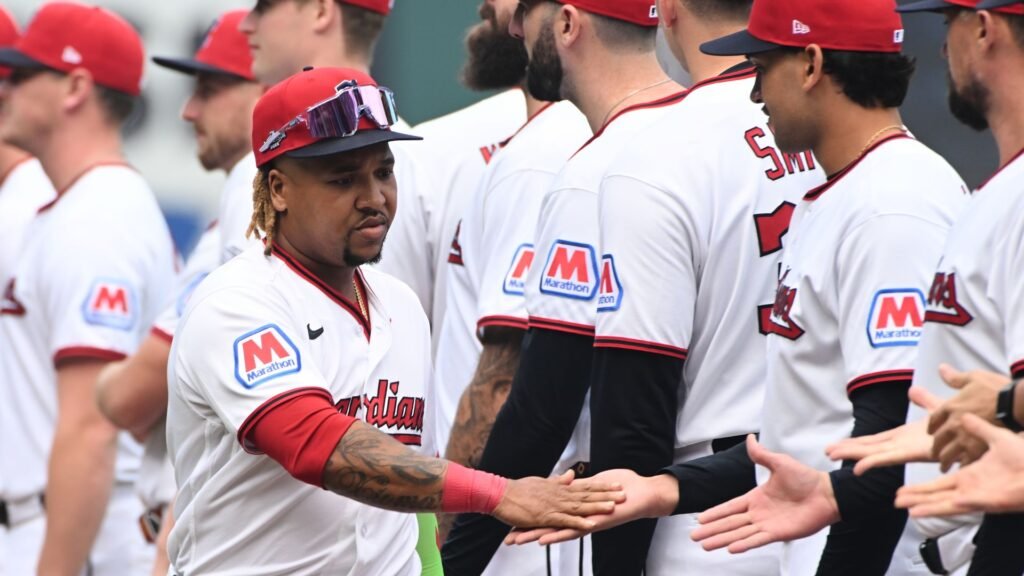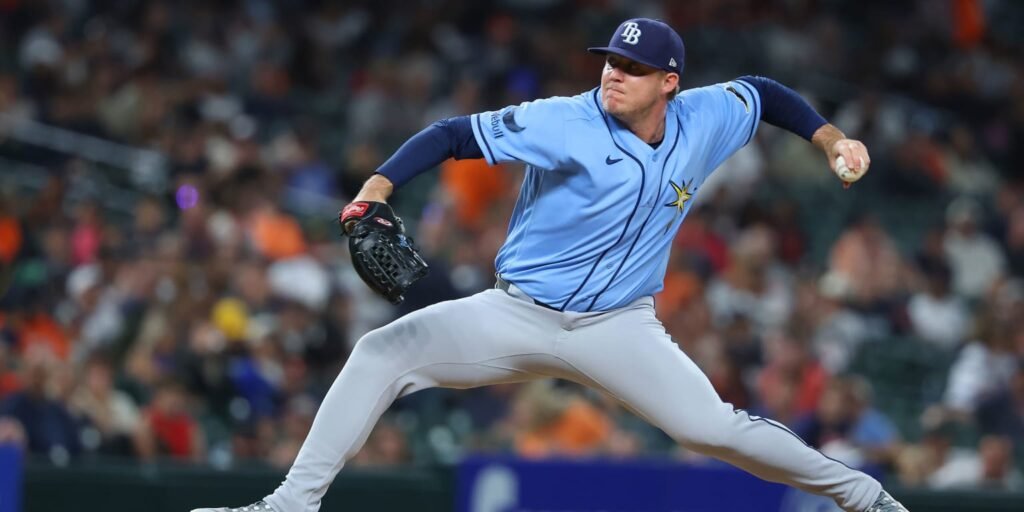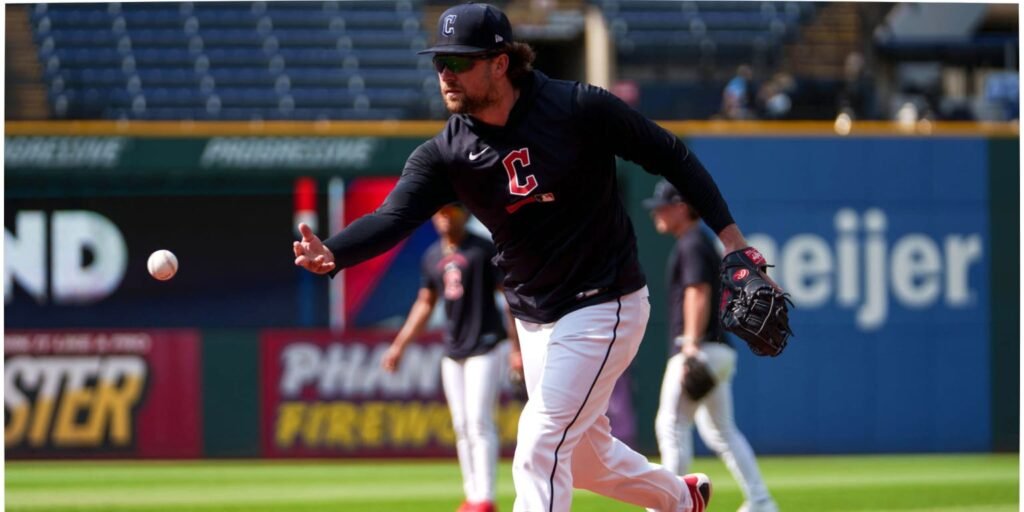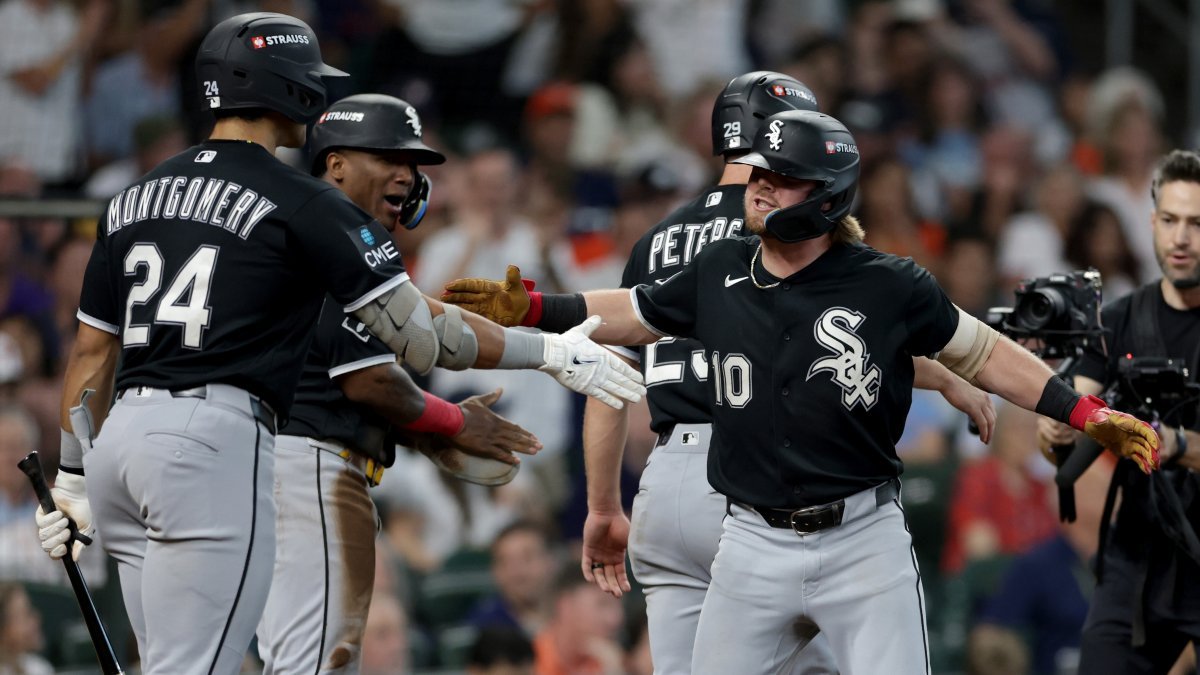
One win separated Cleveland and Chicago in the AL Central. Their 13 head-to-head games were even closer: the White Sox won seven, the Guardians six, and Chicago scored 58 runs to Cleveland’s 57.
They now meet in a best-of-five American League Division Series, with Cleveland’s division title giving it the first two games and a potential Game 5 at Progressive Field. Chicago arrives after sweeping Houston 6–3 and 7–3. The Guardians had a first-round bye.
Full series schedule
Best of five; the first team to three wins advances. Games marked * are played only if needed. Times are Eastern (ET) and Mountain (MT), using EDT and MDT for these dates.
| Game | Date | Ballpark | ET | MT | U.S. TV |
|---|---|---|---|---|---|
| 1 | Sat, Oct. 3 | Progressive Field | 1 pm | 11 am | TBS / truTV |
| 2 | Mon, Oct. 5 | Progressive Field | 5 pm | 3 pm | TBS / truTV |
| 3 | Wed, Oct. 7 | Rate Field | 4 pm | 2 pm | TBS / truTV |
| 4* | Thu, Oct. 8 | Rate Field | 5 pm | 3 pm | TBS / truTV |
| 5* | Sat, Oct. 10 | Progressive Field | 5 pm | 3 pm | TBS / truTV |
Start times and broadcast assignments are subject to change. If only one ALDS Game 4 or Game 5 is needed that day, it starts at 8 p.m. ET / 6 p.m. MT.
How to watch and listen
TBS and truTV carry the series in the United States, with streaming on HBO Max and Spanish-language television on UniMás. Canadian viewers can follow on Sportsnet and Sportsnet+; television channel assignments should be checked in the daily guide.
ESPN Radio provides national coverage. Chicago’s team broadcast is on ESPN Chicago WMVP 1000 AM. Cleveland’s broadcasts are on WTAM 1100 and WMMS 100.7. Times below are Eastern and Mountain; subtract one hour from Eastern for Chicago’s local Central time.
Cleveland can begin with its two strikeout arms
| Game | White Sox | Guardians |
|---|---|---|
| 1 | TBD | Parker Messick |
| 2 | TBD | Gavin Williams |
| 3 | TBD | TBD |
| 4* | TBD | TBD |
| 5* | TBD | TBD |
Parker Messick starts Game 1, followed by Gavin Williams in Game 2. Together they struck out 441 hitters in 370⅔ regular-season innings. That combination tests a Chicago offense that struck out 1,494 times, despite scoring 98 more runs than Cleveland.
Messick’s 49 walks and 1.06 WHIP make the first game particularly important for the White Sox’s patient middle of the order. Miguel Vargas and Munetaka Murakami both posted on-base percentages above .340. Cleveland can reduce the value of their home-run power by making them hit without runners waiting ahead of them.
MLB.com’s pitching report identifies an Espino/Cantillo combination as a Game 3 possibility; Chicago’s assignments remain TBD, with Burke a Game 2 option.
Williams’ Game 2 start would allow him to return for a potential Game 5 on four days’ rest. Messick could return for Game 4 on the same rest. Cleveland has not announced those later starts.
| Pitcher | ERA | IP | K | BB | WHIP |
|---|---|---|---|---|---|
| Parker Messick | 2.56 | 186⅓ | 193 | 49 | 1.06 |
| Gavin Williams | 3.76 | 184⅓ | 248 | 61 | 1.11 |
| Davis Martin | 3.95 | 146 | 122 | 46 | 1.32 |
| Sean Burke | 3.34 | 172⅓ | 185 | 62 | 1.20 |
| Anthony Kay | 4.44 | 158 | 129 | 56 | 1.37 |
| Grant Taylor | 2.25 | 84 | 106 | 30 | 1.07 |
| Cade Smith | 1.95 | 74 | 107 | 23 | 0.96 |
Chicago’s power against Cleveland’s pitching
| Team | Record | Run diff. | HR | OBP | OPS | ERA |
|---|---|---|---|---|---|---|
| White Sox | 84–78 | +56 | 211 | .320 | .726 | 4.12 |
| Guardians | 85–77 | +11 | 162 | .316 | .696 | 3.77 |
The White Sox hit 211 home runs, led by Murakami’s 35, Vargas’ 33 and Colson Montgomery’s 31. All three matter, but their seasons were different. Vargas paired his power with a .363 on-base percentage. Montgomery hit .197, so home runs account for a larger share of the value he brings to the order.
Chicago’s .726 team OPS exceeded Cleveland’s .696. The Guardians’ advantage came on the mound, with a 3.77 ERA against the White Sox’s 4.12 and 1,530 strikeouts against Chicago’s 1,337. Cleveland has a plausible way to suppress the extra-base hits that produced the scoring gap.
Steven Kwan’s .382 on-base percentage gives Cleveland a different kind of threat at the top of an inning. Chase DeLauter finished with a .287 average and .820 OPS. The White Sox cannot focus so heavily on José Ramírez that they let those hitters establish traffic ahead of the middle of the order.
How the bullpens can alter a starting matchup
Chicago used five scoreless bullpen innings to finish its Houston clincher. Sean Burke struck out eight in four innings that day; Anthony Kay and Erick Fedde also pitched. The two days without a game before Saturday help, but the division-series plan still depends on how Will Venable chooses to distribute innings.
Grant Taylor’s regular-season line was 106 strikeouts in 84 innings with a 2.25 ERA. For Cleveland, Cade Smith had 41 saves, a 1.95 ERA and 107 strikeouts in 74 innings. Getting a lead into those pitchers’ hands can matter more than forcing a starter through one more dangerous trip through the order.
The early off days permit heavy bullpen use. The consecutive games in Chicago on October 7 and 8 create a different problem: the manager who uses several pitchers for multiple innings in Game 3 may have fewer comfortable choices in Game 4.
Roster questions before the opener
The October 1 team preview lists Holderman’s wrist injury and Hoskins’ back rehabilitation as Cleveland concerns. Final ALDS rosters will settle availability.
Cleveland was 41–40 at home and 44–37 away. Chicago was 48–33 at home and 36–45 away. The White Sox must win at least once in Cleveland to advance, but the Guardians’ home record also shows why the venue alone should not be treated as a prediction.
For the other Division Series, read Yankees vs. Rays ALDS preview, Braves vs. Dodgers NLDS preview and Padres vs. Brewers NLDS preview. The complete postseason watch guide covers the later-round calendar.
Reporting checked October 2, 2026. Schedule, official probable starters, season statistics and head-to-head results: MLB schedule and MLB statistics, checked against MLB’s public statistical feed. Pitching options discussed in the text are distinguished from the announced starters in the table.