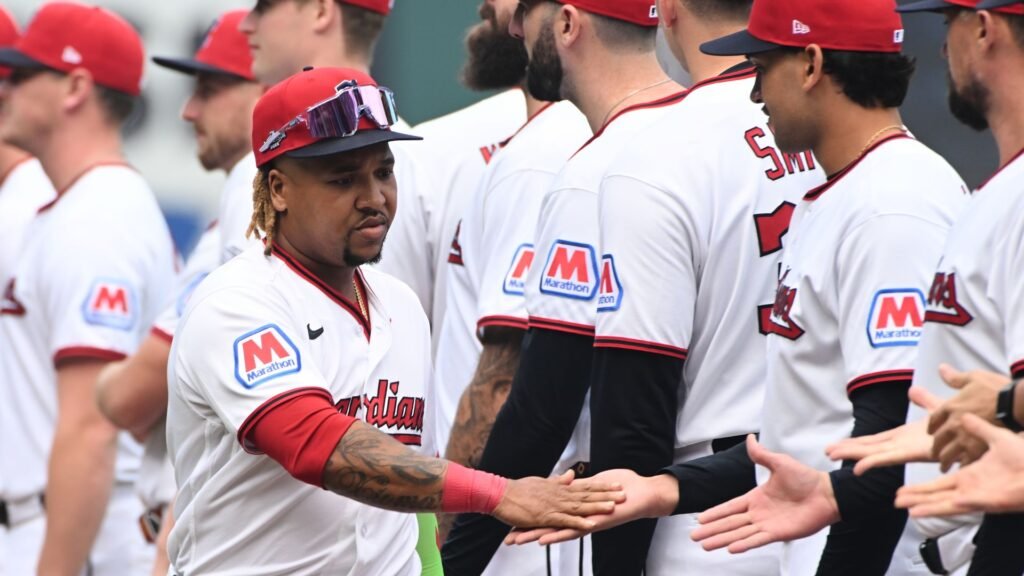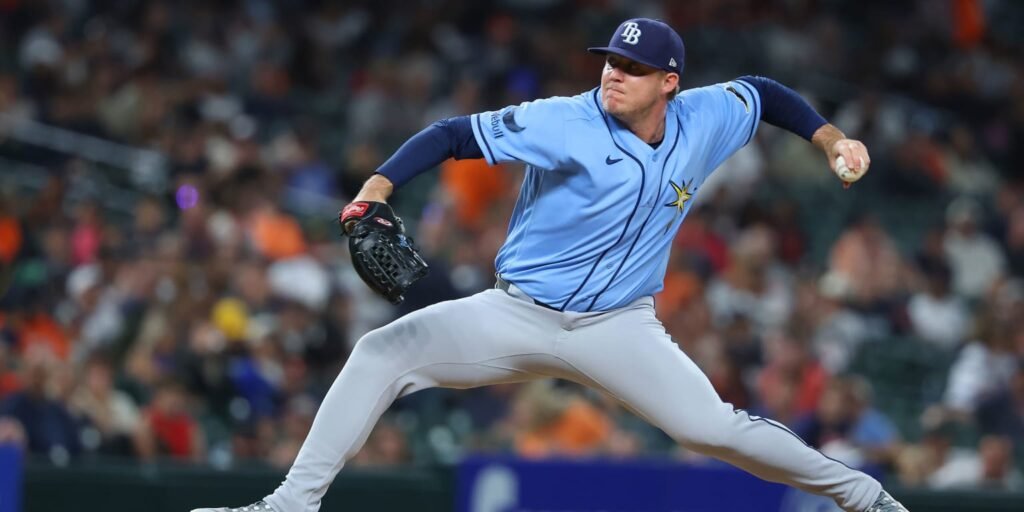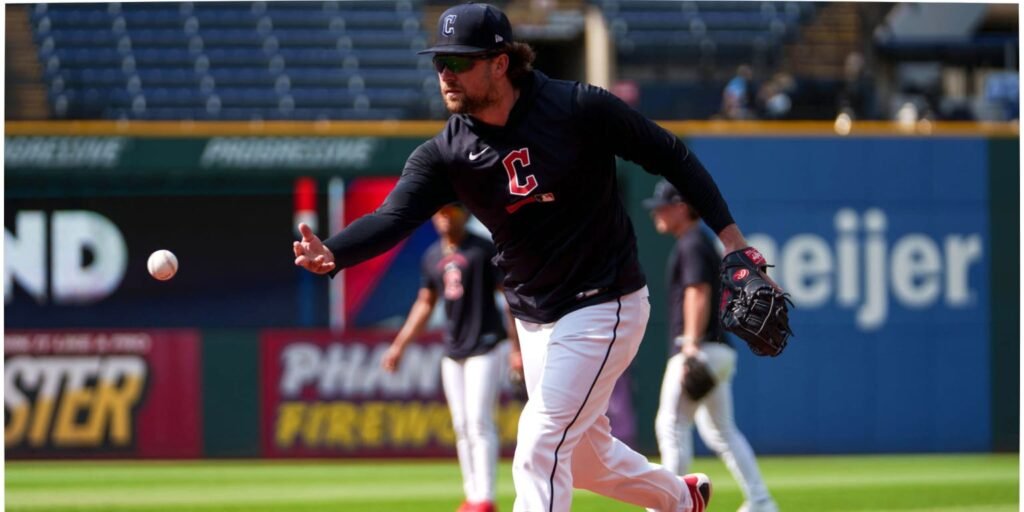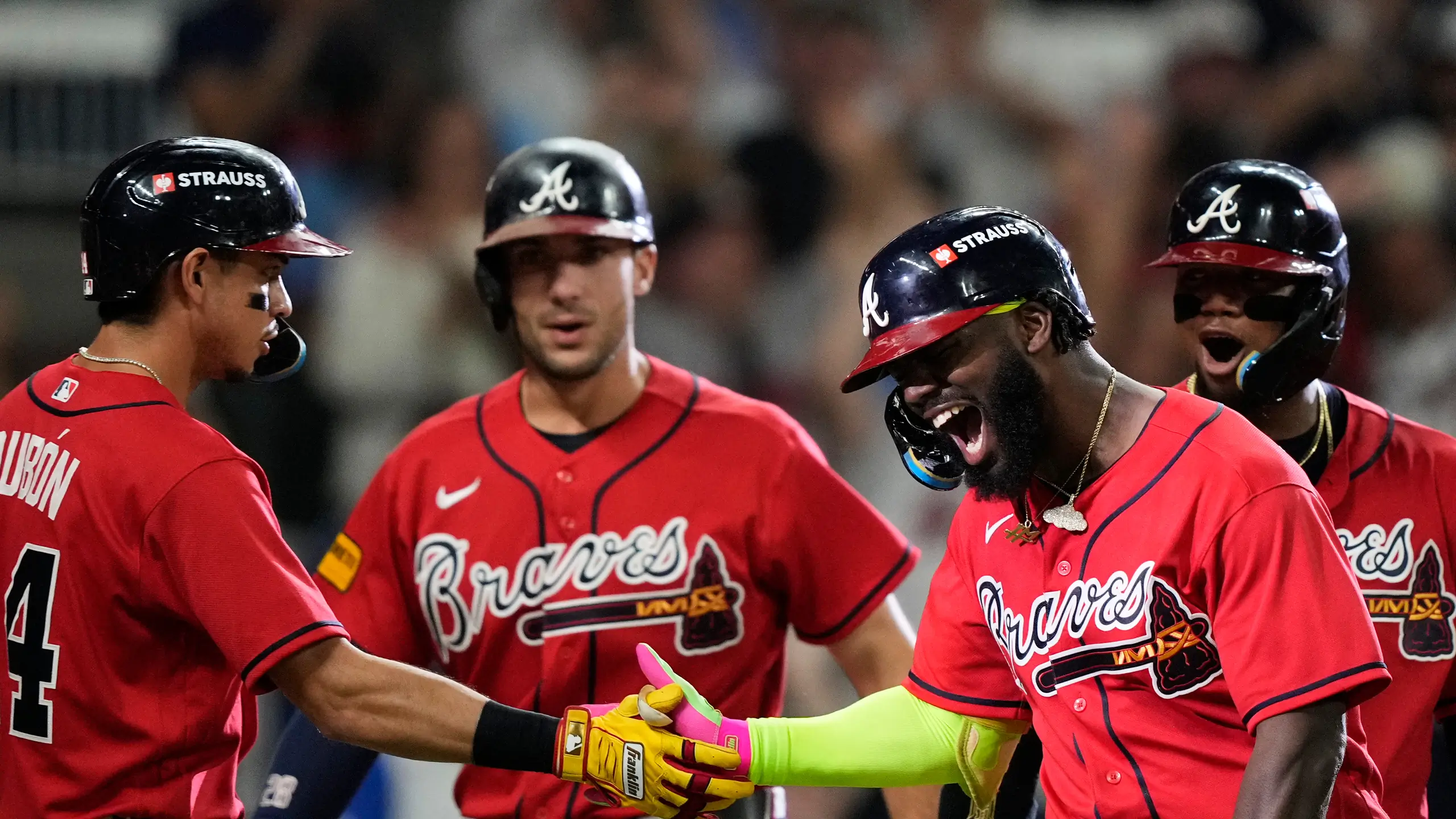
Atlanta won five of six games against Los Angeles this season and outscored the Dodgers 26–15. It now has to reproduce that success after a three-game Wild Card Series, against a club that had time to arrange its pitching and won 100 games.
The Braves advanced with Thursday’s 6–2 victory over Philadelphia. Los Angeles opens the best-of-five National League Division Series at home Saturday, with a potential deciding Game 5 also at Dodger Stadium.
Full series schedule
Best of five; the first team to three wins advances. Games marked * are played only if needed. Times are Eastern (ET) and Mountain (MT), using EDT and MDT for these dates.
| Game | Date | Ballpark | ET | MT | U.S. TV |
|---|---|---|---|---|---|
| 1 | Sat, Oct. 3 | Dodger Stadium | 4 pm | 2 pm | FOX |
| 2 | Sun, Oct. 4 | Dodger Stadium | 8 pm | 6 pm | FS1 |
| 3 | Tue, Oct. 6 | Truist Park | 6 pm | 4 pm | FS1 |
| 4* | Wed, Oct. 7 | Truist Park | 6 pm | 4 pm | FS1 |
| 5* | Fri, Oct. 9 | Dodger Stadium | 8 pm | 6 pm | FOX |
Start times and broadcast assignments are subject to change. If only one NLDS Game 5 is needed on October 9, it starts at 8 p.m. ET / 6 p.m. MT on FOX.
How to watch and listen
The current U.S. listings put Games 1 and 5 on FOX and Games 2, 3 and 4 on FS1. Streaming is on FOX One, with Spanish-language coverage on FOX Deportes. In Canada, Sportsnet and Sportsnet+ carry the postseason; check the daily television guide for channel allocation.
ESPN Radio has national coverage. Atlanta’s team broadcast is on 680 AM/93.7 FM The Fan, and Los Angeles is on AM 570. The first pitch in Los Angeles on Saturday is 1 p.m. Pacific, 2 p.m. Mountain and 4 p.m. Eastern.
Atlanta’s turnaround complicates the rotation
| Game | Braves | Dodgers |
|---|---|---|
| 1 | TBD | TBD |
| 2 | TBD | TBD |
| 3 | TBD | TBD |
| 4* | TBD | TBD |
| 5* | TBD | TBD |
Chris Sale threw 21 pitches while recording the final four outs Thursday, two days after starting the Wild Card opener. Grant Holmes worked two innings in the clincher, and Tyler Mahle had started the previous night. Their workload matters before any projected NLDS order can be treated as settled.
Sale’s 2.16 regular-season ERA, 200 strikeouts and 31 walks made him Atlanta’s strongest starting option. Thursday’s relief appearance helped secure the next round, but it also changes the rest calculation. Saturday comes with only one intervening day off after that outing.
Bryce Elder is a separate availability question. The Atlanta Journal-Constitution reported September 29 that he had thrown batting practice after September 8 knee surgery, but still faced a rehabilitation checklist. That is evidence of progress, not clearance to start the division-series opener.
The Dodgers’ team report identifies Yamamoto, Skubal, Snell and Glasnow as rotation options, with Yamamoto likely for Game 1. The order remains unannounced.
Yoshinobu Yamamoto’s 0.87 WHIP and 2.53 ERA give Los Angeles a strong opening option. A Saturday start would also leave five full days before a possible Friday Game 5, allowing a repeat start on five days’ rest.
| Pitcher | ERA | IP | K | BB | WHIP |
|---|---|---|---|---|---|
| Chris Sale | 2.16 | 162⅔ | 200 | 31 | 0.98 |
| Grant Holmes | 3.44 | 151⅔ | 115 | 62 | 1.31 |
| Tyler Mahle | 3.99 | 149 | 137 | 46 | 1.23 |
| Yoshinobu Yamamoto | 2.53 | 185 | 182 | 42 | 0.87 |
| Tanner Scott | 2.69 | 63⅔ | 82 | 15 | 0.99 |
| Raisel Iglesias | 2.55 | 60 | 64 | 17 | 1.08 |
Los Angeles’ full-season advantage
| Team | Record | Run diff. | HR | OBP | OPS | ERA |
|---|---|---|---|---|---|---|
| Braves | 94–68 | +116 | 204 | .309 | .718 | 3.63 |
| Dodgers | 100–62 | +201 | 204 | .338 | .762 | 3.55 |
The Dodgers scored 59 more runs than Atlanta and allowed 26 fewer. Their .338 on-base percentage against the Braves’ .309 means the comparison extends beyond home-run totals. A lineup that keeps reaching can force Atlanta’s pitchers to work from the stretch and expose more of a staff coming off the Wild Card round.
Shohei Ohtani finished with a .377 on-base percentage and .889 OPS. His return before the end of the regular season was brief, so the quality of his swings after the bye remains a meaningful question. Mookie Betts had 23 homers, Max Muncy 29 and Andy Pages 23, giving the Dodgers scoring options beyond Ohtani.
Atlanta can answer with Matt Olson’s 41 home runs, Michael Harris II’s 26 and Drake Baldwin’s 25. Harris’ three-run shot opened Thursday’s scoring, while Olson and Ozzie Albies also homered. Those swings supplied all six runs, but repeatedly relying on homers with runners aboard requires reaching base first.
The bullpen after a six-pitcher clincher
Atlanta used six pitchers Thursday. That does not make every reliever unavailable Saturday, but it makes actual pitch counts and the Game 1 starter more useful than a generic claim that the bullpen is rested. Sale’s 21 pitches and Holmes’ two innings are part of that calculation.
Los Angeles’ Tanner Scott finished with a 2.69 ERA, 82 strikeouts in 63⅔ innings and 25 saves. Atlanta’s Raisel Iglesias had 34 saves and a 2.55 ERA. Regular-season saves do not establish the October role for every pitcher; the announced roster and each manager’s choices will determine who handles the most consequential hitters.
Atlanta’s 5–1 head-to-head record is a reason to take the matchup seriously, rather than dismissing the Braves because Los Angeles earned a bye. The six-game sample is also much smaller than the season behind the Dodgers’ +201 run differential. Both facts belong in the preview.
For the other Division Series, read Yankees vs. Rays ALDS preview, White Sox vs. Guardians ALDS preview and Padres vs. Brewers NLDS preview. The complete postseason watch guide covers the later-round calendar.
Reporting checked October 2, 2026. Schedule, official probable starters, season statistics and head-to-head results: MLB schedule and MLB statistics, checked against MLB’s public statistical feed. Pitching options discussed in the text are distinguished from the announced starters in the table.