
 Business
Scores

Business of Sports · College Sports · RATINGS
College Football TV Ratings: Why Florida–Georgia and Ohio State–USC Can Both Lead
ABC led the reported television comparison, 7.05 million to 6.61 million. Adding Peacock puts Ohio State–USC at 7.1 million, changing the scope of the ranking.
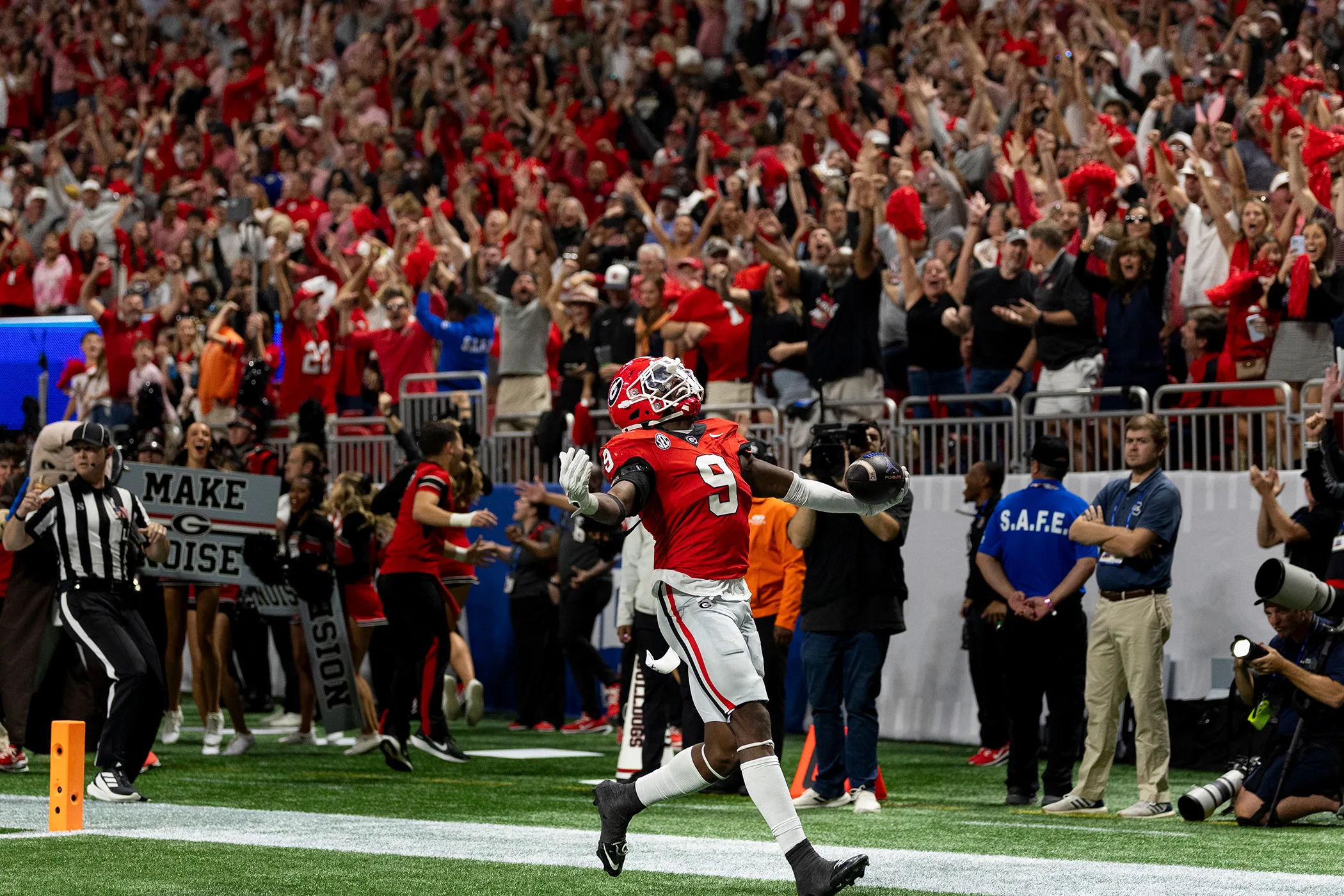
Florida–Georgia had the larger reported television audience in college football’s Week 9. Ohio State–USC had the larger figure when NBC’s television coverage and Peacock streaming were combined. Those findings use different measurement scopes.
On3’s November 3 audience report lists 7.05 million viewers for Florida–Georgia on ABC and 6.61 million for Ohio State–USC on NBC. It separately gives Ohio State–USC a combined 7.1 million audience including Adobe Analytics/Peacock.
| Game | Reported scope | Average viewers |
|---|---|---|
| Florida–Georgia | ABC television | 7.05 million |
| Ohio State–USC | NBC television | 6.61 million |
| Ohio State–USC | NBC and Peacock combined; overlaps NBC row | 7.1 million |
In the television comparison, ABC led NBC by 440,000 viewers, about 6.7% of NBC’s audience. Comparing the 7.1 million combined number against ABC’s 7.05 million instead produces a 50,000 difference in the other direction. The second calculation includes streaming for one game and television for the other.
A different denominator changes the headline
The combined NBC–Peacock figure contains NBC’s television audience. The 6.61 million and 7.1 million should therefore never be added together. They are overlapping measurements of the same event, with streaming included in the latter.
The reporting does not supply an equivalent separately identified combined television-and-streaming total for Florida–Georgia. It consequently cannot establish which game led an identically defined all-platform comparison. A table can show the available figures while preserving that unanswered question.
The games occupied different windows
Florida–Georgia began at 3:30 p.m. ET on October 31, while Ohio State–USC occupied the 7:30 p.m. ET window. The audiences were measured at different times of day, against different competing programs.
Georgia’s official game account records a 27-8 victory at Mercedes-Benz Stadium in Atlanta, with a 24-0 halftime lead. It was the rivalry’s first meeting away from Jacksonville since the 1994-95 campus games. The setting and result provide context for the afternoon telecast without proving how many viewers either attracted or discouraged.
On3 identifies USC’s upset of Ohio State as NBC’s most-watched B1G Saturday Night telecast of the season when television and Peacock are included. That is a package-specific distinction, compatible with ABC leading the television-only figures reported for these two games.
The useful conclusion is precise: Florida–Georgia led this TV comparison; Ohio State–USC’s larger combined total adds streaming. Keeping both labels visible allows readers to understand the apparent reversal without treating it as contradictory reporting.
Explore the Ratings database for audience records with their distribution and reporting periods preserved.
More from The Sporting Page
 Business of Sports
Florida sells arena naming rights to Tower Hill Insurance
 Business of Sports
Skydance plans Paramount Plus and HBO Max bundle for early 2027
 Business of Sports