
History · MLB
How the Mets Tied Game 6 Before Bill Buckner’s Error
Three two-out singles and a wild pitch erased Boston’s lead in 1986. The missed ground ball then ended a tied game, and the World Series still needed Game 7.
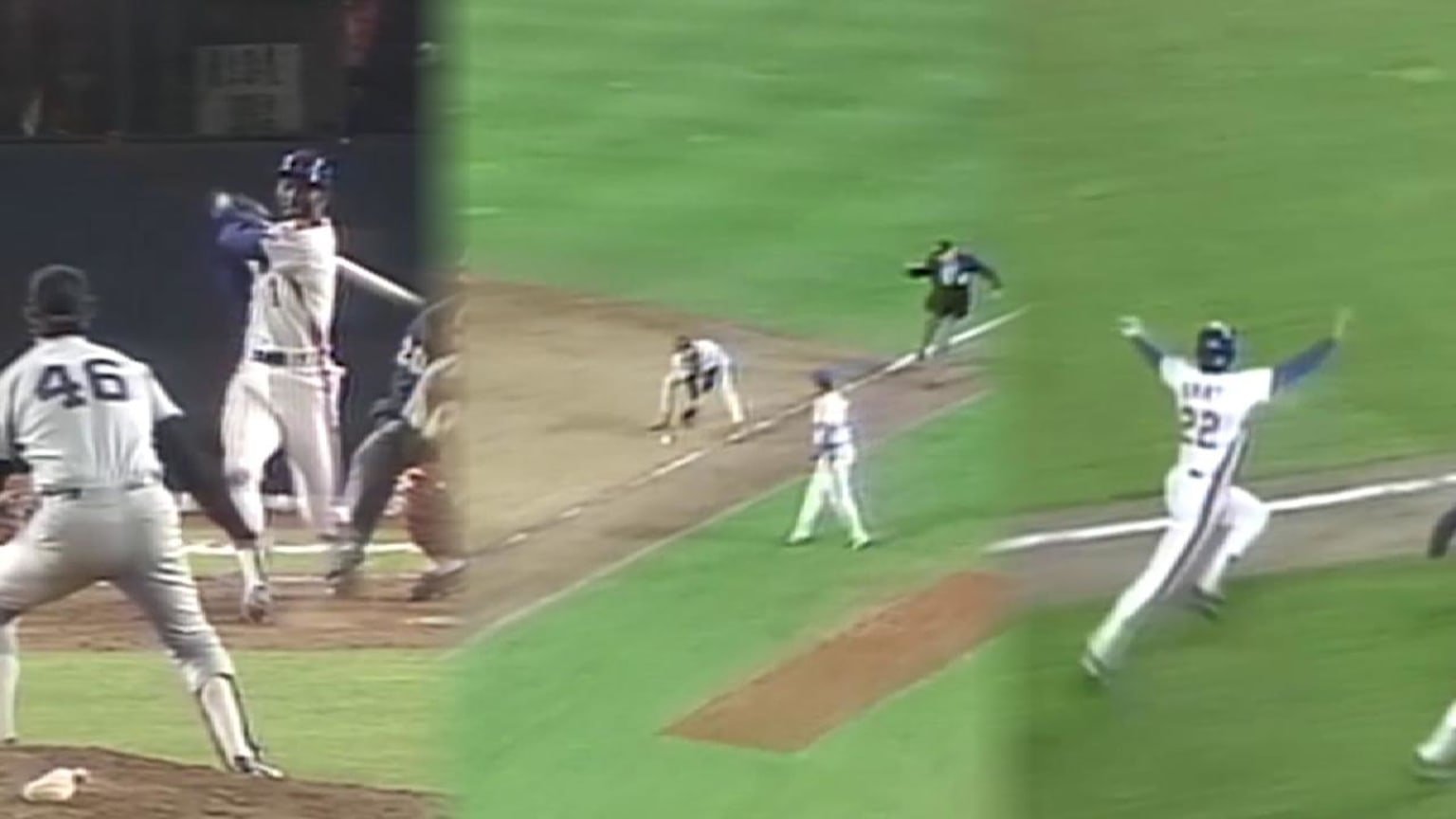
Bill Buckner’s error ended the sixth game of the 1986 World Series. It did not erase Boston’s lead. By the time Mookie Wilson’s ground ball reached first base, the Mets had already tied the score at 5–5.
Forty years after the game officially dated October 25, 1986, that distinction explains what the final play changed. Boston lost a tied game, 6–5, at Shea Stadium. New York escaped elimination. The championship still required a seventh game.
The Three Singles Before the Error
The Game 6 play-by-play preserved by Retrosheet begins the decisive inning with Boston creating its own opportunity. Dave Henderson led off the top of the 10th with a home run against Rick Aguilera. After two strikeouts, Wade Boggs doubled and Marty Barrett singled him home. The Red Sox led 5–3.
Calvin Schiraldi then retired Wally Backman on a fly to left and Keith Hernandez on a fly to center. Boston needed one more out, with nobody on base. The rally that followed began before Wilson batted or Buckner had a ground ball to field.
Gary Carter singled to left. Pinch-hitter Kevin Mitchell followed with a single to center, moving Carter to second. Neither hit scored a run, but together they brought the potential winning run to the plate.
Ray Knight’s single to center scored Carter and sent Mitchell to third. Boston’s lead was down to 5–4, with runners at the corners. Manager John McNamara replaced Schiraldi with Bob Stanley to face Wilson.
The Pitch That Tied It
Stanley’s wild pitch sent Mitchell home and Knight to second. That was the tying play. The official distinction matters: the runner who subsequently scored on the error was no longer needed to erase a deficit. Knight represented the winning run.
Wilson then reached on Buckner’s error, and Knight scored from second. Retrosheet records the play as an error by the first baseman, not a hit, and Wilson received no RBI. The error supplied the last run in a three-run inning built from three singles, a wild pitch and the missed ground ball.
Contemporary reporting identified both the wild pitch and error. Treating the final fielding mistake as the entire collapse leaves out the events that made a walk-off possible.
The pitching record preserves another distinction. Stanley inherited Mitchell and Knight, and both scored. Schiraldi was charged with the loss and all three runs in the inning; the final run was unearned. Stanley recorded no outs. Those entries describe how the runs were assigned, rather than isolating responsibility for the entire result.
The Championship Remained Open
Two nights later, on October 27, Boston took a 3–0 lead in Game 7. The Mets tied it with three runs in the sixth and scored three more in the seventh. They won 8–5. Buckner had two hits and scored a run in that deciding game.
Boston’s earlier 1975 Game 6 victory on Carlton Fisk’s home run offers a related distinction between an unforgettable ending and a championship. A sixth-game win can extend a Series without deciding who ultimately wins it.
Buckner’s error belongs in the account of how Game 6 ended. The preceding singles and wild pitch belong in the account of how Boston’s lead disappeared. The remaining game belongs in the account of how New York won the World Series. Keeping that chronology intact explains the stakes without making one play stand for every lost opportunity.
Sources and Notes
- Retrosheet, October 25, 1986 box score and play-by-play: inning sequence, scoring, fielding and pitching assignments.
- Retrosheet, October 27, 1986 box score and play-by-play: deciding-game chronology and Buckner’s batting line.
- Gordon Edes, Los Angeles Times, October 26, 1986: contemporary report.
- SABR Games Project, 1986 Game 6: later research cross-check. Its later interviews are not presented as contemporary testimony or TSP interviews.
- MLB archival clip: cover provenance.
Retrosheet is a later compilation of historical game records. The contemporary report is identified separately. This article uses the recorded wild-pitch ruling and makes no claim about an alternative outcome had the final ground ball been fielded.
Sources and notes
- https://www.retrosheet.org/boxesetc/1986/B10250NYN1986.htm
- https://www.retrosheet.org/boxesetc/1986/B10270NYN1986.htm
- https://www.latimes.com/archives/la-xpm-1986-10-26-sp-7780-story.html
- https://sabr.org/gamesproj/game/october-25-1986-a-little-roller-up-along-first-mets-win-wild-game-six-on-buckner-error/
- https://www.mlb.com/video/must-c-mookie-s-little-roller-c1865240883
- https://thesportingpage.com/what-carlton-fisks-1975-home-run-actually-won/