
History · MLB
Why the Brewers Moved From the American League to the National League
Milwaukee’s World Series return revives a league-identity question rooted in expansion, scheduling and the decision that took effect in 1998.
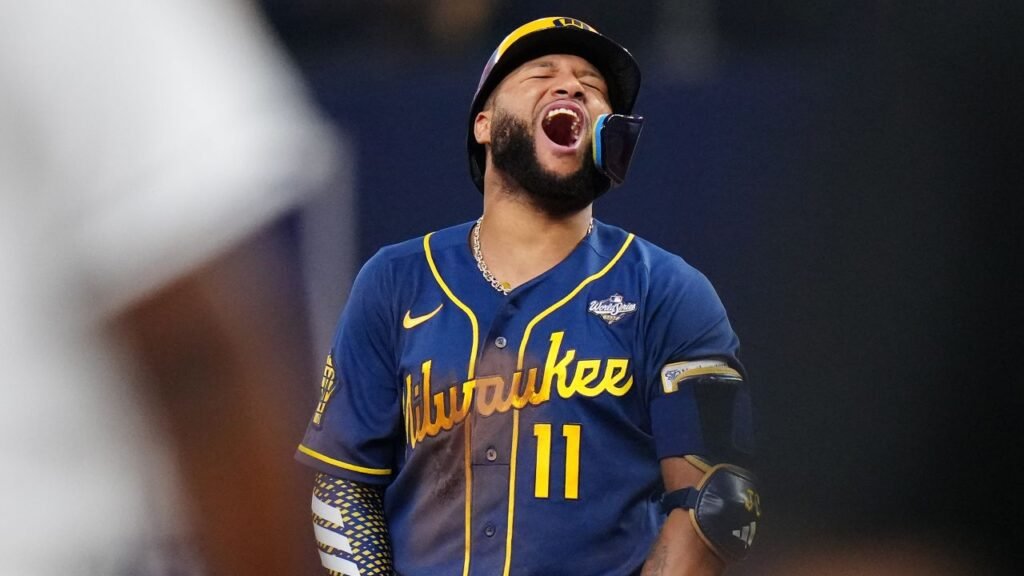
The Brewers are back in the World Series against Tampa Bay, representing the National League. Their previous appearance, in 1982, came as American League champions. The change between those trips grew from a practical problem: how to schedule an expanding major league.
Milwaukee moved from the AL Central to the NL Central for the 1998 season. The transfer kept an even number of clubs in each league while baseball added two expansion teams. It also left a durable distinction in Brewers history: the same franchise has won pennants in both leagues.
In 1997, MLB introduced regular-season interleague play. Arizona and Tampa Bay were preparing to begin play the following year, with the Diamondbacks assigned to the National League and the Devil Rays to the American League. Adding one team to each league would have produced two groups of 15.
The arithmetic mattered. Fifteen teams can form seven same-league matchups, leaving one club without an opponent. To give all 30 teams a game on a particular day, at least one pairing must cross league lines. Owners preferred to keep interleague games in designated stretches, rather than make those matchups a season-long scheduling requirement.
A 16-team National League and a 14-team American League accommodated that preference. Each could arrange a full set of games internally. The Brewers’ transfer solved an immediate scheduling problem while allowing the new franchises to enter their assigned leagues.
A contemporary report published by The Spokesman-Review on October 16, 1997, records the previous day’s owners’ vote: 27–0 for the realignment plan, with the Giants abstaining. Kansas City had the first opportunity to change leagues. Milwaukee had agreed to move if the Royals declined.
The Royals stayed in the American League. As the Society for American Baseball Research documents in its study of the 1997 offseason, that left the Brewers to make the transfer. The club’s official chronology dates its National League membership to November 6, 1997. The playing change followed the next spring.
The rearrangement reached beyond Milwaukee. Detroit moved from the AL East into the AL Central, and Tampa Bay entered the East. Milwaukee joined a six-team NL Central with the Cubs, Cardinals, Reds, Pirates and Astros. The Brewers gained a different group of regular divisional opponents while remaining in the same city.
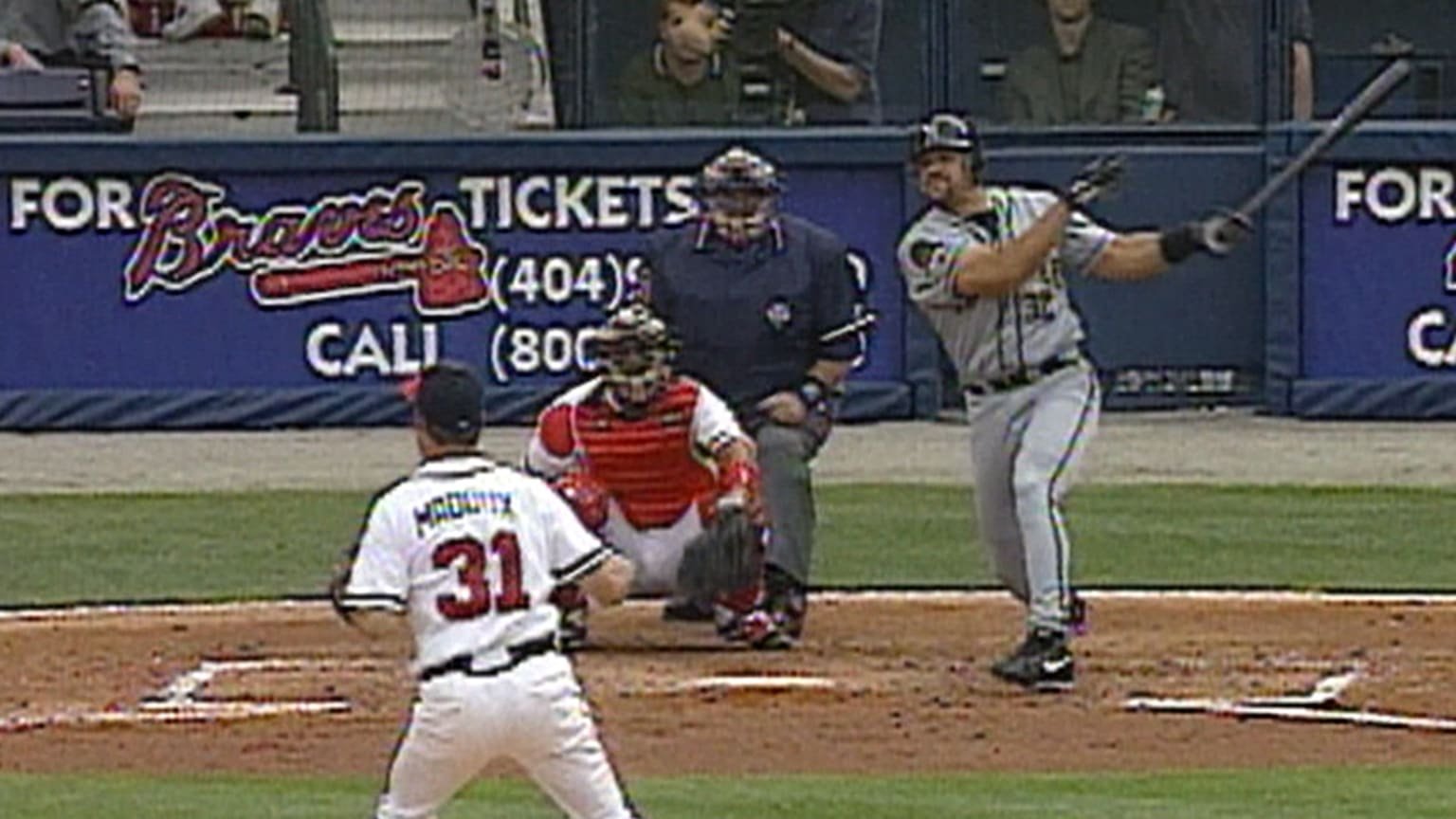
Milwaukee’s first National League game came in Atlanta on March 31, 1998. Its first NL home game followed on April 7 at County Stadium. Retrosheet records a 6–4 Brewers victory over Montreal and a ceremonial first pitch by Hank Aaron.
The 16–14 arrangement lasted through 2012. Houston’s move to the AL West in 2013 put 15 clubs in each league. MLB’s official approval of the Astros ownership sale had identified that alignment as a consequence of the transfer.
This time, baseball accepted interleague games throughout the season. MLB’s published 2013 scheduling coverage explicitly described that change. The same odd-numbered league structure that owners had avoided in 1997 became workable under a different scheduling approach.
The Brewers’ current World Series run carries both identities in the franchise record. Their league changed to meet baseball’s expansion and scheduling choices; the earlier American League pennant remained part of Milwaukee’s history.
Sources and Notes
- Brewers official 1980s chronology: the earlier pennant record.
- The Spokesman-Review, October 16, 1997: contemporary account of the owners’ vote and the Kansas City/Milwaukee sequence.
- SABR’s study of the 1997 winter meetings: realignment alternatives, the scheduling rationale and final division changes.
- Brewers official 1990s chronology: formal membership date. The decision and the first season in the new league are separate events.
- MLB’s archival first-game video and Retrosheet’s County Stadium firsts: road debut and home opener.
- MLB’s Astros sale approval, Houston’s 2013 schedule announcement and MLB’s 2013 Royals scheduling report: the later league balance and season-long interleague arrangement.
Sources and notes
- https://www.mlb.com/brewers/history/timeline-1980s
- https://www.spokesman.com/stories/1997/oct/16/baseball-decides-on-one-team-move/
- https://sabr.org/journal/article/the-1997-winter-meetings-minor-league-changes-major-league-impact/
- https://www.mlb.com/brewers/history/timeline-1990s
- https://www.mlb.com/video/brewers-first-game-in-nl
- https://www.retrosheet.org/ballparks/county_stad_nl2.htm
- https://www.mlb.com/news/mlb-approves-sale-of-the-houston-astros-to-group-led-by-jim-crane/c-25991560
- https://www.mlb.com/astros/news/astros-release-2013-schedule/c-38304254
- https://www.mlb.com/news/royals-are-slated-for-more-interleague-play-in-2013/c-38263974
- https://thesportingpage.com/pratts-go-ahead-single-and-six-scoreless-relief-innings-lift-brewers-past-rays-5-4/