The agreement announced on June 17, 1976 brought four American Basketball Association franchises into the National Basketball Association: the Denver Nuggets, Indiana Pacers, New York Nets and San Antonio Spurs. They joined for the 1976-77 season, increasing the NBA to 22 teams.
The transaction commonly called the ABA-NBA merger had two different effects. Four clubs continued as NBA franchises, while other ABA players entered the older league through separate transactions. The Kentucky Colonels and Spirits of St. Louis did not become NBA teams. Even the reigning ABA champion Nets arrived with a roster that had lost its defining player.
Four franchises entered the league
The ABA had begun play in 1967. Its last championship was decided on May 13, 1976, when New York beat Denver 112-106 in Game 6. The Nets’ official account of the final ABA title records a comeback from a 22-point second-half deficit. Julius Erving finished the series with an average of 37.7 points per game.
A championship, however, did not settle which organizations would continue. The New York Times report published June 18, 1976 described four of the remaining six ABA teams being admitted to the NBA. It also identified the financial conditions of entry, including a $3.2 million payment from each accepted franchise.
The same contemporary report said the Nets would have to compensate the New York Knicks for entering their territory. That was an additional obligation beyond the common entry payment. The agreement admitted a second New York-area team, but admission came with costs that affected what that team could put on the floor.
Players from the two excluded organizations were available through a dispersal draft. That mechanism redistributed players; it did not preserve Kentucky or St. Louis as NBA franchises. The distinction is necessary when tracing a player’s arrival in the league, because a move from the ABA did not always follow his existing club’s admission.
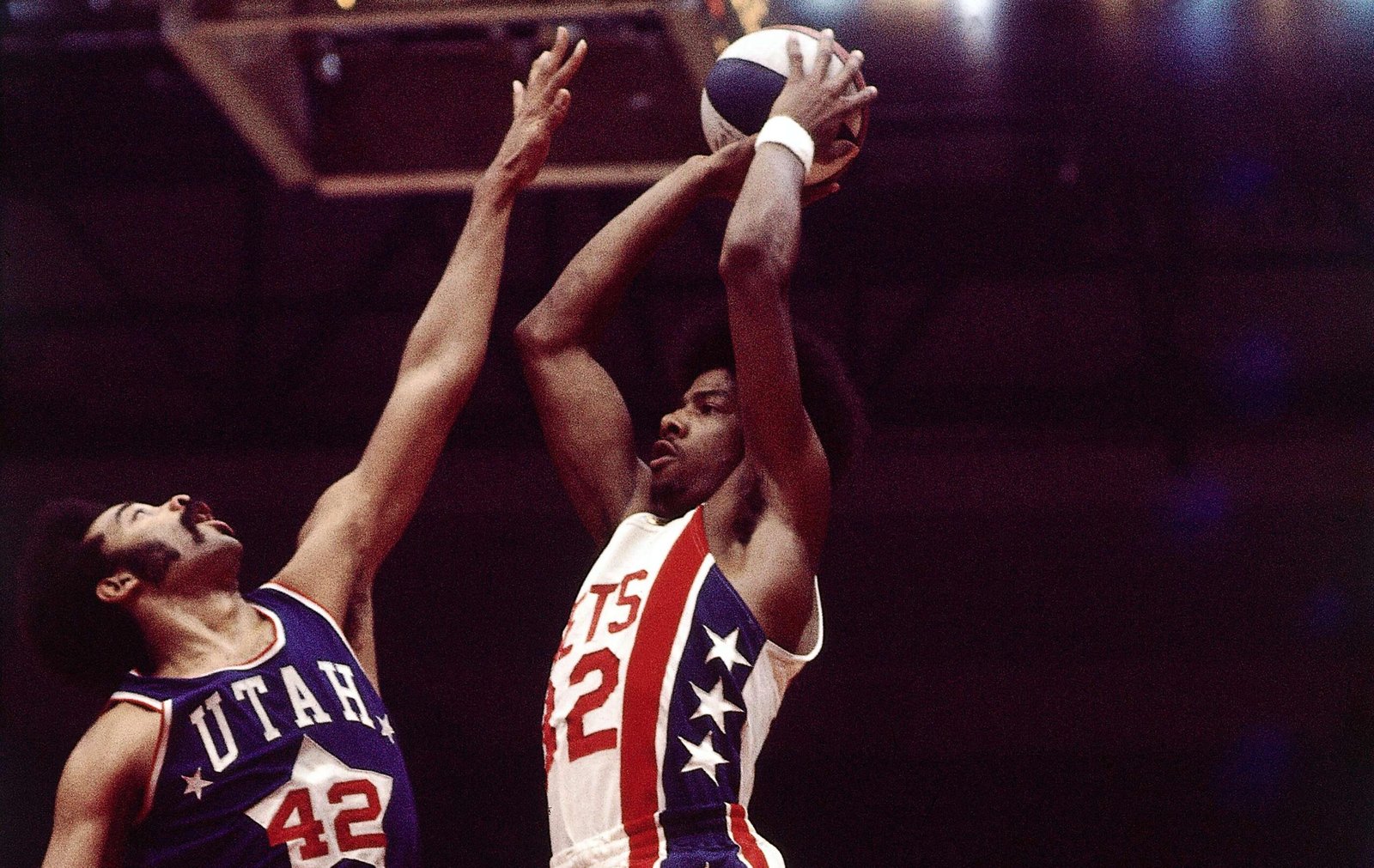
The Nets joined without Julius Erving
New York had won the final ABA championship with Erving as its leading figure. The club then acquired point guard Tiny Archibald from Kansas City, preparing for an NBA season that appeared to offer a pairing of two established stars.
The pairing never took the court for the Nets. Two days before their NBA debut, New York sold Erving to the Philadelphia 76ers. The Nets’ official history of their entry into the NBA connects the sale to the costs of joining the league. Erving’s move was a sale by an admitted franchise, not selection in the dispersal draft.
On October 22, 1976, the Nets won their first NBA game, beating Golden State 104-103. Archibald scored 30 points and John Williamson added 27. The early result did not predict the season that followed: Archibald’s ankle injury limited him to 34 games, Williamson was traded to Indiana, and New York finished 22-60.
The franchise’s continuation and its competitive position had therefore moved in different directions. The Nets had secured entry into the NBA, but their championship roster did not arrive intact. They relocated to New Jersey for the following season.
Players changed the NBA beyond the four clubs
Other ABA players strengthened established NBA organizations. Artis Gilmore went from Kentucky to the Chicago Bulls. Maurice Lucas joined Portland, where he played alongside Bill Walton on the team that won the 1977 NBA championship. Erving reached the Finals with Philadelphia.
The NBA’s 1976-77 season review records Portland beating Philadelphia four games to two. That first post-merger championship illustrates why counting the four admitted franchises captures only part of the transition. Players from the ABA influenced teams that had already belonged to the NBA.
The older league did not immediately adopt every feature associated with its rival. The ABA’s three-point shot remained outside NBA play for the next three seasons. The NBA introduced it in 1979-80, as the league’s history of the three-point line records. The adoption of that rule followed the admission of the four teams rather than taking effect with it.
Erving’s move from the Nets to Philadelphia is also a dividing point in accounts of his career. TSP’s history of Kevin Loughery’s work with Erving and Michael Jordan considers the players through their coach’s experience. The merger’s institutional record supplies a different perspective: four franchises continued, other clubs disappeared, and their players reached the NBA by several routes.