

Two Styles of Greatness: Michael Jordan and Julius Erving
Kevin Loughery is the only man to have coached both Julius Erving and Michael Jordan at the professional level. In February 2026, he spent six minutes on SiriusXM explaining what separated them. Most of it came down to two practices.
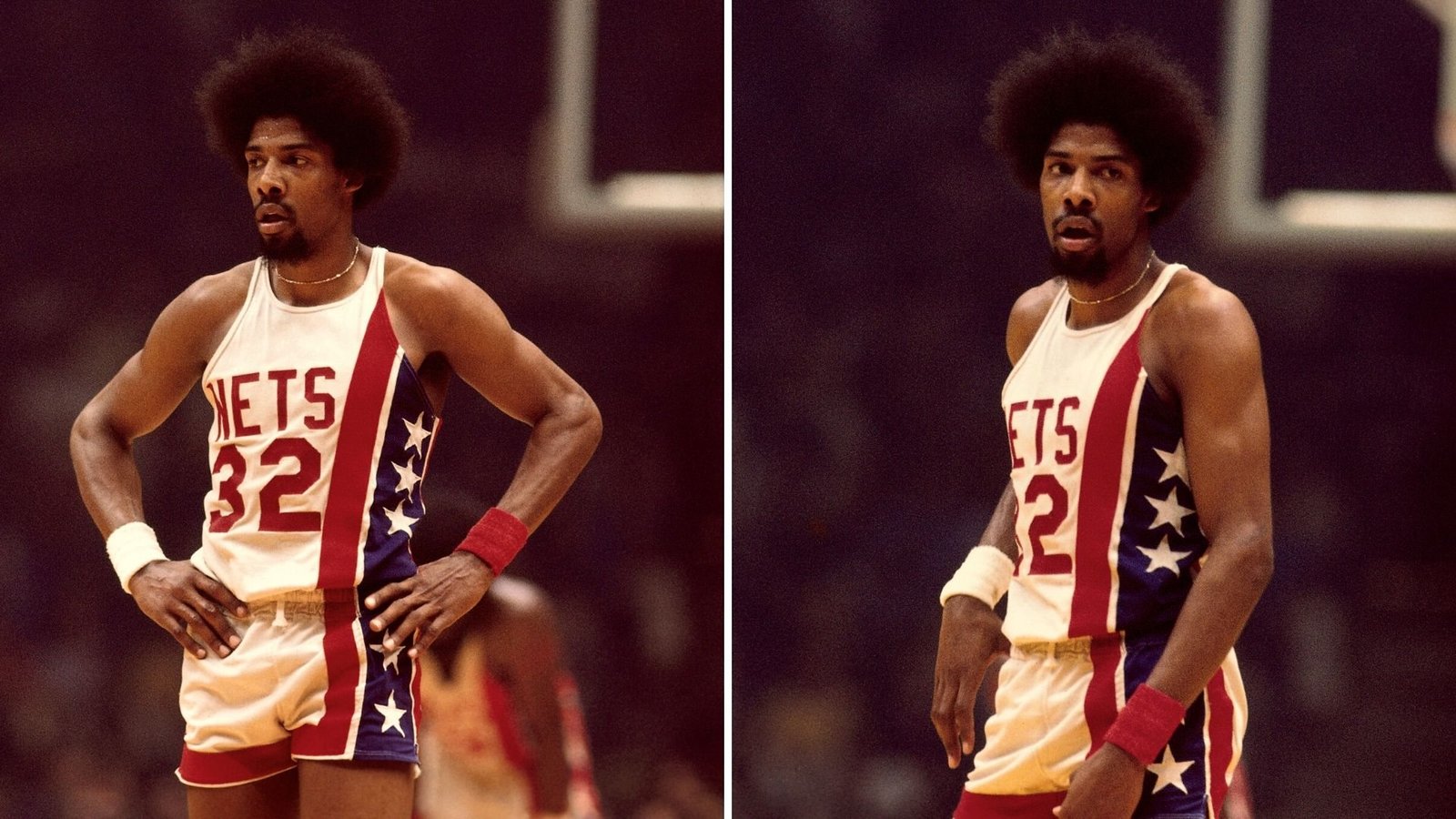
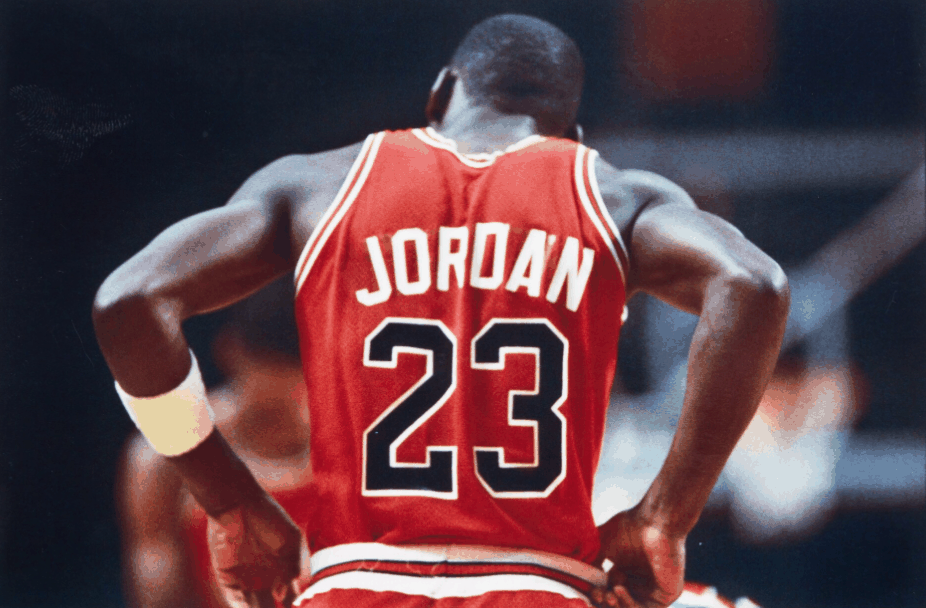
Russo had been talking about Julius Erving for a while before he got around to it.
“Lastly on Erving, you coached both Erving and Jordan. What’s the biggest difference between the two of them?”
Kevin Loughery hedged for exactly one clause. He had coached Michael Jordan for only one season. Then he stopped hedging.
“Doc was easier to coach than Michael. And I love Michael. I love both of them.”
The competitive spirit with Jordan, he said, was “beyond belief.” His three seasons with Erving, however, had been the most enjoyable of his basketball life.
“Michael was really tough on his teammates, and Doc was different,” Loughery said. “He would get along with everybody.”1
Nobody else gets asked this
Loughery came out of New York basketball. Born in Brooklyn, he played for Joe Lapchick at St. John’s before spending 11 seasons as an NBA guard. He averaged 15.3 points for his career and reached the 1971 NBA Finals with the Baltimore Bullets, where he encountered Kareem Abdul-Jabbar and the Milwaukee Bucks.2
Two years later, Philadelphia handed Loughery one of the bleakest assignments in league history.
The 76ers were already 4–47 when Roy Rubin was dismissed and Loughery became player-coach. At the press conference introducing him, a reporter asked what it would take for Philadelphia to reach the playoffs.
“Three airplane crashes,” Loughery answered.
The team finished 9–73, with Loughery going 5–26 over the final 31 games.2
By the following spring, he was an ABA champion.
Loughery took over the New York Nets in 1973 and won the title in his first season with Erving as the centre of the team. They won again in 1976, capturing the final championship in ABA history.
Then came Chicago in 1984 and a 21-year-old rookie from North Carolina who treated the usual apprenticeship as somebody else’s idea.
When Russo asked Loughery about the difference between Erving and Jordan, the answer came with two practices attached, roughly a decade and one league apart.
Doc, on purpose
Loughery remembered a point when the Nets had lost a couple of games and complacency had begun entering the room.
He approached Erving before practice and told him what was coming.
“Doc, I’m gonna get on your ass in practice today.”
The distinction matters because Loughery told him in advance. The criticism would land on Erving, but its intended audience was everyone watching.
“We’re not going very well right now,” Loughery recalled telling him. “Guys are starting to get complacent.”
Loughery knew what would happen if he placed the pressure on the best player in the gym.
“If I get on his back, everybody else is gonna pop up and say, ‘Uh-oh, we’re ready to go again.’”
Erving had to absorb the criticism without turning the moment into a public struggle over his status. He understood why Loughery had chosen him to carry the message.
Loughery kept returning to the same phrase.
“That’s how he blended in.”
Then he delivered the sentence that governs the entire story.
“You couldn’t do that with Michael.”1
Erving’s willingness to accept the role should not be confused with passivity.
During his three seasons under Loughery, he won three consecutive ABA Most Valuable Player awards and led the Nets to two championships. In the 1976 ABA Finals against Denver, Erving averaged 37.7 points, 14.2 rebounds and 5.3 assists. New York trailed by 22 points in the second half of the deciding Game 6 before completing the comeback and winning the last game the ABA ever played.3
The player whom Loughery could use as an example in practice was the same player carrying the largest burden when the season reached its final minutes.
That was why the tactic worked. Nobody in the room could mistake the coach’s criticism for a change in Erving’s standing.
Loughery could use the best player to address the team because the best player did not need every interaction to confirm that he was the best player.
Cards
Before Loughery returned to basketball, he went to the card table.
“I played cards with Michael,” he said. “Coaches wouldn’t do that today.”
Loughery remembered needling Jordan from across the table.
“Boy, you’d cheat just to win.”
He quickly added that he was joking, then clarified it again because he wanted the point understood: Jordan would not actually cheat.
The joke depended on a larger truth. Jordan could turn almost anything into a result that mattered.
The same was true on the golf course.
“He never lets up as far as having to win,” Loughery said. “He was never a social player.”1
Loughery did not know Jordan only from film sessions or from the end of a bench. He had sat across from him at the card table and played golf beside him.
He had seen what happened when there was no crowd, no standings and no championship at stake.
Jordan still kept score.
The jersey
“I had a very veteran team for Chicago when he came in, and he just beat these guys up,” Loughery said. “He just destroyed them.”
Then he paused.
“I haven’t told you this before.”
The Bulls were playing a practice game to ten. Jordan’s side had built a lead of approximately 7–1 when Loughery intervened.
“Michael, change the jersey.”
Jordan removed his jersey and switched to the losing side. He then beat the team he had just helped put ahead.
“He was steaming at me for that,” Loughery remembered. “He didn’t yell at me, but I know he was steaming. He wants to win. He wouldn’t let up.”
It is a quieter version than the one that tends to circulate, and it comes from the man who blew the whistle.
Both practice stories began with Loughery disturbing the natural order of the room, but the pressure travelled differently.
With Erving, it spread outward. The coach placed the burden on Doc so that everyone else would feel it.
With Jordan, the disruption became personal and immediate. Changing jerseys transformed an easy victory into another challenge involving his coach and the teammates now standing across from him.
Loughery was not running either player down. He finished the Jordan story by explaining that this was what made him great and later made him successful beyond basketball.
Then he returned to Erving.
“Even though Doc is like that too,” Loughery said, “but in a different fashion.”1
Jordan later confirmed the broader method behind Loughery’s story.
During his 2009 Basketball Hall of Fame address, Jordan remembered Loughery placing him with the starters during practice, then moving him to the losing side after the competition had begun. Jordan said the second group would come back to win “nine times out of ten,” and thanked Loughery for adding another log to the competitive fire already inside him.5
Jordan’s speech does not independently establish the exact 7–1 score from Loughery’s 2026 recollection. It confirms the larger pattern. Loughery regularly changed Jordan’s side because he understood that the transfer would be received as a test.
He did not create Jordan’s competitiveness. He kept finding productive places to direct it.
What Philadelphia got
The sharpest thing Loughery said, he almost threw away.
He began describing the Philadelphia team Erving joined after the ABA folded.
Darryl Dawkins was there. George McGinnis expected the ball, Doug Collins was an established scorer, and Lloyd Free brought another aggressive offensive personality.
“If Michael went with that team, he’d be the leader of that team in five seconds,” Loughery said. “Doc would blend in.”
From that contrast came his most provocative conclusion.
“That’s why I don’t think we seen the real Dr. J in the NBA, as much as we did in the ABA.”1
One roster, which is why Loughery bothered with the names.
The 1976–77 76ers had collected an unusual amount of offensive talent without establishing an obvious order around it. Philadelphia reached the NBA Finals, won the first two games and then lost four straight to Portland.
Erving had averaged 29.3 points during his final ABA season. His average fell to 21.6 during his first year in Philadelphia.
The NBA’s own historical profile of Erving describes him restraining some of his offensive instincts in the interest of making the crowded arrangement work. Across five ABA seasons, he averaged 28.7 points, won three scoring titles and collected three MVP awards. During 11 NBA seasons with Philadelphia, he averaged 22.0 points.4
Loughery was not reading from a statistical sheet, though, and the numbers were not his point.
He was talking about hierarchy.
With the Nets, Erving was not simply the leading scorer. The team understood that the decisive possession, and much of what happened before it, would pass through him. He could rebound, begin the break, create from the perimeter and finish the possession himself.
Philadelphia required accommodation.
Loughery did not state the connection this bluntly, but it sits beneath his answer: the same quality that allowed a coach to use Erving as the carrier of a message in practice also made him willing to fit around other major personalities.
Loughery did not consider that willingness a defect. He called those Nets seasons the most enjoyable years he had in basketball.
Nor was he dismissing Erving’s NBA career. Erving won the league’s Most Valuable Player award in 1981 and helped Philadelphia capture the 1983 championship. He remained an All-Star in every one of his 11 NBA seasons.4
The distinction concerned how completely the team belonged to him.
Erving remained a superstar in Philadelphia, but he was willing to share the room.
Loughery could not imagine Jordan blending into that same room. He believed Jordan would have reorganized it around himself almost immediately.
Before the championships
Loughery’s 2026 interview did not invent the connection between the two players.
In May 1989, before Jordan had reached an NBA Finals, Loughery was already comparing his postseason control with Erving’s final ABA championship run.
Jordan was producing across every area of the game during Chicago’s playoff series against New York. Loughery watched him and returned to what Erving had done against Denver thirteen years earlier.
“I didn’t think I’d ever see another one like Doc,” Loughery said at the time.
Then he made the comparison even stronger.
“I believe Michael is the most talented basketball player I’ve ever seen.”6
The article identified Loughery as the only man to have coached both players at the professional level.
That timing matters.
Loughery was not working backwards from Jordan’s six championships or from a completed mythology. Jordan had not yet passed Detroit, reached the Finals or become the central figure of a dynasty.
Loughery recognized the resemblance while the ending was still unwritten.
Jordan may have been the greatest talent he encountered. Erving may have been the player he most enjoyed coaching. Jordan’s competitiveness could overwhelm a practice, while Erving’s temperament gave the coach access to the entire team.
Each statement could be true without cancelling the others.
The witness
Russo closed the discussion by reading Loughery’s basketball life back to him.
“How many guys do you know who played in the NBA, coached in the ABA, and saw George Mikan and Wembanyama play? And then coached Jordan and Erving?”
He kept going.
St. John’s. The NBA Finals against Kareem. The 9–73 Philadelphia team. Two ABA championships with the Nets.
“That is incredible when you think about it,” Russo said.1
Loughery had seen Mikan play. Decades later, he was telling Michael Jordan to change jerseys in practice.
After spending the interview separating Erving from Jordan, he still would not choose between them.
“They are two great players,” Loughery said. “I love both of them. I play golf with both of them.”
The point was never that Erving lacked competitiveness or that Jordan could not be coached.
The same pressure simply travelled through them differently.
One player allowed the coach to place a burden on him so the rest of the team would stand up. The other treated the coach’s intervention as another obstacle that had to be beaten before practice ended.
Loughery had coached two of basketball’s defining players and learned that greatness did not enter a room in only one form.
Notes
Kevin Loughery interview with Christopher “Mad Dog” Russo, Mad Dog Unleashed, SiriusXM, February 2026. The six-minute recording contains Loughery’s comparison of Jordan and Erving, his account of warning Erving that he would challenge him in practice, the cards and golf recollections, and the complete 7–1 jersey-switch story. Michael Jordan, Julius Erving, Kevin Loughery, Mad Dog Russo (February 2026).pdfPDF
↩1 ↩2 ↩3 ↩4 ↩5 ↩6NBA records list Loughery’s 11-season playing career, 15.3-point scoring average and St. John’s background. St. John’s identifies Joe Lapchick as his coach. The 1972–73 76ers were 4–47 under Roy Rubin and 5–26 under Loughery, finishing 9–73. Charley Rosen recalled Loughery’s “three airplane crashes” answer in an interview with WBUR’s Only A Game. NBA.com
↩1 ↩2The Nets won ABA championships under Loughery in 1974 and 1976. Brooklyn’s official retrospective reports that Erving averaged 37.7 points in the 1976 Finals and that New York overcame a 22-point second-half deficit in Game 6. Contemporary reporting listed Erving’s series averages as 37.6 points, 14.2 rebounds and 5.3 assists, with the scoring difference resulting from rounding. NBA.com
↩NBA.com’s historical profile records Erving’s three ABA scoring titles, three ABA MVP awards and two ABA championships. It also describes his adjustment after joining a Philadelphia roster containing George McGinnis, Lloyd Free and Doug Collins, noting that Erving restrained some of his offensive instincts for team success. The profile lists his 28.7-point ABA average, 22.0-point NBA average, 1981 MVP award and 1983 championship. NBA.com
↩1 ↩2Jordan’s official Naismith Memorial Basketball Hall of Fame page contains his 2009 enshrinement speech. In the speech, Jordan recalled Loughery moving him from the winning practice team to the losing side and thanked the coach for intensifying his competitive fire. Jordan averaged 28.2 points, 6.5 rebounds and 5.9 assists as a rookie, won Rookie of the Year and helped Chicago improve by 11 victories. The Naismith Basketball Hall of Fame
↩Joe Gergen, “Jordan’s Performances in Playoffs Remind Loughery of Dr. J in ABA,” Newsday, reprinted by the Los Angeles Times, May 21, 1989. The report identifies Loughery as the only man to have coached Jordan and Erving professionally and records his comparison before Jordan had won an NBA championship. Los Angeles Times
↩
About the reporting
This story is built around Kevin Loughery’s February 2026 interview with Christopher “Mad Dog” Russo on SiriusXM. Direct quotations were transcribed from the supplied recording. Punctuation and obvious transcription errors were cleaned where necessary, while Loughery’s spoken wording and grammar were otherwise retained.
Statistics and historical records were checked against official NBA material, Basketball-Reference, St. John’s University records, contemporaneous reporting and retrospective league histories.
Loughery’s description of the 7–1 Chicago practice is his recollection of an event that occurred more than forty years earlier. Michael Jordan’s 2009 Hall of Fame speech independently confirms Loughery’s broader practice of moving him from a winning group to the losing side, but Jordan did not cite the specific 7–1 score in that speech.