

Business of Sports · NFL
What Is Caddix? How Jack Rasmussen Built the SmartStuds Cleat Company
The Baltimore-rooted brand grew from a father-and-son design project into a cleat business built around movable studs.
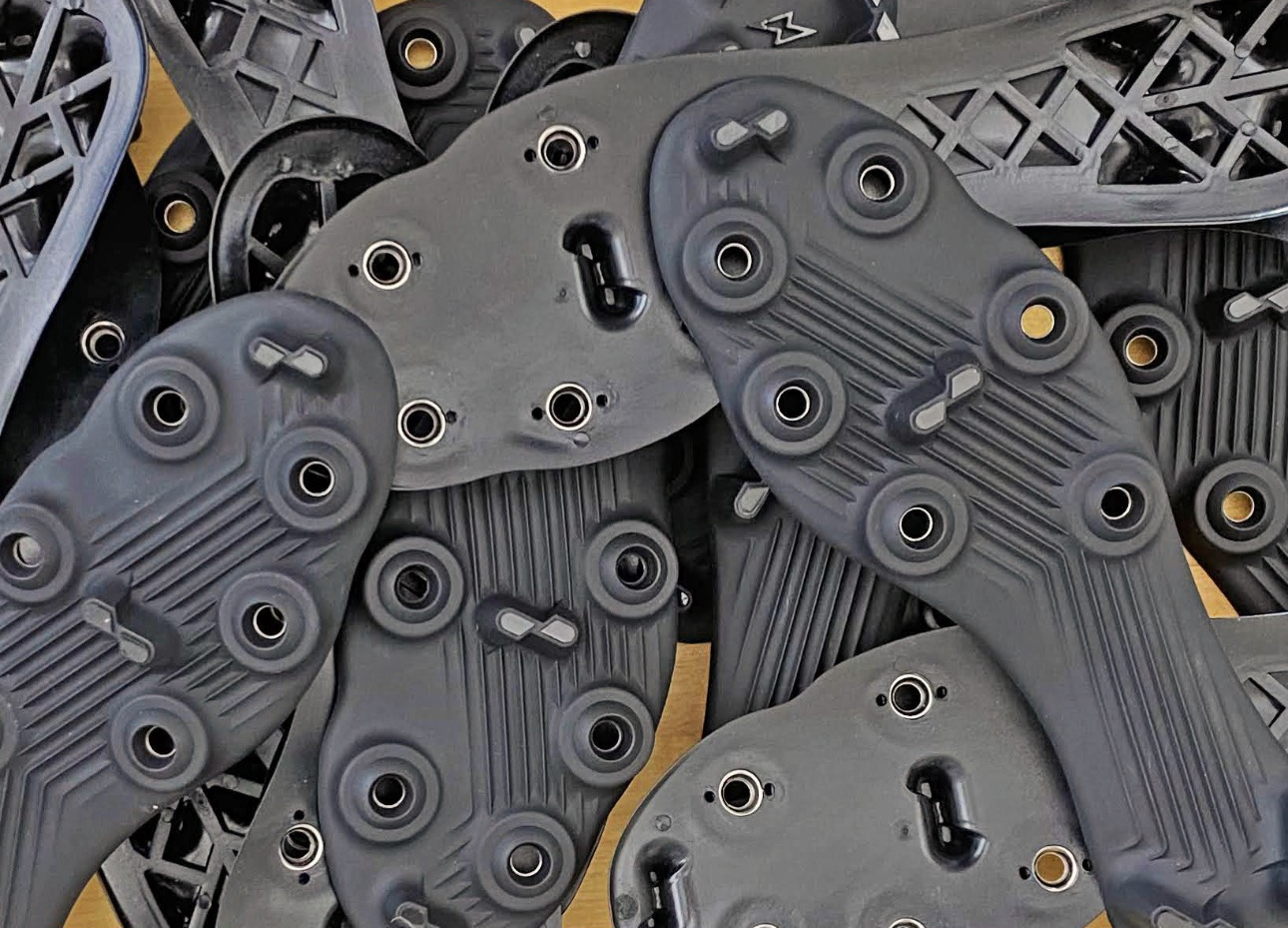
Caddix is a Baltimore-rooted cleat company founded by Jack Rasmussen and his father, Jeff. Its central idea is a stud that can move under pressure, rather than remaining rigid as an athlete turns. The company calls that system SmartStuds and markets it around reducing excessive rotational force.
How Jack Rasmussen built the company
The idea and the business have different starting dates. Caddix’s own timeline traces the concept to 2015. Baltimore Fishbowl’s April 2025 account dates the company’s founding to January 2020, following years of experimentation prompted by the Rasmussens watching a non-contact knee injury during an NFL game.
Fishbowl reported that Jeff worked in advertising, while Jack taught himself biomechanics and tested early sole designs in his parents’ garage. His improvised materials included quick-hardening caulk and dish soap. The report describes a first patent approval in August 2019 after repeated submissions, before the concept developed into a commercial footwear business.
Jack also had direct experience with college football. Western New Mexico’s official 2022 roster lists him as a graduate-student punter from Baltimore who previously attended Missouri Western. His path into cleat development therefore combined playing experience with a design project begun outside an established footwear manufacturer.
In a June 2025 interview with Dawgs By Nature, Rasmussen explained that the initial proposal centered on layers within the sole moving in different directions. Manufacturing constraints led the team toward the studs themselves in 2020. Portland footwear consultancy I-Generator helped turn the concept into a shoe that could be produced.
What SmartStuds are designed to do
Rasmussen described an internal post surrounded by a rubber washer and plastic, allowing an individual stud to move. That is a mechanical component, rather than an electronic sensor. Caddix says the studs deform during cutting and pivoting so they can release from the playing surface more quickly while retaining useful grip.
The distinction concerns rotational traction: resistance as a planted foot turns. Caddix’s stated goal is to moderate that resistance before force travels farther up the leg. Its science page presents this as an approach to risk mitigation and acknowledges that its footwear cannot prevent every injury.
There is research behind the broader traction question. A 2013 study in Medicine & Science in Sports & Exercise followed 555 high-school football athletes over three years. Researchers measured players’ footwear traction on their fields and recorded game injuries. Higher rotational traction was associated with higher rates of non-contact lower-extremity injury.
That study predates Caddix’s commercial shoes and does not establish how much wearing this particular brand changes an athlete’s injury risk.
Sources and notes
- https://caddix.com/pages/our-story
- https://caddix.com/pages/science
- https://caddix.com/pages/the-team
- https://baltimorefishbowl.com/stories/dropout-to-designer-how-a-baltimore-native-spent-a-decade-building-cleats-designed-to-reduce-sports-injuries/
- https://www.dawgsbynature.com/2025/6/12/24443376/caddix-cleats-nfl
- https://pubmed.ncbi.nlm.nih.gov/23657169/
- https://wnmumustangs.com/sports/football/roster/jack-rasmussen/4665
More from The Sporting Page
 Business of Sports
Caleb Williams Has No Caddix Deal: Meet the Brand’s Athletes
 Business of Sports
Caleb Williams’ Caddix Fines Reach $35,823 After Falcons and Patriots Games
 College Sports