 Business
Scores

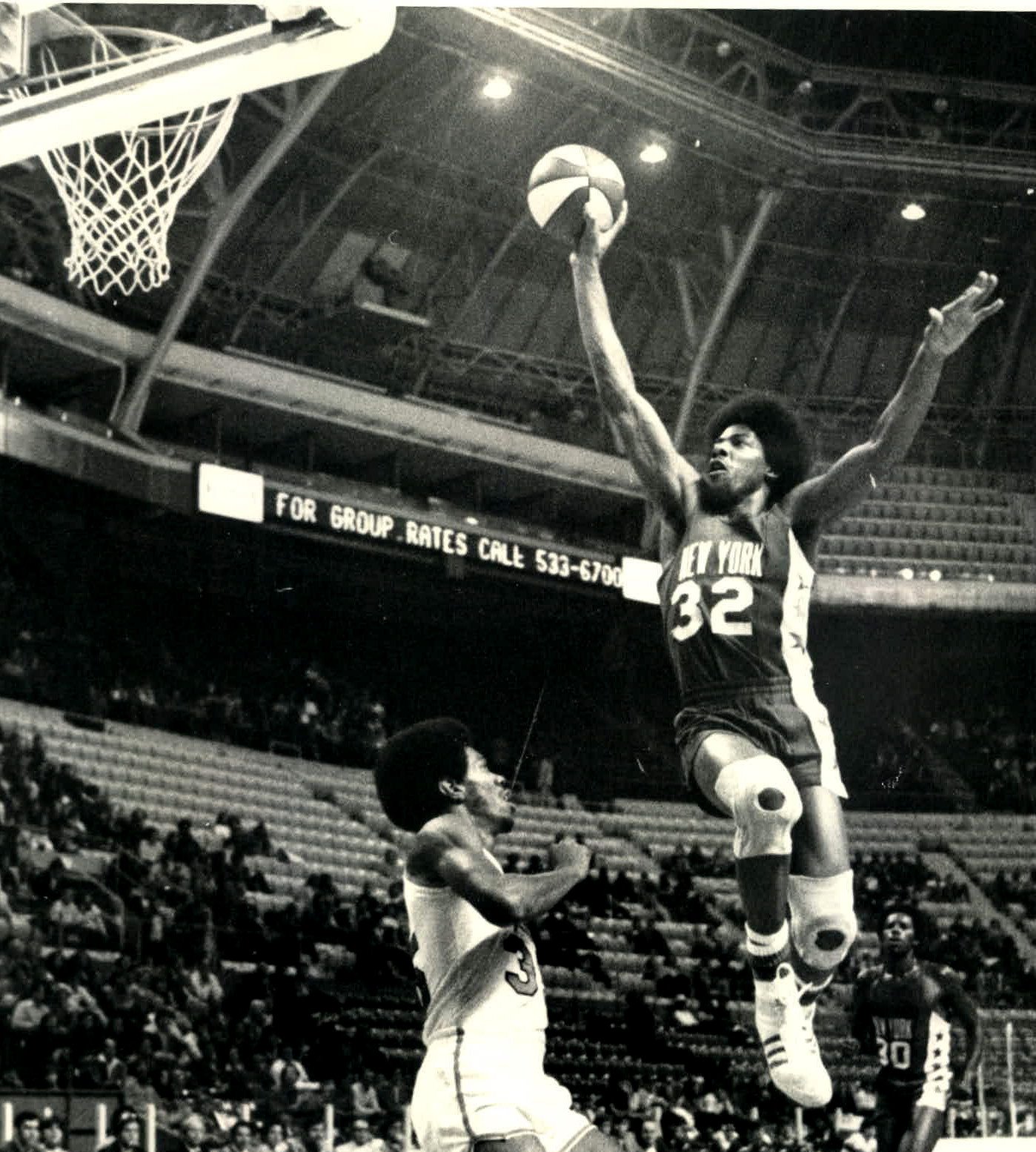
Julius Erving scored 63 points and collected 23 rebounds in San Diego on February 14, 1975. His New York Nets still lost. Four overtimes had turned an ordinary regular-season date into a 176–166 game, and even the largest scoring total among the ABA’s documented 50-point, 20-rebound performances could not settle it.
Five documented ABA games meet both thresholds, spread among five players from 1969 through 1975. Their stories intersect: Freddie Lewis played alongside Mel Daniels, George McGinnis and Marvin Barnes in three of the five games. Daniels later appeared on the other side when Barnes reached the same thresholds.
Here is each performance in chronological order, with the team’s record entering the game and the player’s final regular-season averages. All season averages below describe the completed regular season; they are not averages through the date of the game.
| Player and Date | Season | PTS / REB | Team Entering | Result |
|---|---|---|---|---|
| Mel Daniels, March 18, 1969 | 1968–69 | 56 / 31 | Indiana 40–32 | Indiana 143, New York 114 |
| Spencer Haywood, April 15, 1970 | 1969–70 | 59 / 25 | Denver 50–33 | Denver 152, Los Angeles 116 |
| George McGinnis, January 12, 1974 | 1973–74 | 52 / 37 | Indiana 23–20 | Indiana 124, Carolina 105 |
| Julius Erving, February 14, 1975 | 1974–75 | 63 / 23 | New York 40–14 | San Diego 176, New York 166, 4 OT |
| Marvin Barnes, March 16, 1975 | 1974–75 | 54 / 23 | St. Louis 26–48 | St. Louis 122, Memphis 114, OT |
All five were regular-season games in the original American Basketball Association. “50/20” means at least 50 points and at least 20 rebounds. The available record contains an unresolved rebound total discussed below.
Mel Daniels: 56 Points, 31 Rebounds Against the Nets
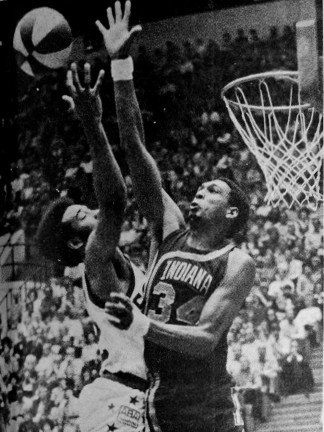
Daniels was the 6-foot-9 center Indiana acquired after his Rookie of the Year season with Minnesota. The former New Mexico star became the interior foundation of the Pacers’ three ABA championship teams. In March 1969, however, Indiana was still pursuing its first trip to the Finals.
The Pacers entered March 18 at 40–32, having won nine straight. They had been 31–32 before the streak. Daniels’ 56 points and 31 rebounds against the New York Nets extended the run to 10 victories in a 143–114 home win.
The Pacers’ media guide preserves the extraordinary split: 37 points and 26 rebounds came in the second half. He made 25 field goals in the game. The box score lists 25 makes in 38 attempts, with six free throws accounting for the rest of his scoring.
This was a team with other major offensive options. Roger Brown finished the season at 21.0 points per game, Freddie Lewis at 20.3 and Bob Netolicky at 18.9. Lewis supplied 22 points and eight assists that night. Daniels finished the season averaging 24.0 points and 16.5 rebounds in 76 games and won the ABA’s Most Valuable Player award.
Indiana finished 44–34, first in the Eastern Division, and reached the Finals before losing to Oakland in five games. Daniels’ performance came during the late surge that carried a .500 team into that postseason.
Spencer Haywood: A 59-Point Rookie Season Finale
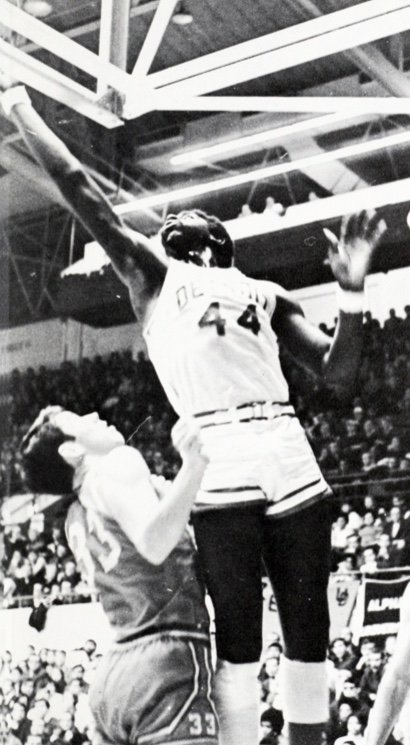
Haywood arrived in Denver after starring at the University of Detroit and helping the United States win the 1968 Olympic gold medal. His one ABA season produced both Rookie of the Year and Most Valuable Player honors. He led the league in scoring and rebounding while playing all 84 regular-season games.
The Denver team was still called the Rockets when it hosted the Los Angeles Stars on April 15, 1970. Denver entered the regular-season finale 50–33. Haywood supplied 59 points and 25 rebounds in a 152–116 victory, a performance documented by Colorado Sports Hall of Fame historian Dave Plati. The 59 points established the ABA scoring record at the time.
Haywood’s completed season averages were 30.0 points, 19.5 rebounds and 2.3 assists. He shot 49.3 percent from the field and averaged 45.3 minutes. Larry Jones, another major scorer, averaged 24.9 points and 5.7 assists; Byron Beck, Lonnie Wright and Jeff Congdon were also part of the Rockets’ rotation.
Denver’s final 51–33 record topped the Western Division. The Rockets had opened the season 0–7 and changed coaches, with Joe Belmont replacing John McLendon. They beat Washington in seven games in the opening playoff round, then lost the division finals to the same Los Angeles franchise Haywood had overwhelmed in the finale.
George McGinnis: 52 Points and 37 Rebounds on His Third Straight Night
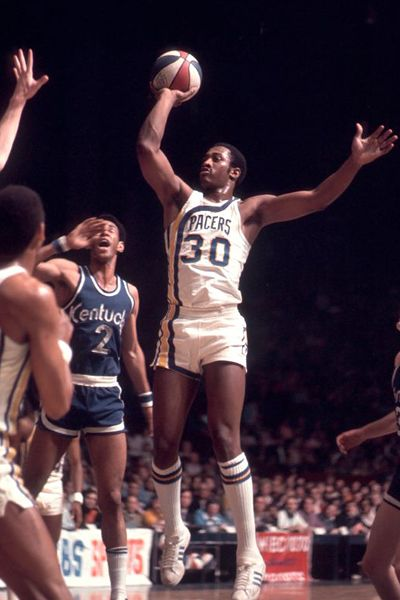
McGinnis, the powerful 6-foot-8 Indiana forward, was in his third professional season. He had already helped the Pacers win the 1972 and 1973 championships. His January 12, 1974, game against Carolina came within a particularly crowded stretch of Indiana’s attempt to win a third consecutive title.
Indiana had lost to San Diego on January 10 and at New York on January 11. The Pacers returned home at 23–20 and beat the Cougars 124–105. McGinnis played all 48 minutes, scored 52 points and took 37 rebounds, still listed in the franchise’s ABA records.
The box score separates those rebounds into 16 offensive and 21 defensive. McGinnis made 19 of 33 field-goal attempts and 14 of 22 free throws. He collected 37 of Indiana’s 68 listed rebounds. Bob Netolicky added 20 points and 10 rebounds, while Freddie Lewis scored 12 and Roger Brown contributed 11 points and seven assists.
McGinnis finished the season with averages of 25.9 points, 15.0 rebounds and 3.3 assists in 80 games. Indiana’s other established pieces included Daniels, Brown, Lewis, Netolicky, Donnie Freeman, Don Buse and Bill Keller, several holdovers from its title teams.
The schedule gave the Pacers no recovery day. They played in San Diego on January 13 and lost 141–130. Indiana eventually finished 46–38, beat San Antonio in seven playoff games and lost another seven-game series to Utah in the Western Division finals.
Julius Erving: 63 and 23 in a Four-Overtime Defeat
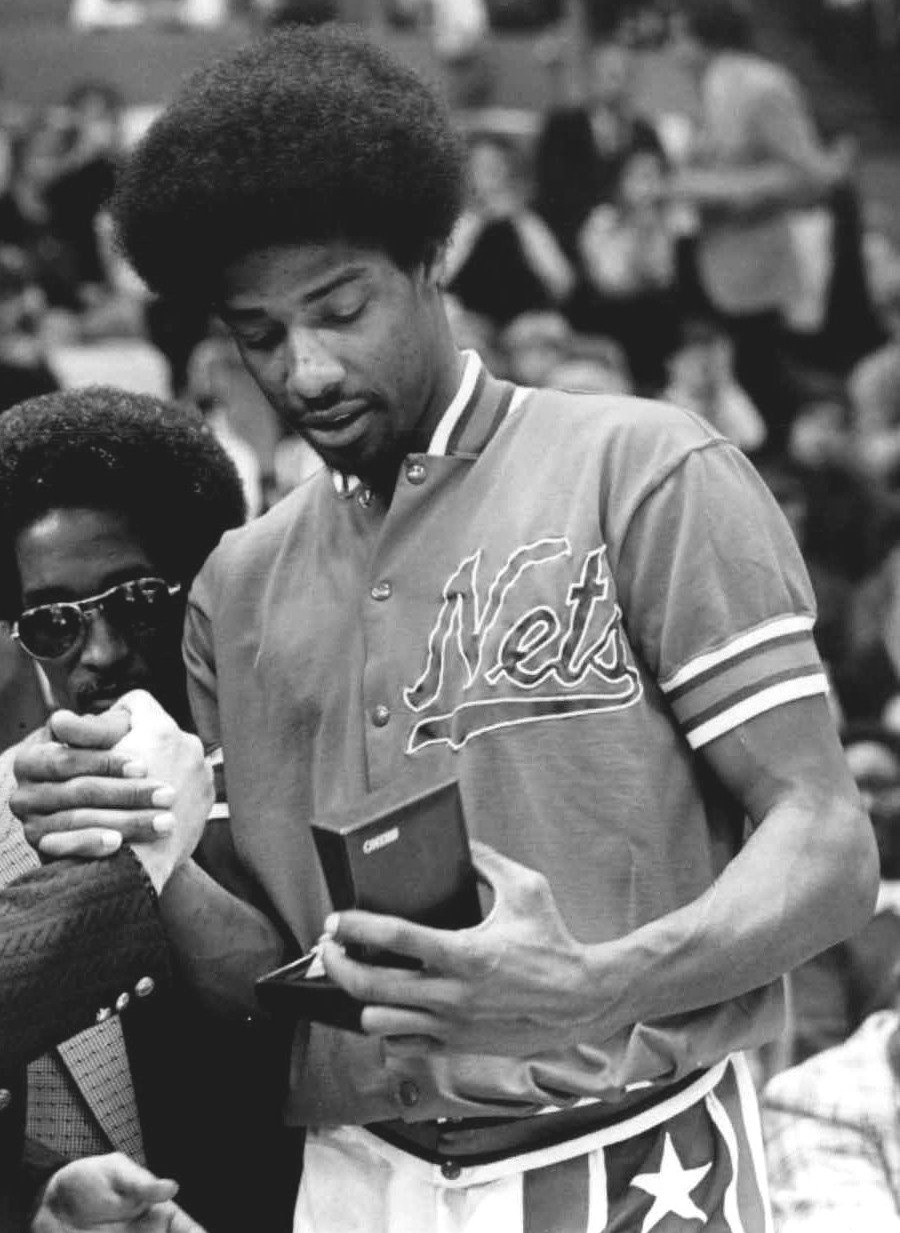
Erving was the reigning ABA Most Valuable Player and the leading player on its defending champion. His Nets arrived in San Diego on February 14, 1975, at 40–14. The Conquistadors turned that visit into the lone defeat among the five documented 50/20 performances.
In a 176–166 game that lasted four overtimes, Erving played 66 of a possible 68 minutes. He scored 63 points and collected 23 rebounds, adding eight assists, two steals and two blocks. He made 25 of 51 shots and 13 of 19 free throws. His five 3-point attempts all missed.
The four extra periods added 20 minutes to regulation, and the teams combined for 342 points. Erving’s 63 points and 23 rebounds came within a 68-minute game, a different amount of playing time from the regulation performances by Daniels, Haywood and McGinnis.
New York’s supporting cast included Larry Kenon, who finished that season at 18.7 points and 10.7 rebounds, and Billy Paultz, at 15.8 and 9.7. Brian Taylor and John Williamson were also important scorers, with veteran Bill Melchionni among the guards. Erving’s final regular-season line was 27.9 points, 10.9 rebounds and 5.5 assists in all 84 games.
The Nets finished 58–26, tied with Kentucky atop the Eastern Division before losing the first-place tiebreaker. Their championship defense ended in a five-game opening-round loss to the Spirits of St. Louis, the team on which the next player on this list was already making his own history.
Marvin Barnes: 54 and 23 Before the Spirits’ Playoff Upset
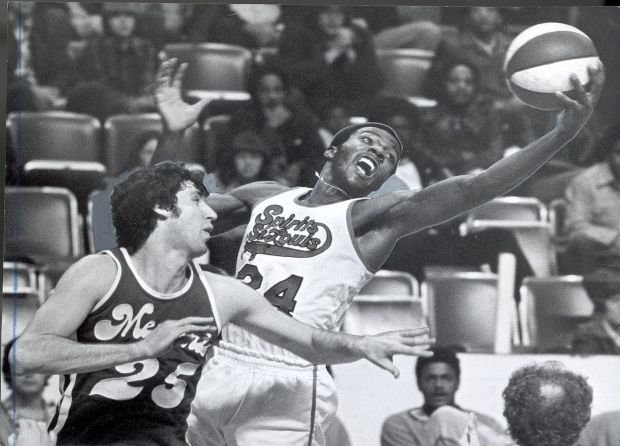
Barnes had helped Providence reach the 1973 Final Four and led the NCAA in rebounding the following season. Philadelphia selected him second overall in the 1974 NBA draft, but he signed with the ABA’s Spirits of St. Louis. He was still a rookie when Memphis visited on March 16, 1975.
The Spirits entered at 26–48. Barnes made 25 of 34 shots, scored 54 points and grabbed 23 rebounds in a 122–114 overtime win. He played all 53 minutes. Freddie Lewis, who had been beside Daniels and McGinnis in Indiana, played the same number of minutes and contributed 27 points, six rebounds and 12 assists.
Gus Gerard added 21 points and 12 rebounds, and Jimmy Foster had 13 assists. The roster also included rookie Maurice Lucas. On the other side was Daniels himself: Memphis’ box score credits the first player on this list with 10 points and 13 rebounds in 29 minutes.
Barnes finished his Rookie of the Year season averaging 24.0 points, 15.6 rebounds and 3.2 assists in 77 games. Lewis averaged 22.6 points, Gerard 15.7 and Lucas 13.2. St. Louis finished 32–52, a record that made its next achievement especially striking.
The Spirits beat the 58-win Nets four games to one in the opening playoff round before losing to Kentucky in five. Barnes’ March performance belonged to a losing regular-season team that was a few weeks away from ending the defending champion’s season.
Rick Barry scored 53 points for New York against Pittsburgh on January 15, 1971, but his rebound total is unavailable. That game cannot be confirmed as a 50-point, 20-rebound performance.