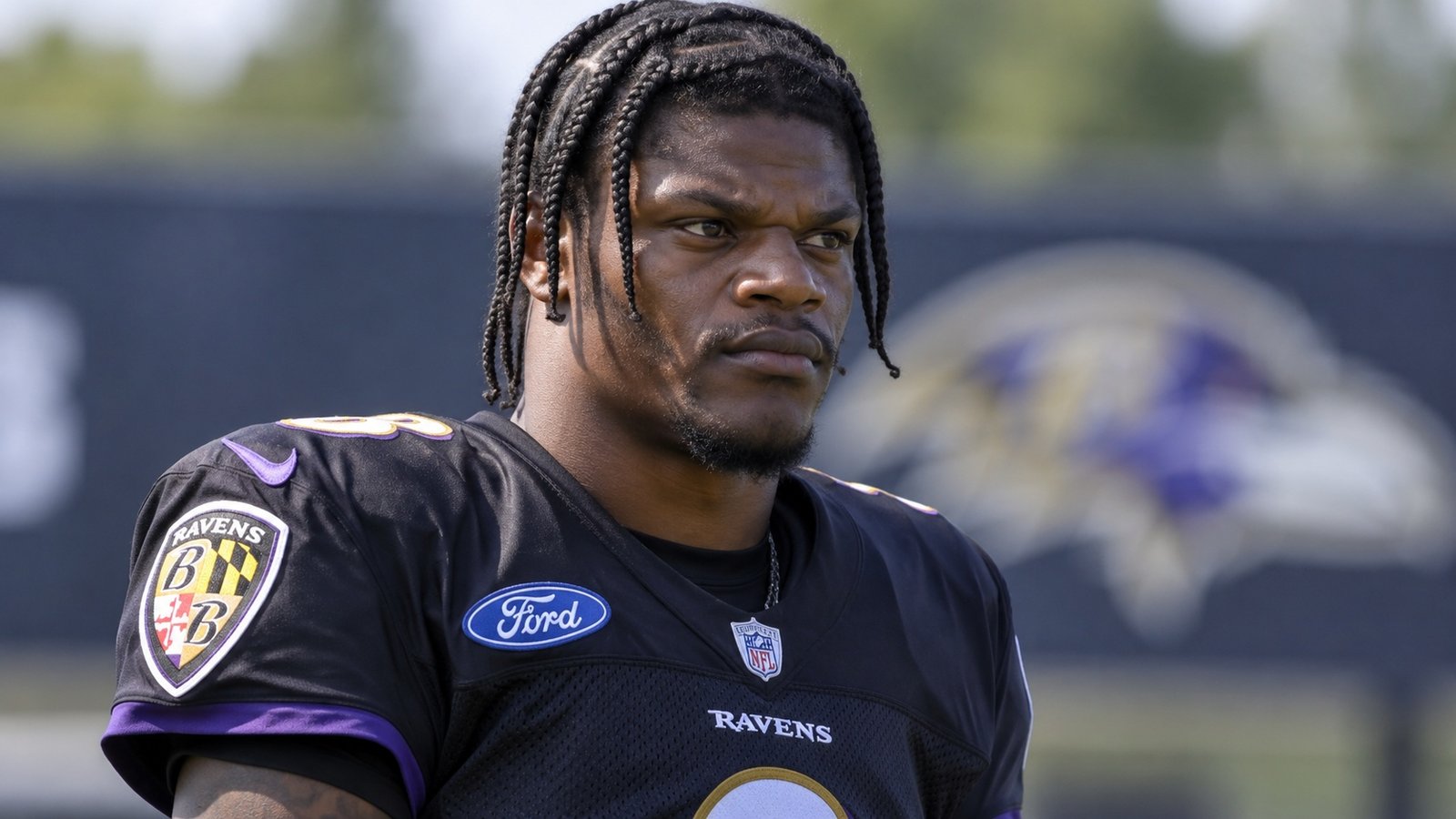
Lamar Jackson is prepared to put his contract aside once Baltimore’s season begins. That should not be portrayed as reluctance or stubbornness. In my view, it is exactly how a franchise player should conduct himself.
When Lamar Jackson takes the field for Baltimore against Indianapolis, his contract should no longer be part of his working day.
The Ravens had an offseason to negotiate with him. Jackson had an offseason to negotiate with them. They did not reach an agreement. Now they play football.
There is something professional about Jackson drawing that line. Once the season begins, his attention belongs to the Ravens locker room, the coaching staff preparing each week and the games Baltimore is paying him to win.
I consider that a class act.
This is not unusual for a star player
Albert Pujols did essentially the same thing before the 2011 baseball season. Unable to reach an extension with St. Louis before his self-imposed deadline, Pujols suspended negotiations because he did not want his contract becoming a distraction. He played the season, helped the Cardinals win the World Series and dealt with his future afterward.
Aaron Judge established an Opening Day deadline with the Yankees in 2022. New York made its offer, Judge declined it, negotiations stopped and Judge turned his attention to baseball. He then hit 62 home runs and won the American League MVP.
Jackson does not even need those precedents to justify his approach. He already used essentially the same boundary himself.
In September 2022, while negotiating the contract that eventually became his current deal, Jackson set Week 1 as his deadline. When the Ravens and Jackson failed to reach an agreement, Baltimore announced that negotiations would be put on hold until after the season. The organization publicly praised how Jackson had handled the process.
Four years later, there is no reason that standard should suddenly be considered unreasonable.
The deadline is part of the negotiation
There has been an attempt to separate Jackson’s decision from negotiating strategy, as though refusing to negotiate once the season begins somehow exists outside the business process.
Of course the deadline affects the negotiation.
That does not mean Jackson is bluffing. He can sincerely believe that contract discussions should stop once football begins while understanding that a deadline changes the leverage of both parties.
Baltimore knew how much time it had. If the Ravens wanted certainty before Week 1, their opportunity existed before Week 1. Jackson is not required to keep the window open indefinitely because Baltimore would find that convenient.
He is not holding out. He is not refusing to practice. He is not threatening to miss games. He is preparing to play quarterback under the contract he already signed.
There is a major difference between refusing to honor an agreement and refusing to sign another one.
“Highest paid” does not tell us the whole deal
We keep hearing that Baltimore is prepared to make Jackson the highest-paid quarterback in football. That sounds impressive, but an annual salary number is only one part of an NFL contract.
Jackson’s current five-year agreement was worth $260 million when he signed it in 2023. The deal included $185 million in guarantees, with $135 million fully guaranteed at signing. It also includes a no-trade clause and prevents Baltimore from using the franchise or transition tag on him when the contract expires.
Years matter. Guarantees matter. Contract structure matters. Control over a trade matters. The point at which Jackson can return to the market matters.
If Baltimore offers $70 million per season, that creates a headline. It still does not tell us how many years Jackson is being asked to commit, how much money is protected or what control he gives up by signing.
We do not know Jackson’s exact demands, and he has chosen not to negotiate through the media. That means we also should not pretend Baltimore has already offered him everything he could reasonably want simply because the phrase “highest paid” is attached to the offer.
Baltimore should understand where the leverage sits
Jackson is under contract through the 2027 season, when his scheduled cap charge rises to roughly $84.3 million under the existing structure. Baltimore has obvious reasons to want another agreement. It wants long-term certainty at quarterback and a contract structure that gives the front office more flexibility.
Jackson has reasons to wait until he likes the agreement.
The Ravens also should not approach this as though Jackson is lucky simply to remain part of a model organization. Baltimore has done plenty well, but its reputation has sometimes been better than its results.
Jackson became the starter in 2018 with the Ravens sitting at 4-5. Baltimore went 6-1 the rest of the regular season and won the division. Since then, Jackson has become the central figure around which the franchise operates.
The late-game failures of the John Harbaugh era also cannot simply be assigned to the quarterback. When Baltimore fired Harbaugh after the 2025 season, NFL Research noted that the Ravens had blown 46 fourth-quarter leads since 2008, tied for the second-most in the league during that span.
Jackson certainly owns his postseason mistakes. But he did not make every defensive call, manage every late-game possession or build every roster. Baltimore’s failures cannot automatically become Lamar Jackson’s failures because quarterbacks receive the most attention.
Now Lamar gets to evaluate Baltimore too
Jesse Minter is now Baltimore’s head coach. The Ravens have made changes around Jackson, but their receiving group remains worth watching.
Baltimore’s official Week 1 depth chart lists Zay Flowers and Rashod Bateman as the starting wide receivers, with Devontez Walker, Ja’Kobi Lane and Elijah Sarratt among the depth behind them. The Ravens added young receivers, but they did not make a major veteran acquisition that automatically transforms Jackson’s passing environment.
Jackson now gets to see what this version of the Ravens actually is before deciding whether to commit more years of his career to it.
That is leverage, but it is also common sense.
A class way to handle the business
There is risk in waiting. Jackson knows football players can get injured and seasons can change quickly.
He also knows there are very few people capable of doing what he does for an NFL offense. Baltimore knows it too.
That is why I do not see Jackson’s decision to shut down contract discussions as selfish or difficult. I see a player separating business from football and refusing to make his personal negotiation a weekly storyline for his teammates.
Business before the season. Football during it. Contract discussions afterward.
That is a class way to handle the situation, and it sets a good example.
The Ravens had their negotiating window. Jackson is now going to play football.
When that window opens again, Baltimore should be very careful about assuming Lamar Jackson will have less leverage than he does today.