
 Business
Scores

Ferenc Puskás joined Real Madrid in 1958 after making his reputation in Hungary. He was 31 and entering a forward line that already had Alfredo Di Stéfano and Francisco Gento. The move led to a second championship career. Its most enduring match came at Hampden Park, where Puskás scored four goals in the 1960 European Cup final and shared all seven Madrid goals with Di Stéfano.
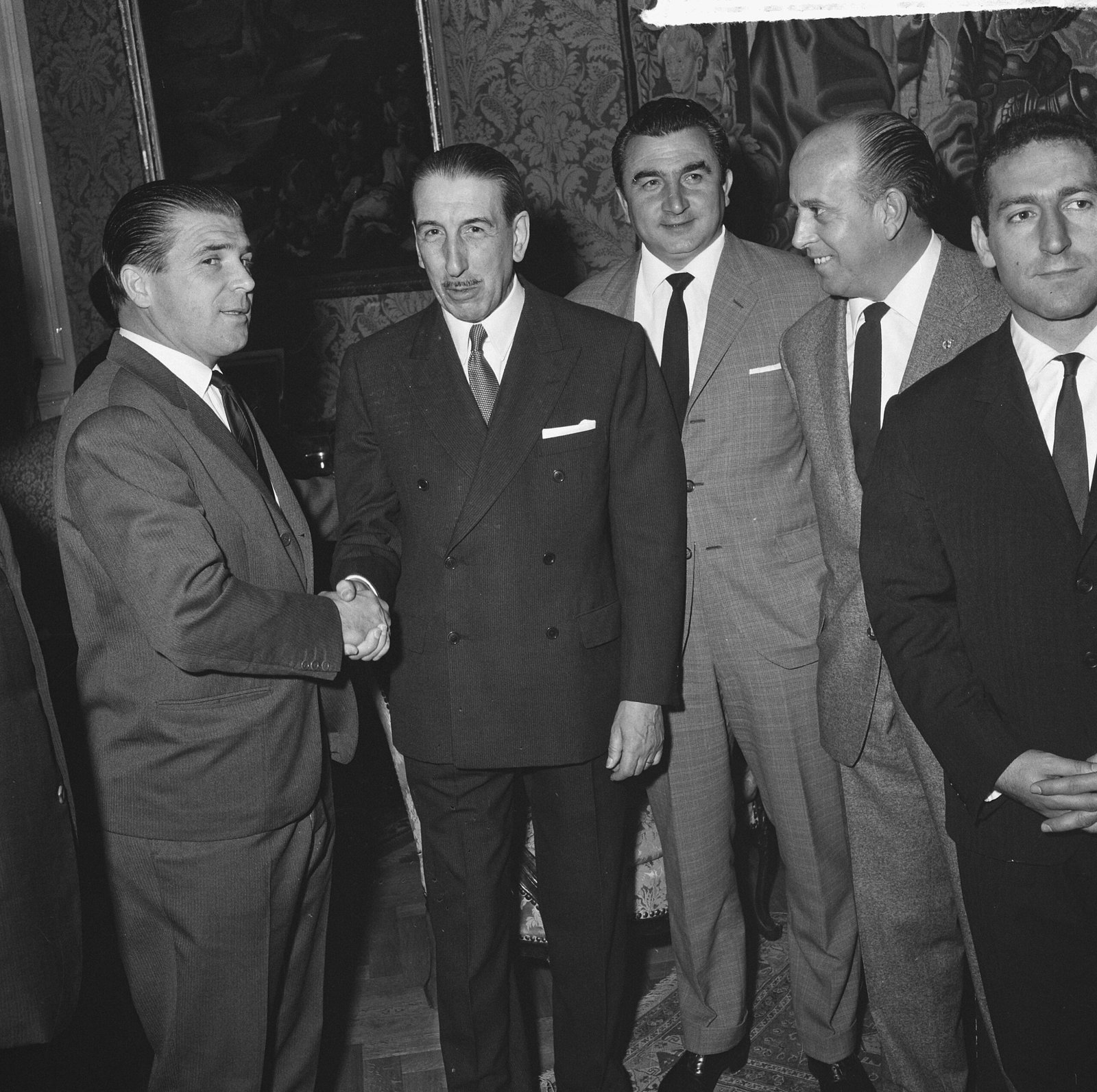
Real Madrid marked the 20th anniversary of Puskás’ death on Nov. 17. Its tribute recalled his five Spanish league titles and three European Cups with the club. The game in Glasgow shows why a striker known to a later generation through FIFA’s annual goal award also mattered to a team chasing a fifth consecutive European title.
Barcelona stood between Madrid and the final
Barcelona reached the 1960 semifinal with a side coached by Helenio Herrera and featuring three Hungarian forwards in László Kubala, Sándor Kocsis and Zoltán Czibor. Barcelona had beaten Milan 7–1 on aggregate and put nine goals past Wolverhampton Wanderers over two games. Madrid earned the first-leg advantage on home ground when Di Stéfano scored twice and Puskás added the other in a 3–1 win. Madrid won by the same score in Barcelona.
The final put Madrid across from Eintracht Frankfurt, which scored 12 goals over two semifinal legs against Rangers. Frankfurt also scored first at Hampden on May 18. Richard Kress put the German side ahead in the 18th minute in front of 127,621 spectators, which UEFA lists as the record crowd for a European Cup final.
The goal before halftime changed the scoreline
Di Stéfano scored in the 27th and 30th minutes to put Madrid ahead. Puskás made it 3–1 in first-half stoppage time. Madrid went into halftime having scored three unanswered goals, and Frankfurt’s next goal came after Puskás had added three more of his own. Madrid won 7–3. Di Stéfano completed his hat trick and Puskás set a record for goals by one player in the final that Real Madrid says still stands.
Puskás had contributed to the semifinal against Barcelona, but the final showed how well the two scorers fit within the same lineup. Di Stéfano supplied the quick response after Madrid fell behind. Puskás widened the lead before the break and then scored the first three Madrid goals of the second half. Their goals gave Madrid room to absorb two more from Frankfurt without giving up control of the match.
A second title run after Hungary
Before going to Spain, Puskás won five Hungarian league titles with Budapest Honvéd. He captained Hungary’s national team in the 1950s. In Madrid he made himself indispensable to another team, at an age by which he had already accumulated a domestic title record. Real Madrid credits him with 242 goals in 262 matches for the club. He was the Spanish league’s leading scorer four times, according to UEFA.
Hungary won Olympic gold in 1952 and beat England 6–3 at Wembley the following year. The national team then lost the 1954 World Cup final 3–2 to West Germany. UEFA credits Puskás with 84 goals in 85 full internationals for Hungary. He left after Soviet forces suppressed the Hungarian uprising in 1956, then played four internationals for Spain. His success in Madrid was a new chapter after a move shaped by events in Hungary.
FIFA created the Puskás Award in 2009 to honor the best goal of the year. At Hampden, his four finishes came in one final. They helped Madrid do what no other club has matched in the competition, winning five European Cups in a row.
