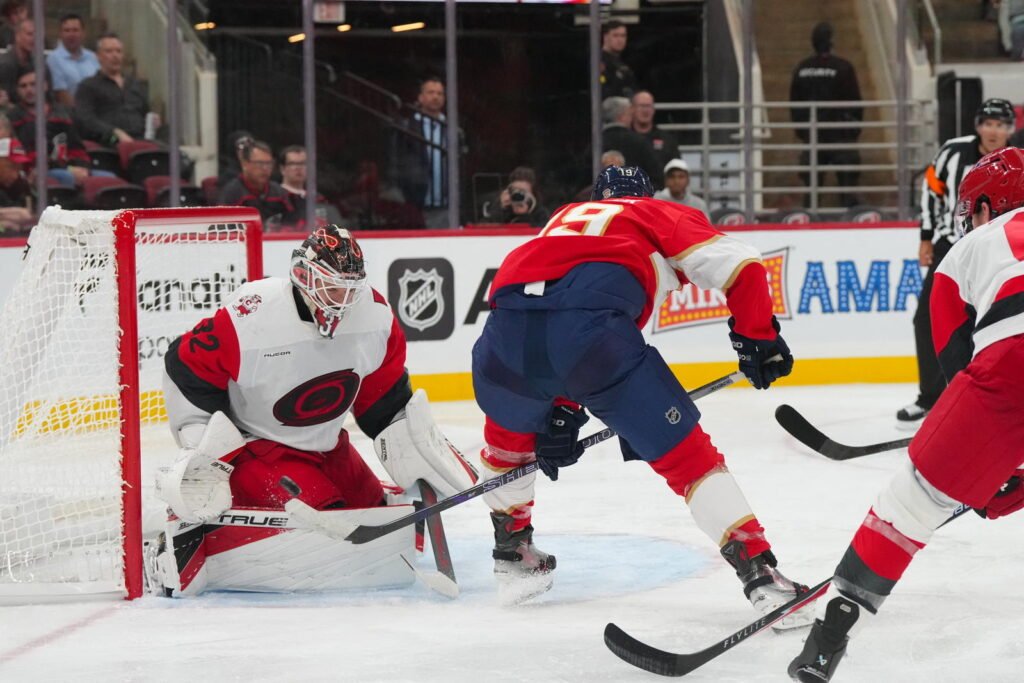
Ron MacLean will still be there when Sportsnet’s Saturday hockey coverage begins on October 3. Elliotte Friedman and Kevin Bieksa are returning, with Colby Armstrong joining them on the panel. The familiar faces will introduce a broadcast with a different name: Saturday Night Hockey. CBC will no longer be carrying the games.
For viewers who have spent their Saturdays with Hockey Night in Canada, the change is more than a new title on the television screen. A free over-the-air broadcast is disappearing, while access to other national games depends on which subscription a household already has and which additional service it is prepared to buy.
Rogers has a substantial expansion of its hockey coverage to promote. That does not oblige viewers to regard every part of the new arrangement as an improvement. The number of games available matters, but so does the answer to a simpler question: can people watch the hockey they want through the services they already pay for?
More games, with a different cost of admission
In its September 9 announcement, Sportsnet said its national schedule would exceed 550 games, a 35 per cent increase, with 150 regional blackouts lifted. Those are meaningful additions for fans who have been unable to watch particular games because of where they live.
They are not, however, a promise that every NHL game will be available through an ordinary Sportsnet television subscription. National rights, regional broadcasts and streaming-exclusive games remain different products. Lifting 150 blackouts is not the same as abolishing blackouts.
Monday Night Hockey returns on October 5 as a Sportsnet+ exclusive. A direct Sportsnet+ subscription includes that programming. Having the Sportsnet channels in a television package is a different arrangement and does not automatically provide the same access.
For eligible customers of participating television providers, the streaming add-on costs C$12.99 a month, plus tax, on top of their existing Sportsnet television subscription. It goes on sale September 15 and includes Monday Night Hockey and more than 100 additional matchups between U.S. teams. It is not a stand-alone replacement for the underlying television subscription.
There is a provider-specific exemption: Rogers, Rogers West and Shaw Direct customers whose television packages include Sportsnet receive the exclusive content without that add-on charge. Rogers also says Xfinity TV customers will receive three additional digital channels, beginning September 29, carrying the exclusive programming without having to take further action.
The distinction matters because two households already paying for Sportsnet can face different bills for the same Monday games. For a television subscriber outside that exemption, adding Monday coverage means paying again for hockey associated with a network already on the household’s bill.
Wednesday introduces another subscription boundary. Under Rogers’ 12-year agreement with Prime Video, the national Wednesday package belongs exclusively to Prime in Canada, in English and French. Prime also receives two first-round Stanley Cup playoff series and one second-round series each year.
Prime’s first Wednesday broadcast is September 30, when the New York Islanders visit Toronto, with coverage beginning at 7 p.m. Eastern. The games carry no additional charge for existing Prime members. That does not mean they are included with Sportsnet; a household without Prime still needs access to that separate service.
A household’s extra costs therefore depend on its existing subscriptions. A direct Sportsnet+ customer does not need the television-provider add-on. An eligible television customer outside the exemption may need it to add Monday coverage, as well as Prime for Wednesday coverage. A viewer following every game of a particular team also has to account for regional rights. These are different routes through a divided schedule, not interchangeable subscriptions.
What disappears with CBC
The June 16 joint statement from Sportsnet and CBC announced the end of their 12-year partnership. It described CBC’s new sports programming strategy and acknowledged the place Saturday hockey occupies in Canadian life: “Watching hockey on Saturday night is a time-honoured tradition for Canadians.”
The practical loss is the CBC option itself. Viewers who received the public broadcaster with an antenna could watch its Saturday games without purchasing a sports-channel package or a streaming subscription. That was not free access to the entire NHL season, but it was a regular, nationally familiar way into it.
CBC retains the Hockey Night in Canada trademark; Rogers holds the national NHL rights. HNIC’s television history dates to 1952. Its identity and the rights to the games are distinct assets, even though viewers experienced them together.
That distinction explains why Rogers cannot simply regard the name as its own. It does not answer whether continued use was discussed, or why an agreement preserving it did not emerge. The public announcement leaves those questions unanswered.
The attachment to HNIC should not be dismissed as resistance to any change. Someone can welcome fewer blackouts while objecting to the loss of the broadcast they knew. A larger schedule does not replace the experience of finding hockey in the same place each Saturday, without having to reconsider the household’s subscriptions.
Rogers’ interests extend beyond the screen
The company reorganizing those broadcasts also owns a controlling interest in the Toronto Maple Leafs. In July 2025, Rogers completed its C$4.7-billion purchase of BCE’s 37.5 per cent stake in Maple Leaf Sports & Entertainment, increasing its holding to 75 per cent.
On July 6, 2026, Rogers announced an agreement to buy the remaining 25 per cent from Kilmer Sports for C$4.35 billion. Rogers said the transaction required league approvals and was expected to close in the fourth quarter. Completing it would give the company full ownership of MLSE.
Rogers already owns Sportsnet and the Toronto Blue Jays. Its C$11-billion national NHL media-rights agreement covers 12 seasons, beginning in 2026-27 and running through 2037-38. Its role encompasses team ownership and the distribution of the games, as well as the television and connectivity services sold to many viewers.
This is an explicit business strategy, not a hidden motive that needs to be guessed at. In the July 6 announcement, chief executive Tony Staffieri described the combination of sports assets and the connectivity business as “a unique value proposition to compete in a very crowded marketplace”. The advantage for Rogers customers in the new viewing arrangements fits that strategy.
The question for a hockey audience is whether the strategy improves its experience, rather than only the company’s ability to sell a bundle. Ownership and investment do not settle that question in either direction. The answer has to account for the games a particular viewer can receive and the actual price of receiving them.
Hrudey was part of the tradition
At The Sporting Page, we are fans of Kelly Hrudey, and we will miss seeing him on Saturday nights. Viewers who grew up with him on Hockey Night in Canada are losing more than one name from a studio lineup. They are losing a familiar part of how they followed the game.
After retiring as a player in 1998, Hrudey moved into full-time broadcasting, a career that has now spanned 28 years. In his August announcement, he said he had been told on June 19 that Sportsnet would not renew his contract. He also made clear that he was not announcing his retirement.
In the video reported by The Canadian Press, he thanked the people watching: “I thank you, the viewer. You might have hated me or loved me. I’m OK with either.” For our part, the appreciation goes the other way. His work helped make a national broadcast feel familiar, and that connection deserves recognition as Sportsnet moves on without him.
The attachment to Hockey Night in Canada extends beyond the name. It includes the broadcasters who gave viewers a reason to stay through an intermission rather than leave until the next period. HNIC was a staple, and Hrudey had become one himself.
The measure is the viewing experience
Sportsnet’s season begins September 29, followed by Prime’s Wednesday debut the next night. Saturday Night Hockey arrives October 3, with Monday’s streaming-exclusive coverage starting October 5. The new viewing arrangements will soon be something audiences encounter in practice, rather than just read about in an announcement.
More national games and fewer blackouts are additions worth recognizing. So are the losses worth examining, particularly for viewers whose regular Saturday broadcast was available on CBC and whose existing television package no longer answers all their hockey needs.
Rogers can point to the size of the new schedule. Viewers are entitled to judge whether the access they gain is worth the additional cost, and what the new arrangement leaves behind.