Analysis
Shannon Sharpe was talking about the people viewers do not see.
On Nightcap, he described agents refusing to let their clients appear on the program. He said the show had reached out and been turned down following a discussion he and Chad “Ochocinco” Johnson had the previous year. Later, he said some players wanted to appear. Nightcap, beginning at 30:00
Sharpe was offering his audience something useful: a firsthand account of the work and friction behind a guest booking. Viewers see the host, the guest and the conversation. They rarely see the invitations, representatives and decisions that determine whether that conversation happens.
His perspective matters because he operates inside that process. By describing it publicly, he gave viewers a reason to look beyond the personalities on their screens and examine the business arranging access to them.
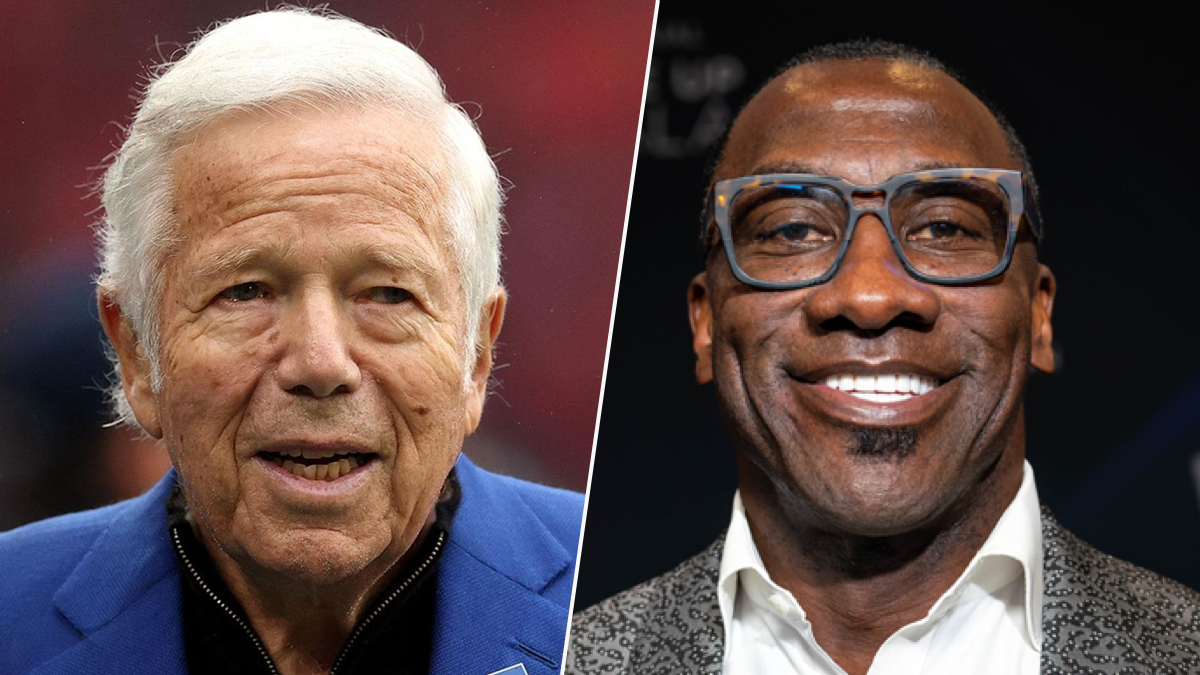
During the discussion, Sharpe brought up Macklemore’s removal from Ed Sheeran’s tour. That dispute supplies a documented example of how control within the sports business can reach a music audience. Robert Kraft acknowledged excluding the rapper from Gillette Stadium. The tour promoter confirmed that venues would not permit concerts with Macklemore on the lineup. ESPN
Kraft’s statement concerns the concerts, not Nightcap’s bookings. What connects the subjects is the power to control access, exercised through different parts of an entertainment business whose boundaries are much less distinct than they appear to fans.
The stadium changes its show, not its ownership
The Kraft Group describes its operations as sports, entertainment and event management. They include Gillette Stadium, the Patriots and the New England Revolution, alongside a business hosting major musical acts and other events. Kraft Group
To a Patriots fan, the stadium represents a team and its history. To a concertgoer, it might represent a long-awaited evening with a favourite musician. The business operating the building can serve both audiences.
When the field becomes a stage, the ownership structure remains. Its influence can travel with the building from football into music.
That is the larger story. Sports belongs to the entertainment business, where franchises, venues and media rights are commercial assets. Music catalogs, film libraries and distribution rights take different forms, but their ownership also carries the ability to make decisions about how audiences encounter creative work.
The assets are the businesses, buildings and commercial rights surrounding the performance. Athletes and artists retain interests and choices of their own. Their work and the public’s attention help create the value, without necessarily giving either group the final say over how those assets are used.
Fans can feel they belong to a team, a scene or a musical movement. The businesses serving those attachments have their own interests. The tension becomes visible when an owner makes a decision that performers or audiences reject.
What the venue pressure established
Kraft cited Macklemore’s recent performances and what he described as a history of antisemitic rhetoric and imagery. He said the decision was not intended to diminish Palestinian suffering. Macklemore distinguished criticism of Israel from hostility toward Jewish people. ESPN’s account of their statements
Reporting Kraft’s explanation does not require accepting it as a sufficient justification for the exclusion. His description of the performance deserves scrutiny because his judgment carried consequences for somebody else’s work.
The promoter, Messina Touring Group, confirmed that multiple venues would not allow concerts with Macklemore on the bill. Sheeran said he had tried to resolve the dispute through discussions, including with Kraft, but the venues and promoter made the final decision. Macklemore separately said Sheeran told him Kraft rallied other owners; that specific account remains attributed to Macklemore. Boston Globe
The confirmed pressure already demonstrates substantial influence. A stadium owner does not need to run a record label to affect a musician’s opportunity to perform. Control of an essential venue can put that owner in a position to impose a condition on the show.
Political influence can operate through such business decisions. An exclusion changes whose views reach an audience. Whatever the owner’s rationale, the effect extends to the performer, the people working around them and the people who bought admission.
Sports, music and film share a business world
The overlap is also visible in representation. CAA describes a business spanning film, television, music and sports, with clients including actors, musicians, athletes, teams and leagues. It presents its ability to work across those fields as a benefit to clients. CAA
WME’s music business handles touring and opportunities beyond the stage. Its sports business includes representation, sponsorship, media rights and content. WME Music, WME Sports
These are examples of commercial overlap, not identifications of an agency involved in Sharpe’s account or Macklemore’s removal.
The overlap can help an athlete build a media career or a musician find opportunities beyond recording. It also means decisions about access can sit inside businesses whose relationships extend across several parts of entertainment.
Understanding that structure means examining each consequential decision: who made it, which asset or relationship gave them influence, and whose interests were affected?
Artists pushed back. Fans sought refunds.
Aaron Rowe, Beoga, Finneas and Lukas Graham announced withdrawals after Macklemore’s removal. Their roles differed: Beoga performed during Sheeran’s sets, while Finneas was scheduled for later South American dates. The response spread beyond a single opening slot. CBS/AP
Lukas Graham expressed the objection directly: “Money doesn’t give you the right to own the conversation.” CBS/AP’s reporting on the artists’ statements
Those performers exercised their own agency. Doing so meant leaving an opportunity rather than accepting the conditions surrounding it. That is a consequential choice to place before people whose work depends on performing.
Sheeran emphasized his responsibilities to fans and those relying on the tour for employment. His explanation shows how a venue condition can create pressure well beyond the excluded artist. Many people have a stake in a show continuing. Boston Globe
Ticket buyers also had to respond. On September 24, Massachusetts Attorney General Andrea Joy Campbell said nearly 200 consumers had contacted her office while struggling to obtain refunds following lineup changes at Gillette. Refund requests were subsequently allowed after her office intervened. CBS Boston
On September 25, the stadium announced a separate development: the concerts were canceled because of severe weather warnings, with automatic refunds for Ticketmaster purchasers. Weather and safety were the official reasons for cancellation. The earlier exclusion, withdrawals and refund dispute had already occurred. Gillette Stadium’s notice
The insight Sharpe brings
Sharpe’s account helps viewers examine a part of the industry that normally remains out of sight. A guest’s absence can look like a host’s choice or a player’s lack of interest. His explanation directs attention to the representatives and conversations in between.
He did not identify the agency or affected players in the segment, so those booking details remain his account. He nevertheless gives viewers an informed participant’s perspective on decisions usually made away from the microphone.
The Kraft dispute gives that question a concrete foundation elsewhere in entertainment. Venue pressure changed a lineup. Other performers chose to leave. Customers sought refunds. Those were consequences of decisions made around the performance, by people who were not the ones taking the stage.
Sports, music and film mean different things to their audiences. The businesses behind them can hold assets and relationships across all three. Popularity alone does not decide how that power is used.
Sharpe gives viewers a reason to look behind the finished show. Kraft’s acknowledged decision shows why they should. The people who own the places and rights through which entertainment reaches us deserve as much scrutiny as the people standing in front of the microphone.