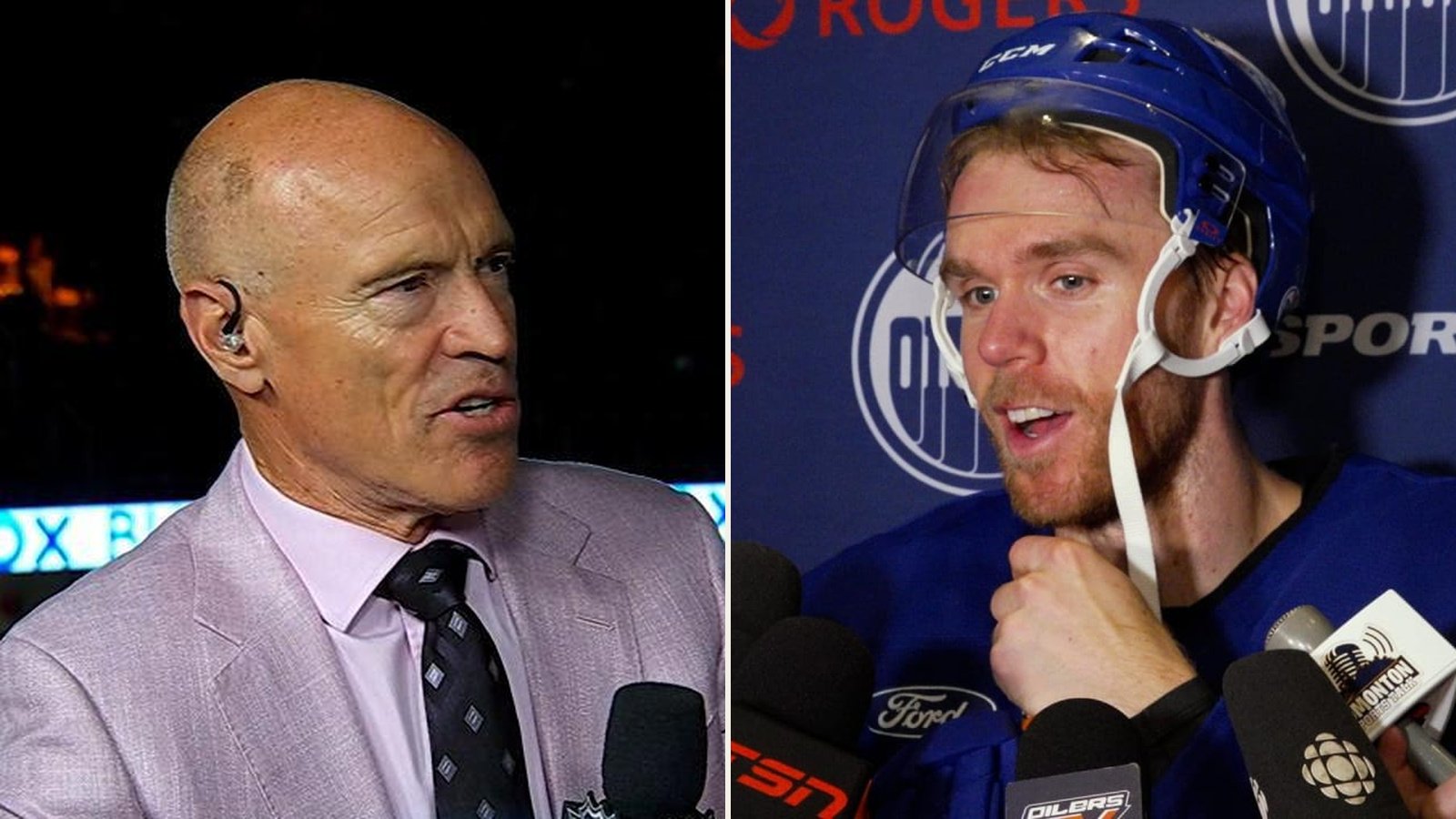
ESPN’s headline put Mark Messier’s reaction to Mike Babcock’s hiring at the centre of the story. His comments also condemn how the Edmonton Oilers share power between management and their senior players, including Connor McDavid.
That emphasis is an editorial choice. OilersNation’s headline explicitly addressed the players’ role. The difference matters because Messier explains why he believes Edmonton’s approach fails the players its leaders are supposed to protect.
“I agree with Ray the way that he was onboarded through the players interviewing him is absolutely something that I’ve never heard of before,” Messier said during ESPN’s September 23 media conference call. “I think there has to be a separation of powers on the structural level of any team.”
McDavid, Leon Draisaitl and Zach Hyman participated in discussions with Babcock before his appointment. Messier believes their involvement compromises the independence they need to represent teammates who might subsequently have a problem with the coach.
“The leadership of your team have to protect the players inside the dressing room,” he said. “How can you do that when you’re directly involved with the decisions they’re making at the management level and hiring of the management and coaches?”
Messier won five Stanley Cups with Edmonton, giving his assessment of dressing-room leadership particular weight. His concern is that a player seeking support could be approaching someone already invested in the appointment he needs to challenge.
“Because if they turn to the leadership, the leadership is management,” Messier said. “There’s no separation there.”
That criticism reaches the executives responsible for the process. Jeff Jackson oversees hockey operations, with Stan Bowman serving as general manager. Jackson was previously McDavid’s agent, representing the captain’s interests before taking authority over his team.
Reporting on Jackson’s 2023 appointment identifies owner Daryl Katz and Paul Coffey as initiating the approach. McDavid encouraged Jackson to pursue the opportunity and supported the move. Our view is that their relationship helped position Jackson for the job. The documented sequence establishes McDavid’s support for an approach initiated by ownership.
We understand Messier’s criticism without necessarily opposing Edmonton’s approach. The Oilers are, in our view, effectively held hostage by their dependence on McDavid. His importance gives him influence that an organizational chart cannot erase, and management has to consider the cost of alienating him.
What are the Oilers supposed to do? Expecting them to make consequential decisions without considering McDavid’s confidence in the team ignores their circumstances. Involving the senior players may be a necessary accommodation, even if it creates the conflict Messier describes. Jackson and Bowman remain responsible for managing that conflict.
We also believe Babcock could be good for this group. These players may benefit from an old-school coach willing to confront them and demand more. Their influence over the organization should not exempt them from criticism of their performances, and endorsing Babcock should mean accepting his demands when they become uncomfortable.
The Oilers’ dependence on McDavid is central to that argument, and coverage focused on Babcock alone leaves too much of it unexplored.