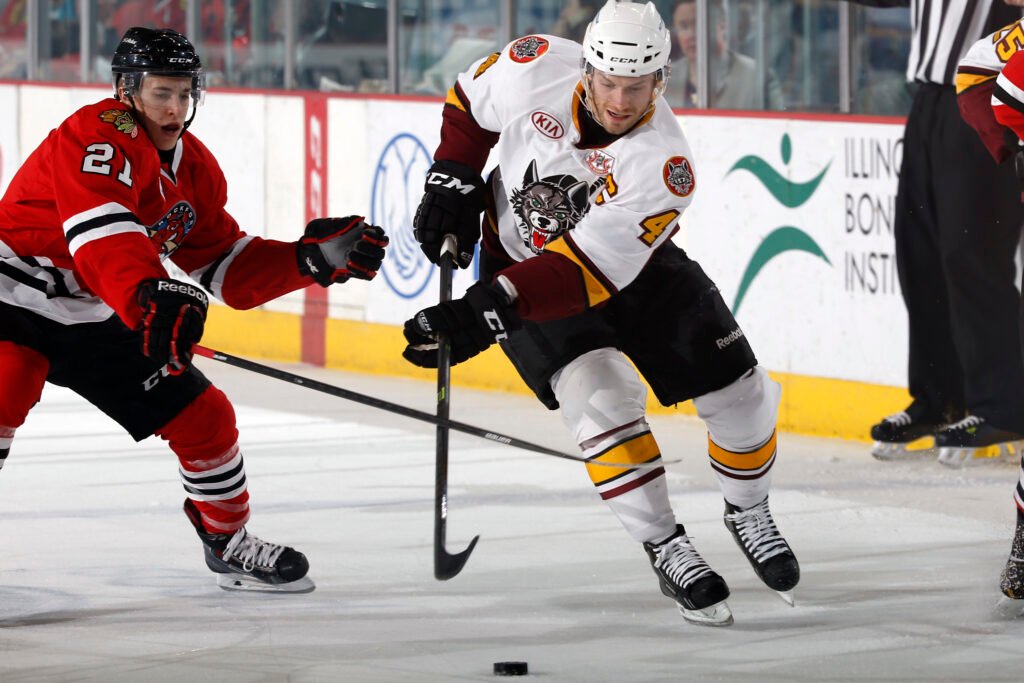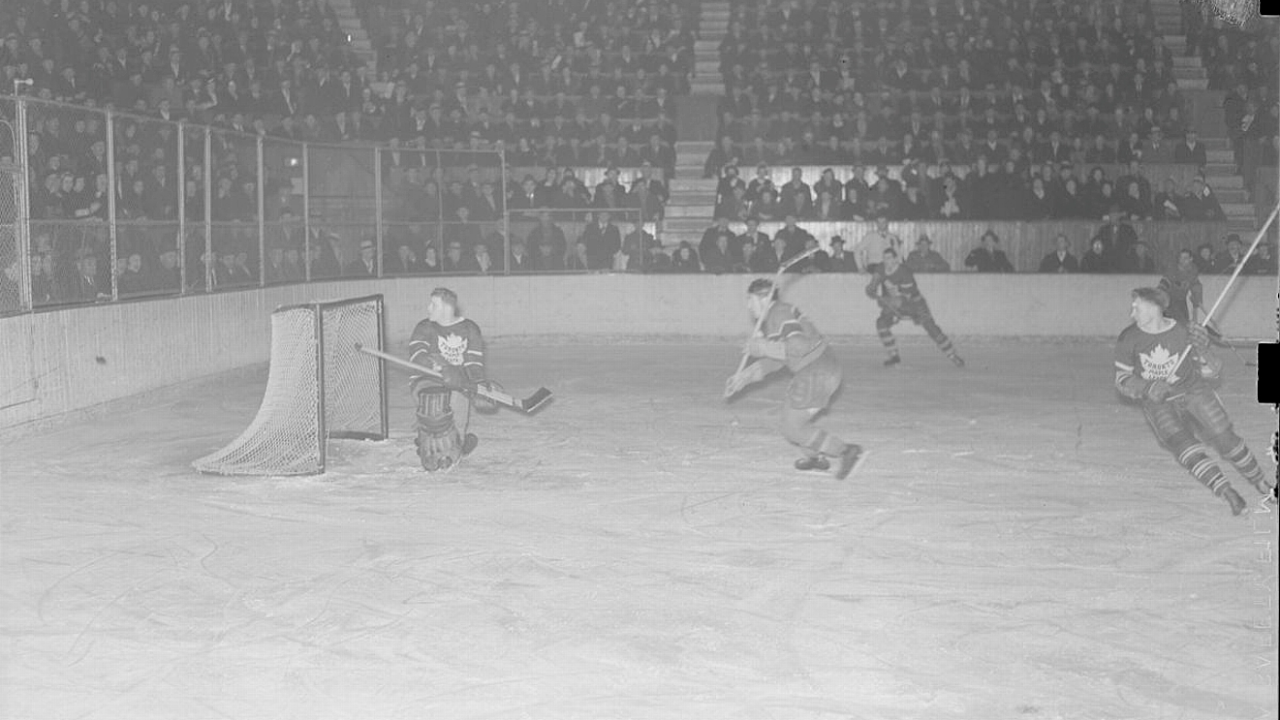
For generations of CBC viewers, Saturday hockey came with a recognizable setting. The teams and announcers changed, and the broadcast eventually stretched into a doubleheader, but the NHL remained part of the public broadcaster's weekend. On October 3, 2026, that arrangement has ended. Sportsnet's NHL package begins under the name Saturday Night Hockey, while CBC moves into a different Saturday sports schedule. 1, 2, 3, 4
The Hockey Night in Canada name still has a future at CBC. The network has announced eight PWHL primetime Saturday broadcasts beginning December 5, when Hamilton is scheduled to visit the Montréal Victoire. That continuation gives the moment its precise historical shape: CBC's NHL era has closed, and its hockey institution is being carried into another league. 3, 5, 6
HNIC's earlier history contains other changes to the presentation viewers knew. Its radio network was built through an advertiser's station connections. French television hockey arrived before the English telecast. The theme music belonged to a composer and a rights company, and the production carried on CBC eventually came under Rogers' control. Following those changes explains how the familiar Saturday broadcast developed. 7, 8, 9, 10, 11
The voice came before the national program
In the early 1920s, newspaper-owned radio stations were discovering how to put sport on the air. The Toronto Star operated CFCA, where reporter Norman Albert described the third period of an amateur hockey game on February 8, 1923. Foster Hewitt began calling games for the same station that month. The Canadian Communications Foundation places his debut on February 16, years before the national commercial series. 12, 13
Hewitt later remembered his first broadcast as a March 22 Kitchener-Parkdale playoff game. Historian Eric Zweig tested that recollection against the tournament record and identified a February 16 Toronto Argonauts-Kitchener Greenshirts game instead. The surviving chronologies support the February date, while the later recollection remains part of the record. 12, 13
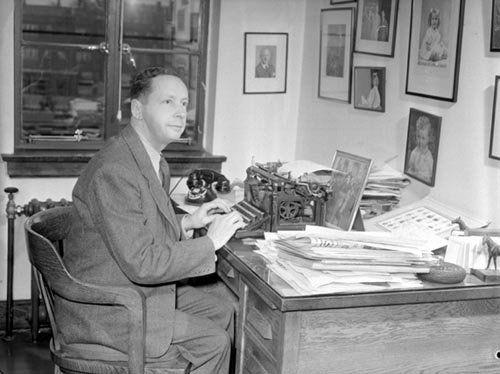
Gordon W. Powley / Archives of Ontario (C 5-1-0-110-2). Source and public-domain record.
His enduring achievement was a language listeners could follow. The goal call, "He shoots, he scores!", remained recognizable long after radio gave way to television. When Jim Hughson received the Foster Hewitt Memorial Award in 2019, he described continuing to use Hewitt's words because they worked. Successive generations inherited a piece of the original broadcaster's craft. 14, 15
An advertiser helped build the Saturday audience
The immediate predecessor of Hockey Night in Canada was the General Motors Hockey Broadcast, which began in November 1931, the month Maple Leaf Gardens opened. MacLaren arranged the broadcasts and the connections between stations, with CFRB an important Toronto outlet. GM dealers wanted the program in their communities, helping a sponsor's hockey coverage reach listeners far from the rink. 3, 7, 16, 17
Hewitt supplied play-by-play, Gordon Calder hosted and former Ottawa goaltender Percy LeSueur provided analysis. Intermission could bring the Luigi Romanelli Orchestra rather than a hockey panel. Producers already had to find a way to keep listeners tuned in while the players were off the ice. 7, 16
The network served more than Toronto. Its 1933-34 arrangement included French Canadiens broadcasts and English Montreal Maroons broadcasts. Imperial Oil replaced General Motors for 1934-35, and the Imperial Esso Hockey Broadcast moved onto the new CBC network in 1936. National public infrastructure and commercial sponsorship developed together. 12, 7
CBC now dates the Hockey Night in Canada name to 1936. An older Communications Foundation biography places the name's appearance in the 1950s, leaving a discrepancy that contemporary schedules would help resolve. The secure institutional milestone is that CBC carried the sponsored hockey broadcasts from its beginning in 1936. 3, 12, 7, 16
Recordings carried the program further during the Second World War. The Foundation describes games recorded on large discs, condensed by CBC and sent to London for the BBC's Forces Program. That was a route for delayed hockey accounts to reach servicemen overseas, illustrating how the audience could expand through technology before a live television network existed. 7
Television hockey began with a French voice
CBC television launched in September 1952. On October 11, René Lecavalier called Detroit against Montreal from the Forum on Radio-Canada. Foster Hewitt's English-language debut followed on November 1, with Boston visiting Toronto at Maple Leaf Gardens. The first Canadian NHL television audience heard the game in French. 8, 4, 18
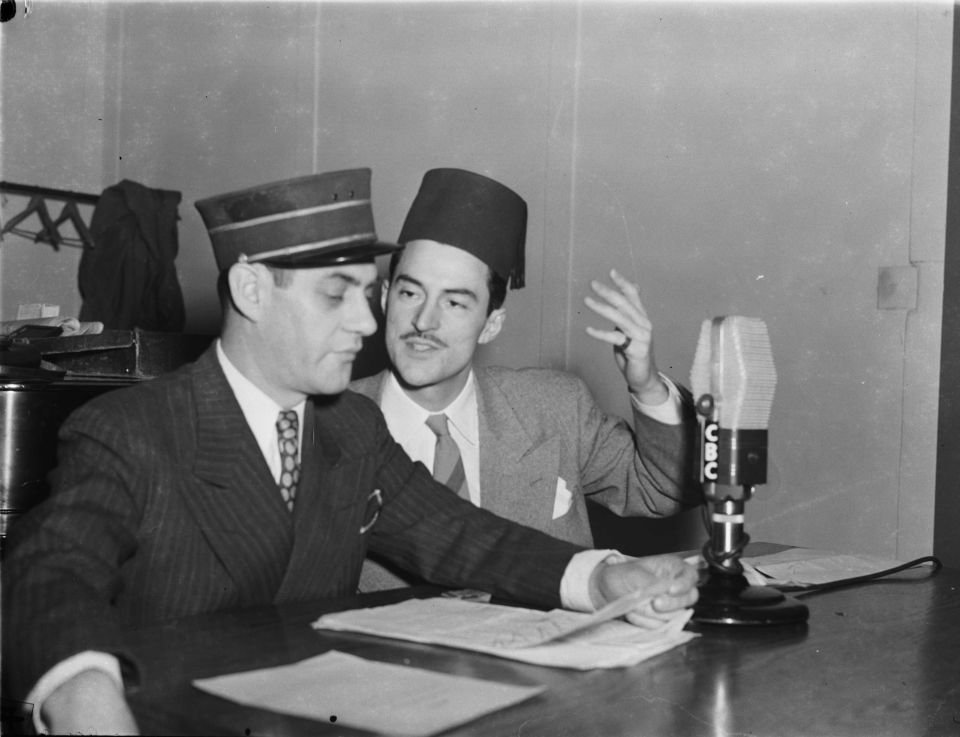
Conrad Poirier / Bibliothèque et Archives nationales du Québec, Fonds Conrad Poirier (P48,S1,P23402). Source and public-domain record.
The early broadcasts offered only part of the evening. Radio-Canada's archive places its October 11 sign-on at 9 p.m. and describes third-period coverage. The English production history gives a 9:30 p.m. start during the first season, joining the game in the second period. Those separate arrangements are more precise than the familiar claim that every early hockey telecast showed only the third period. 8, 4
The limited window reflected the league's concern that television could reduce attendance. NHL president Clarence Campbell also doubted whether cameras could convey hockey's speed. Conn Smythe's position included reservations about presentation alongside a willingness to try television as a means of selling the game. The broadcast developed while the sport was still assessing what a home audience would mean for the arena business. 16, 4
In Montreal, Gerald Renaud helped shape the camera language. George Retzlaff did similar early work in Toronto. The announcer's job now depended on pictures selected by directors and camera crews, whose decisions determined whether viewers could follow the puck and understand the play. 4, 19
A national, full-game broadcast took time
A national audience did not immediately mean simultaneous viewing across the country. Stations could receive kinescopes, film recordings of a television image, for later transmission. Microwave links expanded live service in stages, reaching Alberta in 1957. CBC's network history identifies a July 1, 1958 program connecting points from Victoria to Sydney, Nova Scotia, while its archive preserves an explanation of the system broadcast the previous day. 4, 20, 21
Retzlaff's 1955 replay experiment also needs its period technology attached. A historical account describes film developed rapidly and a replay shown several minutes after the goal. It was an early television replay achievement, with a different process and delay from the electronic instant replay familiar to later audiences. The television history credits Ty Lemberg with a workable replay technique that became a regular production tool in the 1964-65 playoffs. 4, 19, 22
A March 24, 1965 Montreal-Toronto color test preceded regular color production in 1966-67. Complete-game coverage followed in 1968-69, with Radio-Canada dating its full-game transition to October 1968. By then, viewers could see an entire contest in a presentation substantially different from the late sign-on of 1952. 8, 4
High definition arrived first as a special event and later as a regular service. CBC announced the November 22, 2003 outdoor Heritage Game in Edmonton as HNIC's first HD game. Contemporary trade reporting then announced recurring HD coverage of the early Saturday game beginning November 5, 2005. 23, 24
The program behind the pictures
A surviving catalog entry makes the production arrangement concrete. Library and Archives Canada's record for an incomplete February 11, 1961 Boston-Toronto telecast names MacLaren Advertising Company as the production organization and Imperial Oil as sponsor. Retzlaff was the producer, Morris Hastie the technical producer, Ed Fitkin the host and Ward Cornell the interviewer. Foster Hewitt supplied commentary while Bill Hewitt called the play. The archive's description also records Scott Young reading hockey players' valentines during intermission. 25
Those credits show how much work sat behind the channel viewers selected. The contract and sponsor relationships continued changing. The Communications Foundation's production history describes Imperial Oil withdrawing in 1976 and Ted Hough arranging a new partnership involving Molson and CBC. Its account places Ralph Mellanby at the center of television production in the 1960s and 1970s, coordinating Montreal and Toronto and developing the show's sound and presentation. 4
Between periods, Murray Westgate's Esso attendant connected the sponsor to the set. Howie Meeker used pictures to teach the game, and interviews brought players into the conversation. Peter Puck explained rules through animation. The character's production involved NBC and Hanna-Barbera, with Brian McFarlane contributing hockey material, a collaboration that is more securely documented than a sole-creator story. 16, 4, 26
The voices changed with the country on screen
Bill Hewitt took over Toronto's television play-by-play in the late 1950s while Foster remained involved and returned his main attention to radio. Accounts differ on the exact handoff year. In Montreal, Lecavalier shaped a French hockey vocabulary, while Danny Gallivan's inventive English calls included the "cannonading drive" and "Savardian spinnerama." The two broadcasts gave audiences different ways of hearing the same sport. 12, 8, 4, 27
Bob Cole's CBC NHL career began on radio. His first assignment was the April 24, 1969 Boston-Montreal playoff game that Jean Béliveau ended in double overtime. Cole moved into television in 1973 and eventually formed a familiar partnership with Harry Neale. His final NHL telecast came on April 6, 2019, when Toronto visited Montreal and the broadcast carried tributes to his career. 28, 29
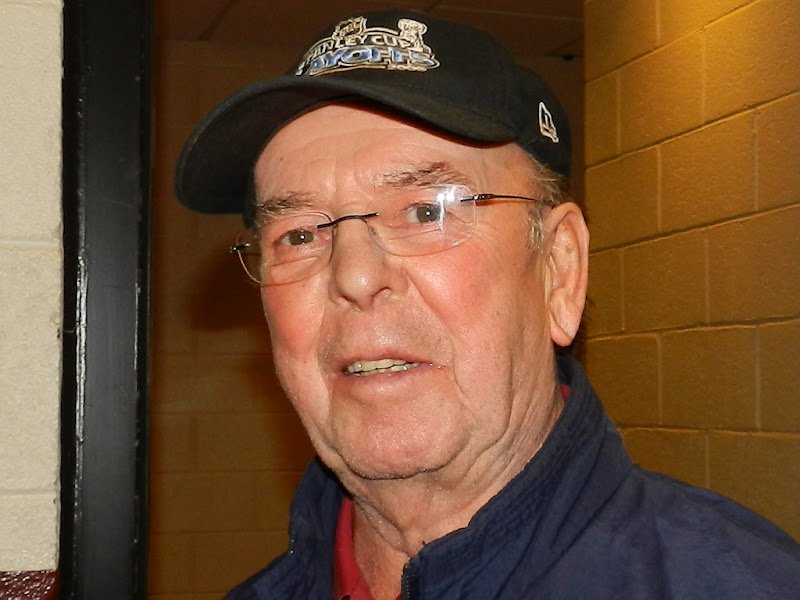
Howard Berger / Wikimedia Commons. CC BY-SA 3.0. Source file unchanged.
The geography widened as Canadian clubs joined the NHL. Vancouver entered HNIC's production map in 1970, with Jim Robson calling games and Babe Pratt supplying analysis. Later western broadcasts brought other arenas and announcers into an institution whose earlier television center had been Toronto and Montreal. 4
The regular Saturday doubleheader began in January 1995 under executive producer John Shannon, according to the Foundation's production history. A sustained late window gave western teams a larger place in the national evening. Hockey Day in Canada, first broadcast in 2000, widened the subject again by placing community hockey alongside NHL games. 4, 30, 31
Hewitt's 1972 Summit Series call and Cole's Olympic work also entered viewers' memories of CBC hockey. Those competitions drew on familiar voices, but had their own broadcasting arrangements. Their place in the announcers' careers reaches beyond the ordinary Saturday NHL series. 12, 4, 28, 29
Hodge's protest and MacLean's opportunity
On March 14, 1987, HNIC's Toronto-Calgary game finished early. CBC switched to Philadelphia-Montreal, then left that tied game before overtime to carry the news. Dave Hodge criticized the decision on air and flipped the object in his hand as he signed off. Earlier that day, CBC had also left a Brier semifinal for coverage of the federal NDP convention. The hockey incident came within a broader dispute about interrupted sporting finishes. 32
The episode is usually remembered as the pencil toss. CBC Archives describes a pen and cites a contemporary newspaper account of a broken pencil. The employment decision was also more complicated than a single night's firing. On March 31, The National reported Hodge saying he had been fired, while producer Don Wallace said he was under review. An April 3 report then quoted a statement accepting his departure. 32, 33
Ron MacLean had already filled in and worked midweek games. His replacement role developed into a long hosting career, with later interruptions and changes under Rogers. The sports broadcast and the employment process unfolded on different dates, a distinction preserved in the contemporary reports. 32, 34, 35
Coach's Corner and the broadcaster's responsibility
Don Cherry became one of HNIC's most recognizable intermission figures. An archived CBC page and the Communications Foundation place his early involvement in 1980, while Sportsnet's 2019 account dates Coach's Corner to 1982. The accounts agree on its development in the early 1980s while differing over the starting point. Cherry worked with Hodge and then MacLean, turning former coaching experience into a regular national commentary platform. 4, 36, 37
The program's appeal and its controversies developed together. After Cherry's January 24, 2004 remarks about European and French Canadian players wearing visors, CBC announced a seven-second delay on February 6. Its executive vice-president, Harold Redekopp, denounced the remarks. That contemporary account establishes CBC's response without settling every later claim about how long the delay remained in place. 38
The final departure followed Cherry's November 9, 2019 comments about immigrants and Remembrance Day poppies. Sportsnet and MacLean apologized the next day. On November 11, Sportsnet announced that Cherry would leave immediately. The decision came from Sportsnet because editorial control had already passed to Rogers, even though viewers could still watch the broadcast on CBC. 36, 39, 11
The music could move while the program remained
Dolores Claman wrote The Hockey Theme in 1968, commissioned by the MacLaren agency through Quartet Productions. Its connection to HNIC and La Soirée du hockey made it one of the broadcast's most enduring sounds. The Canadian Songwriters Hall of Fame inducted it in 2010. 9
On June 9, 2008, CTV announced that it had acquired perpetual rights from Copyright Music & Visuals after CBC's renewal negotiations failed. Contemporary reports discussed an outstanding lawsuit and conflicting accounts of the bargaining. Reported asking figures establish negotiation positions, rather than the amount CTV ultimately paid. 10
CBC replaced the familiar tune through a competition. Canadian Gold, by Beaumont, Alberta, teacher Colin Oberst, won on October 11, 2008. CBC reported 14,871 entries and a C$100,000 prize. The television institution continued with different music, demonstrating that an element listeners treated as part of their Saturday ritual still depended on a separate rights agreement. 40, 9, 10
Different audiences had their own Saturday histories
La Soirée du hockey developed its own audience and vocabulary through Lecavalier, the Canadiens and intermission figures including Jean-Maurice Bailly. Its NHL public-network loss came earlier in Quebec. RDS became the Canadiens' exclusive French broadcaster in 2002, with an arrangement that initially kept an RDS production on Radio-Canada. The June 2, 2004 announcement ending the Quebec arrangement retained a regional exception for francophones outside Quebec. 8, 41
The people on the English broadcast also changed. The Foundation identifies Helen Hutchinson as a co-host in 1976-77. On October 14, 2006, Cassie Campbell became the first woman to provide HNIC game color commentary, working beside Cole when Neale was snowed in at home in Buffalo. That specific booth milestone belongs alongside the earlier history of women hosting and reporting. 4, 42
Andi Petrillo joined HNIC in 2011 and co-hosted its new Game Day program with P. J. Stock. When Rogers set out its national team for 2014-15, Christine Simpson was listed among the rinkside reporters. Petrillo's announced 2026 role on CBC Sports Primetime connects the new Saturday schedule with an earlier generation of the hockey production. 43, 44, 3

Michael Miller / Wikimedia Commons. CC BY-SA 4.0. Source file unchanged.
The Punjabi edition began as a 2008 playoff experiment and became a weekly broadcast that autumn, with Parminder Singh and Harnarayan Singh. Contemporary reporting described families watching together through the new language service. Indigenous-language NHL coverage also has its own credits: APTN and Sportsnet's March 24, 2019 Plains Cree presentation was a Sunday Hometown Hockey broadcast, with Clarence Iron, Earl Wood and John Chabot. 45, 46, 47
Rogers changed control before CBC lost the games
On November 26, 2013, Rogers and the NHL announced a C$5.2 billion national rights agreement for twelve seasons, beginning in 2014-15 and running through 2025-26. It covered national rights across platforms and languages and included out-of-market rights. Existing regional team agreements remained a separate part of the viewing landscape. 48, 49
CBC stayed in the Saturday schedule through a sublicense. Contemporary CBC reporting said it would pay no rights fee for games on its main network, while Rogers would sell the advertising and retain that revenue. CBC could place its other programming in front of the hockey audience, but the underlying arrangement had changed. 49
The CRTC made the control relationship explicit in an April 17, 2015 decision approving Rogers' HNIC network license. Rogers held editorial and advertising control over the programming carried on CBC. Viewers could continue turning to the public channel while a different licensed broadcaster controlled the presentation and its advertising. 11
Rogers announced George Stroumboulopoulos as the principal host in March 2014. MacLean remained with Cherry and took a role in Sunday Hometown Hockey. In June 2016, Sportsnet announced MacLean's return to the early Saturday game, with David Amber hosting the late broadcast. Contemporary reporting supplied audience and team-performance context, but cannot isolate the host as the cause of the ratings change. 34, 35
A seven-year CBC extension announced in December 2017 took effect in 2019-20 and continued through 2025-26, after the original agreement and an interim extension. The release expressly retained Sportsnet's production and editorial control. Its 7.5 million audience figure described weekly reach, rather than that many people watching the full show at once. 50
Empty Saturdays had happened before
CBC's NHL tradition had already experienced interruptions. During the 2004-05 lockout, films occupied the familiar Saturday slot. The NHL canceled the entire season on February 16, 2005. The league's March 12, 2020 pandemic pause supplied another interruption to the games available for television. 51, 52, 53
The difference in 2026 is the end of CBC's carriage agreement while the NHL continues playing. Rogers' next national rights deal, announced April 2, 2025, is worth C$11 billion and runs from 2026-27 through 2037-38. The league agreement allows strategic sublicensing, but does not promise a continuing CBC partnership. 1, 2, 54
The CBC-Rogers nonrenewal announcement followed the end of the 2025-26 playoffs. NHL reporting establishes Carolina's June 14 Stanley Cup-clinching win over Vegas; media reporter Steve Faguy identifies that game as CBC's final NHL telecast. CBC announced the changed arrangement on June 16. The public record does not disclose the complete offers exchanged or establish one private reason the negotiations ended. 1, 55, 56, 11
The name enters another chapter
CBC Sports Primetime is scheduled to begin October 3 with cricket and Petrillo hosting. Sportsnet's Saturday NHL package continues with MacLean and its announced panel. CBC's new hockey plan arrived on September 28, when it announced the PWHL continuation of Hockey Night in Canada. 2, 3
Radio-Canada has also announced national radio coverage of the Montréal Victoire under the La soirée du hockey name, beginning December 5 with host Kéven Breton. Selected Victoire television games will appear as Rendez-vous hockey, hosted by Roseline Filion. The returning French radio name carries a distinct medium and production. 5
CBC's October 2 schedule sets out eight HNIC Saturday primetime games within a 26-game English-language PWHL package. The first is Hamilton at Montréal, scheduled for December 5 at 7 p.m. Eastern at Place Bell. That announced game will begin the PWHL chapter of Hockey Night in Canada on CBC. As of this article's October 3 reporting cutoff, the broadcasts remain scheduled events. 1, 3, 5, 6
Sources and notes (56)
This history draws on official broadcaster and league announcements, regulatory records, contemporary reporting and specialist broadcasting histories. Source notes identify conflicting dates and archival limits. Catalog descriptions establish the contents of listed items; they do not imply that the complete recordings were viewed.
- CBC Sports. CBC will no longer air NHL games in 'end of an era' as broadcast deal expires. 2026-06-16.
CBC's statement of the nonrenewal; broadcaster is a party to the arrangement. Updated June 18. Accessed October 3, 2026. - Sportsnet Staff. Sportsnet adds 35 per cent more games, with Monday, Saturday Night Hockey. 2026-09-09.
Establishes announced new title, October 3 launch and panel; marketing claims are attributed. Accessed October 3, 2026. - CBC Media Centre. CBC/Radio-Canada announces the historic return of Hockey Night in Canada in partnership with the PWHL. 2026-09-28.
Establishes eight-game plan, December 5 return and Primetime launch. Its 90-season history is an institutional claim. Accessed October 3, 2026. - Canadian Communications Foundation. Hockey Night in Canada – The Television Years. Undated, with later updates.
Rich production history. Cross-checked key details; contains incorrect names and compressed dates, including national network and Ottawa expansion. Accessed October 3, 2026. - CBC Media Centre. CBC/Radio-Canada reveals broadcast schedule for the PWHL 2026-27 season. 2026-10-02.
Latest schedule; distinguishes eight HNIC games from 26 total CBC PWHL games and La soirée radio from Rendez-vous hockey TV. Accessed October 3, 2026. - PWHL. PWHL opening weekend scheduled for December 5-6. 2026-09-28.
League confirms Hamilton at Montréal at Place Bell, December 5, 7 p.m. Eastern; future event. Accessed October 3, 2026. - Canadian Communications Foundation. Hockey Night in Canada in Radio. Undated.
Reproduces information from GM's May 1934 Hockey Broadcast News; audience figures are sponsor estimates, not audited modern ratings. Accessed October 3, 2026. - Radio-Canada Archives. La Soirée du hockey au petit écran. 2017-10-11.
French debut at 9 p.m., October 11, 1952; third-period coverage and October 1968 full-game transition. Text and metadata reviewed, embedded clips not watched. Accessed October 3, 2026. - Canadian Songwriters Hall of Fame. The Hockey Theme. Written 1968; inducted 2010.
Composer Dolores Claman, MacLaren/Quartet commission and induction. Does not supply CTV acquisition price. Accessed October 3, 2026. - CBC Sports. CTV purchases The Hockey Theme. 2008-06-09; updated 2008-06-10.
Perpetual CTV rights, rival accounts of negotiations and outstanding lawsuit; proposed prices do not establish sale price. Accessed October 3, 2026. - CRTC. Broadcasting Decision CRTC 2015-154. 2015-04-17.
Introduction paragraph 1 establishes editorial and advertising control delegated to Rogers; records confidentiality of program financials. Accessed October 3, 2026. - Canadian Communications Foundation. Foster Hewitt (1902-1985). Undated.
Useful early station chronology. Conflicts with other accounts on when HNIC name appeared and Bill Hewitt handoff year. Accessed October 3, 2026. - Eric Zweig. Hockey Nerd – Part II: Radio Active. 2015-02-11.
Historian tests Hewitt's later March 22 recollection against game chronology and points to February 16. Accessed October 3, 2026. - Hockey Hall of Fame. Foster Hewitt Memorial Award Winners. Current list reviewed 2026-10-03.
Award scope and year records. Broadcasting honoree distinction is not identical to player/builder induction. Accessed October 3, 2026. - Mike Zeisberger, NHL.com. Hughson honored to receive Foster Hewitt Memorial Award from Hall of Fame. 2019-11-16.
Hughson's stated debt to Hewitt; award and broadcasting development. Accessed October 3, 2026. - The Canadian Encyclopedia. Hockey Night in Canada. 2019 article, subsequently revised.
Broad synthesis and bibliography. Several compressed or conflicting dates and currencies were tested against primary records. Accessed October 3, 2026. - Archives of Ontario via Archeion. MacLaren Advertising collection. Finding aid, undated.
Reference CA ON00009 F 4467; administrative history identifies advertising-rights arrangement. Finding aid is not inspection of underlying contracts. Accessed October 3, 2026. - CBC Archives. First hockey game on TV in 1952. Event: 1952-10-11.
Metadata describes a later retrospective containing 1952 footage. The page's event date is not the retrospective's production date. Accessed October 3, 2026. - CBC Sports. George Retzlaff. 2023-08-23.
Describes camera/switcher work, early producer role and replay experiments; not sole authority for worldwide invention. Accessed October 3, 2026. - Canadian Communications Foundation. CBC Television Network. Undated.
Network-by-year record; July 1, 1958 microwave program between Victoria and Sydney, Nova Scotia. Accessed October 3, 2026. - CBC Archives. CBC's marvellous microwave network in 1958. Original program: 1958-06-30.
Identifies June 30, 1958 episode of Scan about network links. Metadata reviewed; video not watched. Accessed October 3, 2026. - Sports Video Group. A Look at TV's Instant Replay Through the Years. 2013-11-18.
Explicitly relays Denver Post account: 1955 wet-film replay appeared minutes later. Source lineage preserved. Accessed October 3, 2026. - CBC Sports. Hockey Night In Canada set for 52nd season. 2003-10-01.
Announced first HNIC HD game for November 22 Edmonton Heritage Game; announcement rather than proof of completed transmission. Accessed October 3, 2026. - Media in Canada. CBC goes high-def on Saturday nights; heads east for Hockey Day in Canada. 2005-11-03.
Regular first-game HD schedule from November 5, 2005; distinct from 2003 special event. Accessed October 3, 2026. - Library and Archives Canada. Boston Bruins Versus Toronto Maple Leafs: incomplete. 1961-02-11.
ISN 209735, accession 1993-0083: MacLaren production, Imperial Oil sponsorship, Retzlaff, Hastie, Fitkin, Cornell and both Hewitts. Catalog reviewed, film not viewed. Accessed October 3, 2026. - Cartoon Research. Animation Anecdotes #146. 2014-01-24.
Carries Brian McFarlane recollection of NBC/Hanna-Barbera origin; no underlying production contract inspected. Accessed October 3, 2026. - Canada's Sports Hall of Fame. Danny Gallivan. Undated.
Career, Montreal English-language role and vocabulary; exact early TV year differs in some retrospectives. Accessed October 3, 2026. - Joshua Clipperton, The Canadian Press via CBC. Legendary play-by-play man Bob Cole makes final call. 2019-04-06.
April 6 final NHL telecast in Montreal; first CBC radio assignment in 1969, television move in 1973. Accessed October 3, 2026. - Dave Stubbs, NHL.com. Cole left impression on every game he called, everyone he met. 2024-04-25.
Specific April 24, 1969 radio play-by-play debut and author recollections; preserves difference between radio and TV. Accessed October 3, 2026. - Alan Adams, CBC Sports. Hockey Day magic. 2010-01-01; updated 2010-01-06.
First Hockey Day in 2000 and community hosts; no precise inaugural day established here. Accessed October 3, 2026. - Kristina Rutherford, Sportsnet. 25 things you need to know ahead of the 25th Hockey Day in Canada. 2025-01-15.
MacLean's community memories; retrospective reminiscence, not independent evidence of every early anecdote. Accessed October 3, 2026. - CBC Archives. Why Dave Hodge was cut from the Hockey Night in Canada team. 2020-03-14; updated 2025-03-14.
March 14 broadcast, March 31 reporting, employer/Hodge disagreement and April 3 accepted departure; pen description differs from newspaper pencil story. Accessed October 3, 2026. - CBC Archives / The National. Dave Hodge out at Hockey Night in Canada. 1987-03-31.
Original news report, reporter Jane Chalmers, March 31 1987. Catalog page retrieved; companion archive text reviewed; video not watched. Accessed October 3, 2026. - The Canadian Press via Sportsnet. Stroumboulopoulos becomes new face of HNIC. 2014-03-10.
New host, stated younger-audience goal, retained Coach's Corner and Hometown Hockey. Not independent of republications. Accessed October 3, 2026. - The Canadian Press via Global News. Ron MacLean back as host of Hockey Night in Canada replacing George Stroumboulopoulos. 2016-06-27.
Early/late host division, David Amber and disappointing team context; ratings cause not isolated. Accessed October 3, 2026. - Sportsnet Staff. Sportsnet announces Don Cherry to immediately step down from HNIC. 2019-11-11.
Departure and response; dates Coach's Corner start 1982, contrasting 1980 history in older CBC/CCF sources. Accessed October 3, 2026. - CBC Sports (archived). Coach's Corner. Page archived 2007-02-02.
Archived broadcaster biography fully retrieved: explicitly states Cherry first appeared in Coach's Corner in 1980 and MacLean national hosting in 1987; contrasts with Sportsnet's 1982 segment date. Accessed October 3, 2026. - CBC News. CBC puts Cherry on 7-second delay. 2004-02-06.
January 24 visor remarks and February 6 CBC policy response; no claim about delay's later ending. Accessed October 3, 2026. - Salmaan Farooqui, The Canadian Press via CBC. Sportsnet, Ron MacLean apologize for Don Cherry's 'discriminatory' remarks. 2019-11-10; updated 2019-11-11.
Remarks and public apologies. Its reference to US currency for 2013 rights is not followed; primary agreement identifies Canadian context. Accessed October 3, 2026. - CBC Sports. Alberta entry is golden in Hockey Night anthem challenge. 2008-10-11.
Canadian Gold, Colin Oberst, 14,871 entries and $100,000 prize. Accessed October 3, 2026. - Radio-Canada. La Soirée du hockey disparaît. 2004-06-02.
Quebec withdrawal, RDS-produced out-of-Quebec carriage exception and 2002 transition. Accessed October 3, 2026. - CBC Sports. Cassie Campbell makes history as HNIC analyst. 2006-10-14.
Specific first woman doing game color commentary and Buffalo weather cause. Its crew-count statement conflicts with Helen Hutchinson history. Accessed October 3, 2026. - CBC Media Centre. CBC's Hockey Night in Canada launches its 59th season. 2011-10-03.
Andi Petrillo joins, HNIC Game Day and season roles; season-number branding reflects canceled season convention. Accessed October 3, 2026. - Rogers Communications. Healy, Hrudey, Hextall and Simpson x2: Biggest Names in NHL Broadcasting Join All-Star Sportsnet Team. 2014-08-28.
The announced 2014-15 national team lists Christine Simpson among the rinkside reporters. Promotional descriptions and a sibling-first claim are not adopted. Accessed October 3, 2026. - Raveena Aulakh, Toronto Star. NHL play-by-play in Punjabi scores big time. 2009-02-16.
2008 playoff experiment followed by weekly broadcasts in October; Parminder Singh and Harnarayan Singh. Accessed October 3, 2026. - Luke Fox, Sportsnet. Shot Callers: Q&A with Hockey Night Punjabi's Harnarayan Singh. 2016-12-29.
Singh's recollections and explanation of inclusive role; TSP did not conduct interview. Accessed October 3, 2026. - Sportsnet Staff. Sportsnet, APTN team up for first Cree-language NHL broadcast. 2019-03-14.
March 24 Sunday Hometown Hockey production on APTN, Plains Cree, Clarence Iron/Earl Wood/John Chabot; not a CBC Saturday first. Accessed October 3, 2026. - Rogers Communications. Rogers Communications and NHL Announce 12-Year National Broadcast and Multimedia Agreement. 2013-11-26.
$5.2 billion total and 2014-15 through 2025-26 term; interested-party forecasts are not treated as realized profits. Accessed October 3, 2026. - Doug Harrison, CBC Sports. CBC partners with Rogers in landmark NHL rights deal. 2013-11-26.
CBC rights-fee statement, Rogers ad revenues and CBC promotional benefit; national and regional rights distinguished. Accessed October 3, 2026. - Rogers Communications. Rogers Media and CBC Sign New 7-Year Sub-Licensing Agreement for Hockey Night in Canada Broadcasts and Stanley Cup Playoffs. 2017-12-19.
Effective 2019-20 through 2025-26; predecessor four-year agreement plus one-year extension. 7.5 million figure is weekly reach. Accessed October 3, 2026. - CBC Sports. Game over: NHL cancels season. 2005-02-16.
Entire 2004-05 NHL season cancellation. Later page update July 5 does not change event date. Accessed October 3, 2026. - David Crary, Associated Press via Spokesman-Review. Hockeyless in Canada. 2004-10-16.
Hollywood-film substitution in CBC Saturday slot; syndicated report is one source lineage. Accessed October 3, 2026. - NHL. NHL statement on coronavirus. 2020-03-12.
NHL pause beginning that night's games; no invented CBC replacement schedule. Accessed October 3, 2026. - NHL Public Relations. NHL, Rogers announce 12-year national rights media deal. 2025-04-02.
Explicit C$11 billion, 2026-27 through 2037-38, national/all-platform and out-of-market rights; regional agreements not all erased. Accessed October 3, 2026. - Dan Rosen, NHL.com. Hurricanes win Stanley Cup with Game 6 shutout against Golden Knights. 2026-06-15 report of 2026-06-14 game.
June 14 final result 3-0, Carolina series 4-2. Establishes game endpoint rather than CBC-specific transmission by itself. Accessed October 3, 2026. - Steve Faguy, Fagstein. CBC, Citytv will no longer air NHL games. 2026-06-16.
Identifies June 14 as last CBC NHL telecast and reports spokesperson clarification of Citytv. Independent specialist reporting, not official carriage log. Accessed October 3, 2026.