
MLB · Pitching Data
How the Rays Pitched to Cooper Pratt During His World Series Hit Streak
Nineteen pitches, six pitchers and five pitch types: the complete record shows how Pratt combined early swings with three two-strike hits in Games 4 and 5.
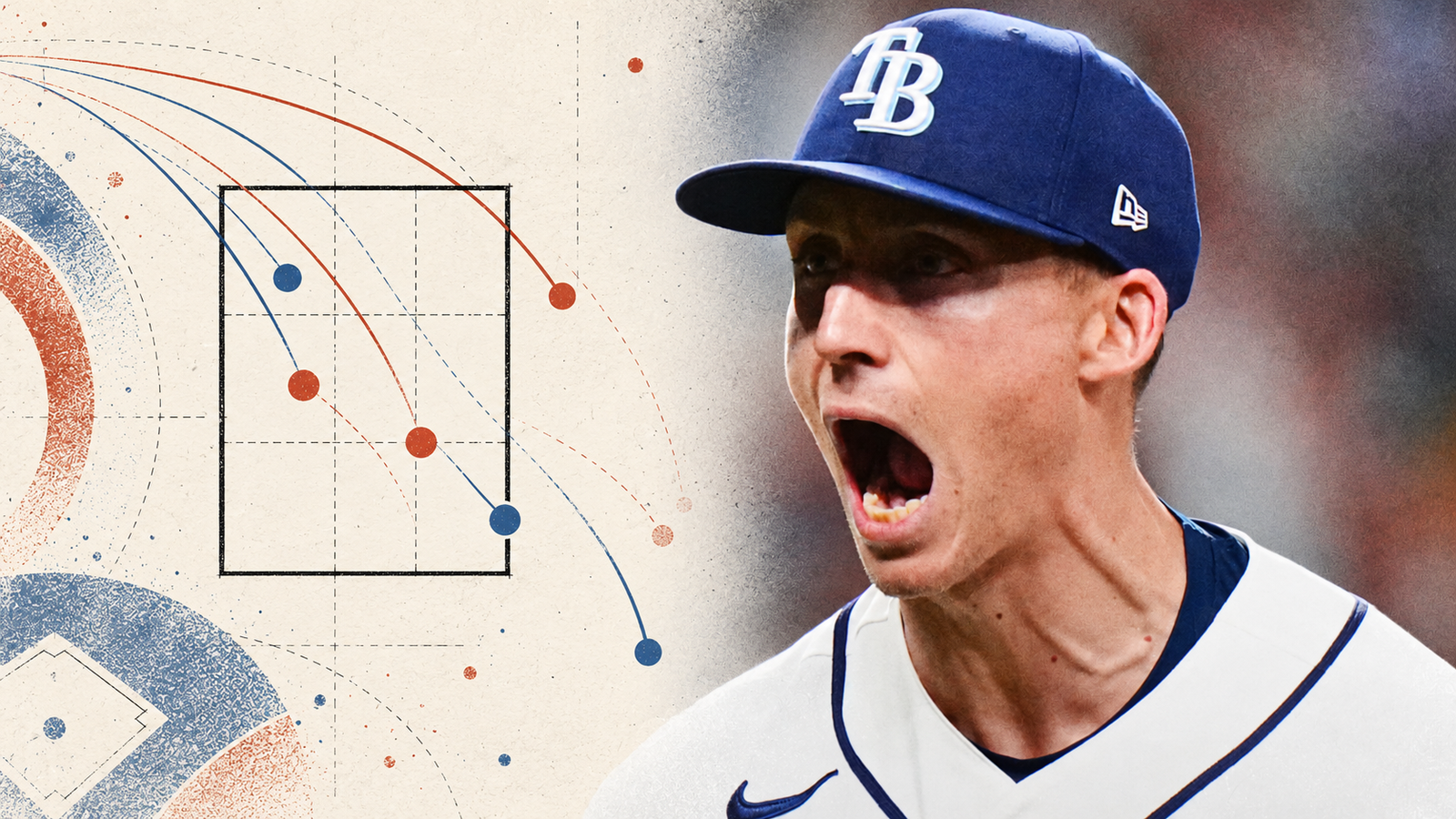
Ian Seymour had a 2–2 count in the 12th inning of World Series Game 4 when Cooper Pratt drove his sweeper over the left-center-field wall. It was Pratt’s fourth consecutive hit, and the fourth different kind of pitch he had turned into a hit during that run.
By the fifth inning of Game 5, Pratt had extended the streak to six straight at-bats. The rookie World Series record came against six different Rays pitchers, across five pitch classifications. The sequence does not reveal a single offering that Tampa Bay kept throwing into trouble. It shows Pratt producing contact against different speeds, counts and locations.
MLB’s official event records contain 19 physical pitches in those six at-bats on October 27–28 at Tropicana Field. Pratt swung ten times and missed once. Three hits came with two strikes; two came on the first pitch. That combination explains how he could attack early without needing every confrontation to end before the pitcher gained an advantage.
Two first-pitch hits, three two-strike recoveries
The streak began with a fourth-inning double off Griffin Jax. Pratt hit the first pitch, a 94.3 mph sinker, to left field. Earlier, in the second inning, Jax had retired him on a changeup after six pitches. The successful at-bat was shorter, but both ended in line-drive contact.
Against Nick Martinez in the sixth, Pratt immediately missed an 80.7 mph changeup. Martinez then threw a ball and got a foul with a sinker. Pratt was behind 1–2 before singling on a 93.6 mph four-seam fastball. The pitch’s recorded center crossed 3.64 feet above the ground, above the feed’s 3.37-foot upper strike-zone boundary. That is a location measurement, not evidence of where Martinez intended to throw it.
Bryan Baker reached the same two-strike position through a different sequence in the ninth: ball, foul, called strike. Pratt took a low changeup for ball two, then grounded the next changeup into left field. His success with two strikes therefore included both a high fastball and a lower, slower offspeed pitch.
The home run followed a mixed sequence
Seymour opened the 12th-inning at-bat with a called-strike sweeper, missed with two changeups and got a foul on a four-seam fastball. He returned to the sweeper at 83.7 mph. Pratt hit it 396 feet, according to the official feed, giving Milwaukee a 3–2 lead before Tampa Bay rallied to win 4–3.
The decisive delivery was not the only breaking ball in the at-bat. Pratt had already taken one for a strike. Describing the home run as proof that he was waiting for that pitch would require evidence beyond its eventual result. The recorded sequence supports a narrower conclusion: he stayed in the confrontation through a fastball foul and converted the next breaking ball.
Game 5 added a cutter and another fastball
Pratt’s first Game 5 hit came on an 88.1 mph cutter from Drew Rasmussen in the second inning. It scored Milwaukee’s first run. Pratt was subsequently retired trying to advance, but that baserunning out did not change the single credited to him.
Kevin Kelly supplied the sixth hit in the fifth inning. His sinker was a called strike, his changeup was a ball, and Pratt singled on a 93.7 mph four-seam fastball. All five classifications in the sample had now produced a hit: sinker, four-seamer, changeup, sweeper and cutter. The 19-pitch mix contained eight changeups, yet the hit sequence cannot be reduced to a changeup problem.
Six hits did not mean six crushed balls
Only two of the six hits had recorded exit velocities above 95 mph: the opening double at 98.9 and the home run at 99.1. Martinez’s sixth-inning single left the bat at 79.4 mph, while Kelly’s was 87.6. Pratt repeatedly put the ball in play, and those contacts produced hits with different trajectories and strengths.
The surrounding plate appearances also limit the conclusion. Across the two complete games, Pratt saw 28 pitches in nine plate appearances. He lined out before the six-hit run, hit a sacrifice fly after it and lined out again in the ninth inning of Game 5. The sacrifice fly did not count as an at-bat; the later lineout ended the run. Milwaukee won Game 5, 4–1, to finish the series.
This is a study of the pitches within a short, successful sequence, rather than evidence of a permanent weakness in Tampa Bay’s approach. The Rays reached two strikes in half of the six hit at-bats and used different pitch types to finish them. Pratt’s contact, including less forceful hits, kept those counts from becoming outs.
Every pitch in the six-hit sequence
| No. | Game / inning | Pitcher | Count | Pitch | mph | Pitch result |
|---|---|---|---|---|---|---|
| 1 | 4 / 4 | Griffin Jax | 0-0 | Sinker | 94.3 | In play, run(s) |
| 2 | 4 / 6 | Nick Martinez | 0-0 | Changeup | 80.7 | Swinging Strike |
| 3 | 4 / 6 | Nick Martinez | 0-1 | Four-Seam Fastball | 93.4 | Ball |
| 4 | 4 / 6 | Nick Martinez | 1-1 | Sinker | 92.6 | Foul |
| 5 | 4 / 6 | Nick Martinez | 1-2 | Four-Seam Fastball | 93.6 | In play, no out |
| 6 | 4 / 9 | Bryan Baker | 0-0 | Four-Seam Fastball | 95.3 | Ball |
| 7 | 4 / 9 | Bryan Baker | 1-0 | Changeup | 81.3 | Foul |
| 8 | 4 / 9 | Bryan Baker | 1-1 | Changeup | 84.4 | Called Strike |
| 9 | 4 / 9 | Bryan Baker | 1-2 | Changeup | 83.7 | Ball |
| 10 | 4 / 9 | Bryan Baker | 2-2 | Changeup | 83.4 | In play, no out |
| 11 | 4 / 12 | Ian Seymour | 0-0 | Sweeper | 82.4 | Called Strike |
| 12 | 4 / 12 | Ian Seymour | 0-1 | Changeup | 84.9 | Ball |
| 13 | 4 / 12 | Ian Seymour | 1-1 | Changeup | 84.0 | Ball |
| 14 | 4 / 12 | Ian Seymour | 2-1 | Four-Seam Fastball | 92.6 | Foul |
| 15 | 4 / 12 | Ian Seymour | 2-2 | Sweeper | 83.7 | In play, run(s) |
| 16 | 5 / 2 | Drew Rasmussen | 0-0 | Cutter | 88.1 | In play, run(s) |
| 17 | 5 / 5 | Kevin Kelly | 0-0 | Sinker | 93.5 | Called Strike |
| 18 | 5 / 5 | Kevin Kelly | 0-1 | Changeup | 87.1 | Ball |
| 19 | 5 / 5 | Kevin Kelly | 1-1 | Four-Seam Fastball | 93.7 | In play, no out |
Sources and method
The Game 4 and Game 5 final MLB feeds supply pitch classifications, locations, contact measurements and official outcomes. Physical pitches use isPitch=true; timeouts, substitutions and advisories are excluded from pitch totals but retained while reconstructing counts. Swings include swinging strikes, fouls and balls put in play. Six hit at-bats contain 19 pitches; the surrounding two-game record contains nine plate appearances and 28 pitches. This comparison is confined to those two games, with no regular-season baseline or claim of a new lasting repertoire change.
Download the 19-pitch streak CSV or the complete 28-pitch two-game comparison. More studies are available in TSP Pitching Data.