
Business of Sports · History · MLB
Who Is Mark Attanasio? How the Brewers Owner Made His Money
From corporate law and credit investing to the Brewers and Norwich City, the career and ownership history behind Mark Attanasio’s wealth.
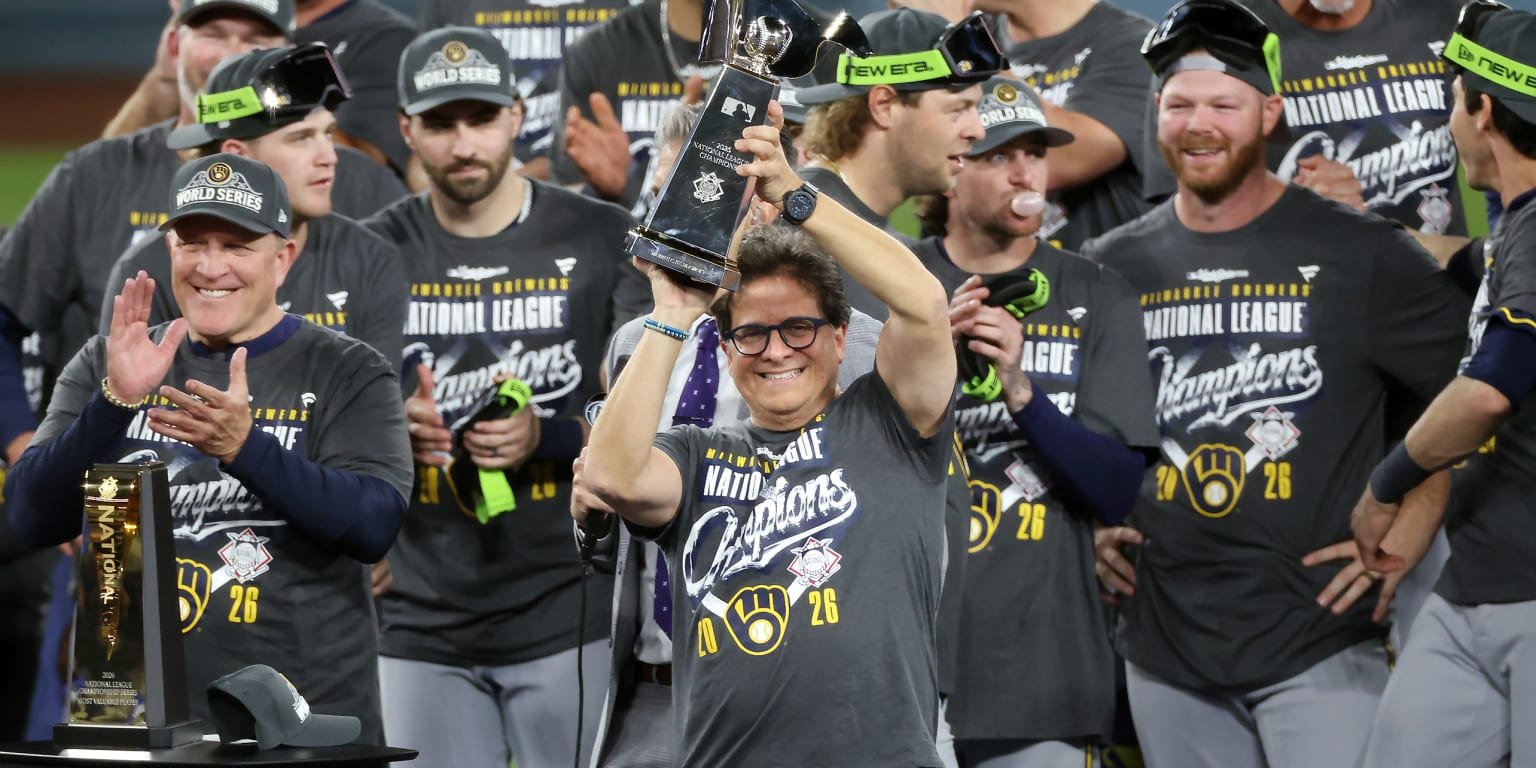
Mark Attanasio made his money in finance before becoming the principal owner of the Milwaukee Brewers. A lawyer who moved into investment banking and co-founded Crescent Capital, he led the group that bought the club from the Selig family in 2005. His sporting interests now also include control of Norwich City, the English soccer club.
The Brewers’ return to the World Series has put a familiar ownership question in front of a larger audience: who is the person behind the team, and where did the money come from? For Attanasio, the answer runs through corporate law, the high-yield bond market and a Los Angeles investment business established more than three decades ago.
A baseball fan before he became an owner
Attanasio’s roots are in the Bronx. His father, Joe, was an actor who later became familiar to Brewers fans through his performances of the national anthem at home games. Baseball became part of the family’s public life long before the Brewers were playing in the 2026 World Series.
Attanasio graduated from Brown University in 1979 and earned a law degree at Columbia. A Brown Alumni Magazine profile published in its September/October 2005 issue traced his interest in owning a team to a sports-law class at Columbia. It was an ambition he developed before he had the resources to attempt a purchase.
His first professional route was law. Corporate filings identify work at Debevoise & Plimpton, where he specialized in corporate finance and securities law. That background placed him close to the legal machinery of raising money, selling securities and financing businesses, rather than on a path into baseball operations.
From law to the bond market
Attanasio moved to Drexel Burnham Lambert in 1985, according to the Brown profile. His work there included investment banking and high-yield bonds. Securities filings later described him as a managing director in those departments before he established Crescent.
High-yield bonds are debt issued by borrowers with lower credit ratings. Investors receive interest in return for accepting the associated credit risk. The distinction matters to Attanasio’s story because the business that financed his move into sports was built around assessing and investing in debt, not selling a consumer product or inheriting a baseball franchise.
Drexel collapsed in 1990. Attanasio and fellow Drexel alumni Jean-Marc Chapus and Bob Beyer established Crescent in 1991. Crescent’s own company history identifies high-yield bonds as its initial focus.
The business behind his wealth
Crescent expanded from that starting point. Its company timeline records a first private-credit fund in 1992, a bank-loan strategy in 1993 and a European office in 2004. Private credit involves lending outside the public bond markets, including financing arranged directly with companies.
The firm became part of Trust Company of the West in 1995. Attanasio continued in senior roles at TCW, including responsibility for leveraged finance, before Crescent’s later development as a separate investment manager. The chronology helps explain why his financial career appears under several corporate names in accounts of the Brewers purchase.
By January 2021, another major ownership transaction had arrived. Sun Life announced the completion of its purchase of a 51% stake in Crescent. The announcement said Crescent would become part of SLC Management while retaining its leadership, brand, offices and clients.
Sun Life described a business with approximately $29 billion in assets under management as of September 30, 2020. Crescent’s current company website lists $53 billion. Those figures describe money the investment business manages. They are not a statement of how much money Attanasio personally owns.
The 2021 transaction also allowed existing equity holders to retain specified interests and included an option mechanism for transferring remaining ownership interests by the end of 2026. That dated announcement explains the transaction’s structure; it does not disclose a complete personal balance sheet for Attanasio.
How much is Mark Attanasio worth?
Forbes estimated Attanasio’s net worth at $2 billion in the profile checked on October 24, 2026. That is a published estimate of personal wealth, not an audited statement supplied by Attanasio.
Three numbers are often confused in descriptions of wealthy owners: their personal net worth, the estimated value of a sports franchise and the assets managed by their investment firm. They answer different questions. Crescent’s assets belong to the funds and clients whose money it manages; a team valuation prices the business; a net-worth estimate attempts to value the individual’s assets after liabilities.
The source of his wealth is finance. The Brewers and Norwich are later investments within a career that began in law and developed through credit markets.
Buying the Brewers
Attanasio’s group bought the Brewers from the Selig family in a transaction Brown Alumni Magazine reported at $223 million. MLB owners approved the change of ownership in January 2005. Attanasio became the principal owner, a description of his leadership position within an ownership group rather than a claim that he personally owns every share of the team.
The club was emerging from a long losing period. Milwaukee finished 81-81 in 2005, ending a run of 12 consecutive losing seasons. That was a modest first step compared with a pennant, but it changed the immediate context in which the new ownership group was judged.
The Brewers later returned to the postseason in 2008 and reached the National League Championship Series in 2011 and 2018. Their 2026 pennant returned the franchise to the World Series for the first time since 1982, when Milwaukee still played in the American League.
Attanasio’s title identifies ownership control. Baseball operations have their own leadership, with Matt Arnold running that side of the club. The owner’s financial history explains who bought the organization; it does not replace an account of the work done by its front office, coaches and players.
Norwich City and a second kind of ownership
Attanasio’s move into English soccer followed a different timetable. A group he led acquired an initial interest in Norwich City in 2022, and he joined the board. Further investment and share conversions increased that group’s control.
Norwich announced on March 3, 2025, that Norfolk Holdings had completed a preference-share conversion and owned approximately 85% of the club’s ordinary share capital. Delia Smith and Michael Wynn Jones held 10%, with other shareholders holding the remainder. Norwich’s accounts recorded the holding at 85.2% at June 30, 2025.
That is a holding by the investment group led by Attanasio. It should not be described as a personal 85.2% holding without the group’s internal ownership information. The same distinction between a control owner and a sole owner matters on both sides of the Atlantic.
Family, community work and the next generation
Attanasio and his wife, Debbie, have two sons, Dan and Mike. Both have become part of the family’s involvement in the Brewers. MLB’s February 2026 report described eventual family succession, with no timetable for transferring control.
His activities outside the clubs include positions connected with the Los Angeles County Museum of Art, Harvard-Westlake School and the LA28 Olympic organization. His Milken Institute biography also lists investment interests beyond baseball and soccer, including the Milwaukee Admirals and Strategic Sports Group.
These are different kinds of involvement. A nonprofit board position is not an ownership stake, and a stake in a wider investment group is not the same as personally operating every organization associated with it.
Sources and notes
Brown Alumni Magazine, “Baseball’s Newest Owner,” September/October 2005 issue; Crescent securities filing: executive career history; Crescent company history; Sun Life’s January 2021 acquisition announcement; Brewers historical timeline; MLB’s February 2026 report; Norwich’s March 2025 share-conversion statement; Norwich’s 2025 accounts; Milken Institute speaker biography; Forbes wealth profile. This account covers an active career through October 24, 2026.