 Business
Scores

Joe Carter’s three-run home run on October 23, 1993 turned a 6–5 Toronto deficit into an 8–6 victory over Philadelphia and ended the World Series. The Blue Jays won the championship four games to two, repeating the title they had won a year earlier.
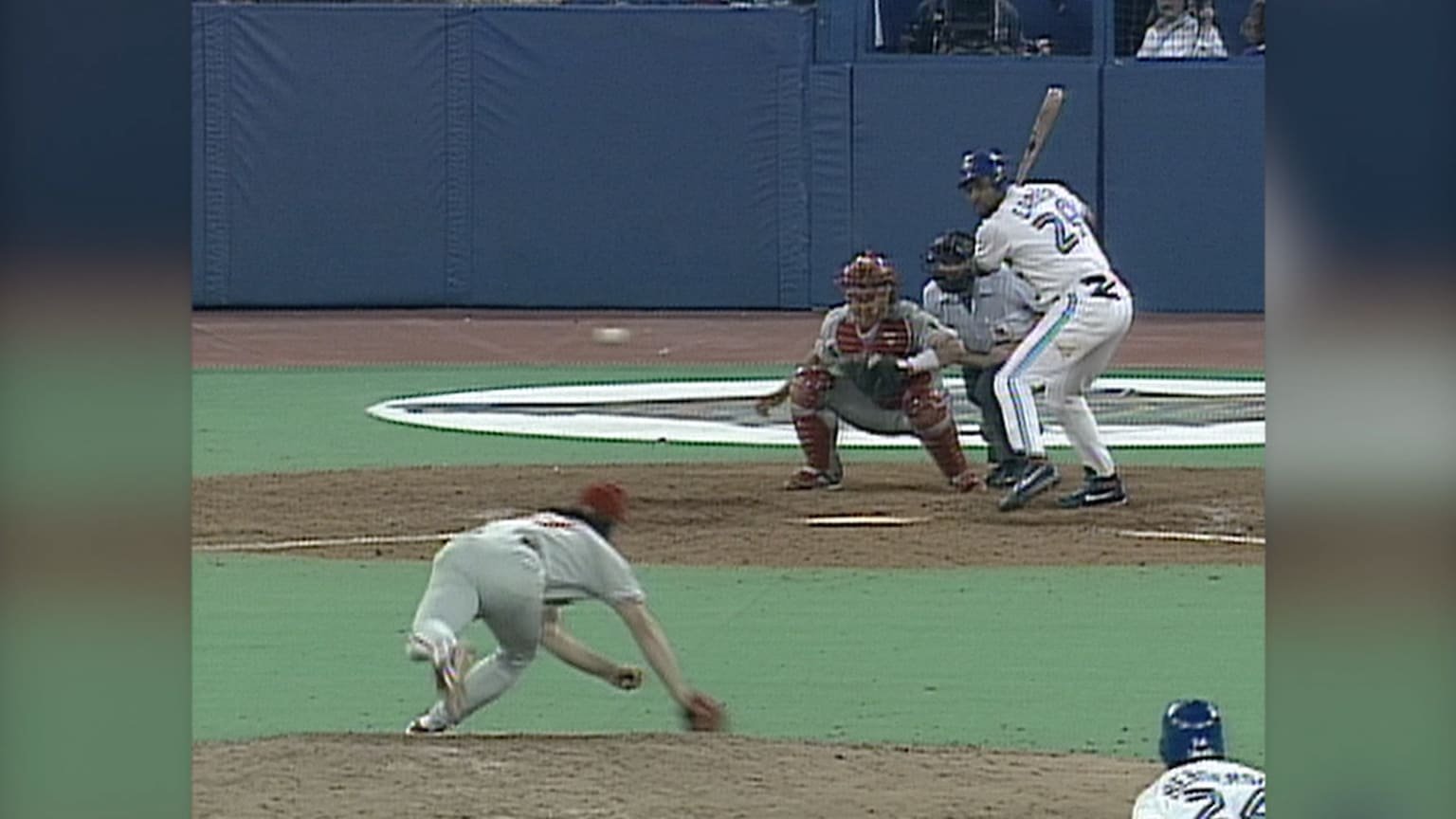
On the home run’s 33rd anniversary, the route to that finish matters as much as the final score. Philadelphia had erased a four-run lead and was three outs from forcing a deciding game at SkyDome.
A Lead That Did Not Last
Toronto scored three times in the first inning. Paul Molitor tripled in Devon White, Carter brought Molitor home with a sacrifice fly, and Roberto Alomar singled in John Olerud. The Blue Jays added a fourth run before Molitor’s fifth-inning homer made it 5–1.
The Phillies’ seventh changed the game. Kevin Stocker walked and Mickey Morandini singled before Lenny Dykstra hit a three-run homer. Mariano Duncan then singled and stole second; Dave Hollins drove him home to tie it. Pete Incaviglia’s sacrifice fly completed the five-run inning and put Philadelphia ahead.
The Four Batters in the Ninth
Mitch Williams began the bottom of the ninth by walking Rickey Henderson. White flied out, then Molitor singled, moving Henderson to second. Carter arrived with one out, the tying run at second and the winning run at first.
Carter reached a 2–2 count before pulling Williams’ next pitch over the left-field wall. Henderson and Molitor scored ahead of him. The three runs ended both the game and the series.
What the Hitters Remembered
In Sportsnet’s 2013 oral history, Molitor recalled resisting the temptation to attempt a championship-winning homer of his own. He concentrated on keeping the inning alive. His single gave Carter the opportunity that followed, rather than finishing the game himself.
Carter’s recollection described expecting a breaking ball after swinging over the previous pitch. His instruction to himself was to “stay back, wait and put the ball in play.” The account was given two decades later.
The surviving recollections disagree about the final pitch. Carter described a fastball with cut; Phillies manager Jim Fregosi called it a slider. Williams said he had intended to locate it up and away. The accounts agree on the misplaced pitch and Carter’s result, but they do not support an uncontested pitch-type label.
A Championship Finish With Two Histories
Carter had also been part of Toronto’s final play in 1992. Playing first base, he caught Mike Timlin’s throw after Otis Nixon bunted back to the mound, completing the Blue Jays’ first World Series championship. A year later, the last play belonged to his bat.
Toronto had acquired Carter and Alomar from San Diego in December 1990 for Tony Fernández and Fred McGriff. Carter re-signed after the 1992 championship; Molitor joined Toronto that same December day. Their places together in the ninth inning were part of the roster Toronto had built across those seasons.
His 1993 regular season had included 33 home runs and 121 runs batted in. He had been one of Toronto’s main run producers all season.
Reaction at the time also extended beyond the final swing. Steve Reagan’s October 25, 1993 Big Spring Herald column singled out Molitor and Dykstra alongside Carter while discussing Williams’ defeat. The contemporary account supplies a useful reminder that a series remembered for one home run had contained important performances on both sides.
Carter became the second player to end a World Series with a home run, following Bill Mazeroski in 1960. Toronto’s second title had a different route from its first: an opponent’s late rally, two runners reaching in the ninth and a home run that removed the need for another game.
Sources and Notes
Retrosheet’s Game 6 box score and play-by-play establish the scoring and ninth-inning sequence. Adrian Fung’s SABR account supplies game context and source references. The Hall of Fame’s Carter history documents his Toronto arrival and 1992 final play.
The quoted recollection and conflicting pitch descriptions come from Sportsnet’s 2013 oral history. Steve Reagan’s contemporary column appears on page 6 of the October 25, 1993 Big Spring Herald, preserved by Texas Tech. The archival cover still comes from MLB’s official Game 6 video.