
 Business
Scores

Washington’s problem on Monday Night Football is not simply getting ahead. It is making a lead last against an unbeaten San Francisco team that has scored most of its points after halftime. The Commanders visit the 49ers at Levi’s Stadium on October 19 with a 1-3-1 record, facing a 5-0 opponent and another test of a defense that has repeatedly let games turn late.
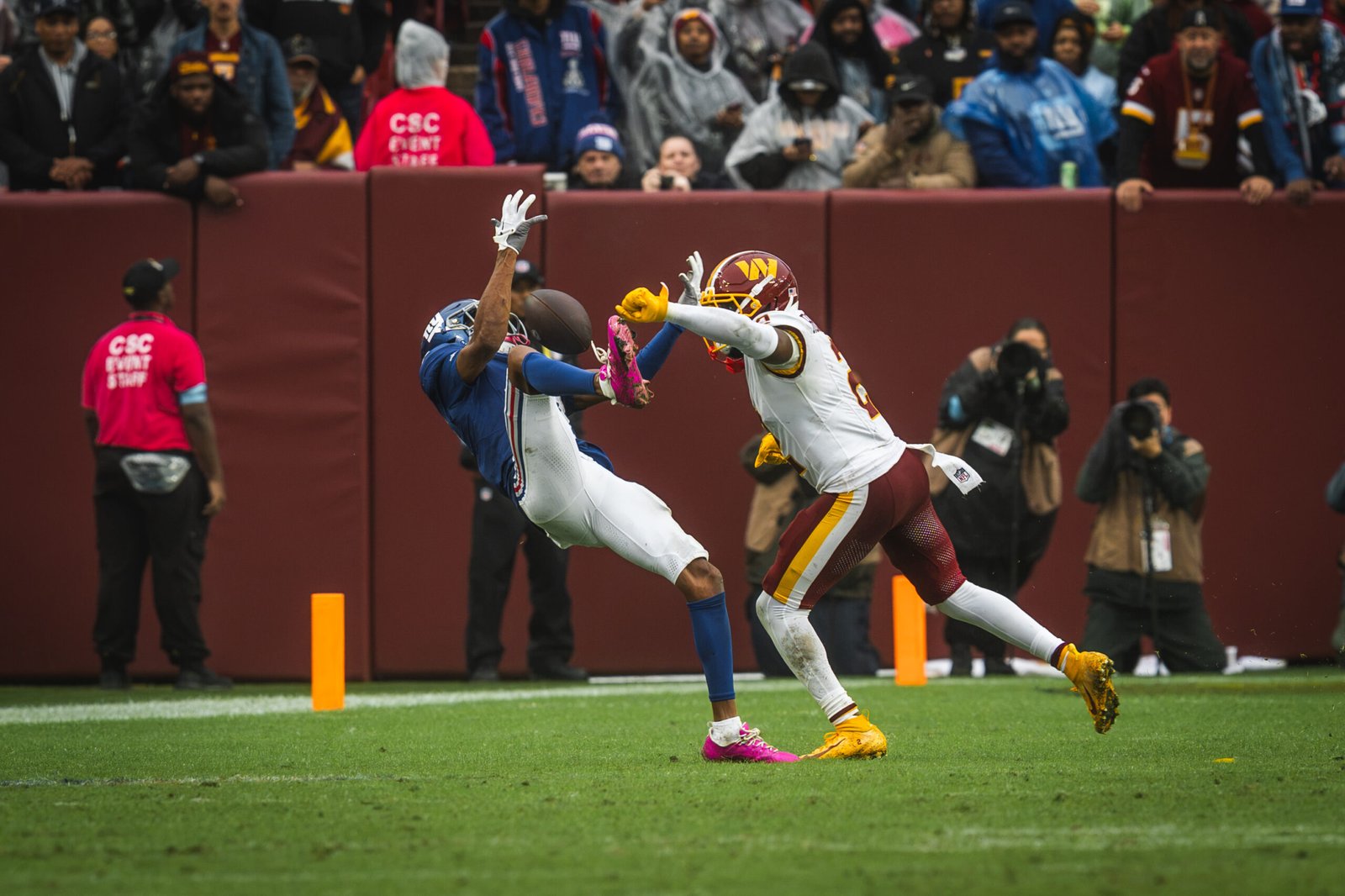
Washington has allowed 95 points in the third and fourth quarters through five games. San Francisco has scored 89 in those quarters over the same number of games. Can Washington get off the field when Brock Purdy and the 49ers begin their second-half possessions?
Commanders vs. 49ers: time and TV
| Game | Washington Commanders (1-3-1) at San Francisco 49ers (5-0) |
|---|---|
| Date and kickoff | Monday, October 19, 2026; 6:15 p.m. MDT / 8:15 p.m. EDT |
| Venue | Levi’s Stadium, Santa Clara, California |
| United States | ESPN and ABC; ESPN app with appropriate access. NFL+ live viewing is limited to phones and tablets. |
| Canada | TSN1, TSN3, TSN4, CTV2 and RDS2; DAZN subscription streaming |
Viewing sources: 49ers’ official game guide, Bell Media’s Week 6 schedule and DAZN Canada. Access and subscriptions vary by country. The National Weather Service’s regional evening forecast calls for mostly cloudy skies and northwest winds of 5–10 mph.
Washington’s trouble starts before third down
The clearest recent example came against the Giants. Washington led 27-13 in the fourth quarter, then conceded touchdown drives of 75 and 72 yards before settling for a 27-27 tie. New York had managed 77 net yards by halftime and finished with 408, including overtime.
Defensive coordinator Daronte Jones has identified simpler calls and better technique as responses. His explanation distinguishes a short completion from a breakdown: conceding a few yards can be acceptable when defenders close promptly and prevent the catch from becoming a much larger gain.
“We’re okay with a three- or four-yard catch; just gotta rally make the tackle,” Jones said in Washington’s October 16 practice report.
The problem is not confined to third down. In Washington’s 33-31 win over Seattle, the Seahawks’ final touchdown drive covered 68 yards in five consecutive completions: 18, 11, 15, 17 and seven yards. Every snap began on first down, and the drive lasted 1:06. Seattle did not need to overcome a long-yardage situation.
Against New York, Washington did force fourth-and-eight during the first late touchdown drive, only for Isaiah Likely to score on a 17-yard reception. On the tying possession, Malik Nabers gained 16 yards on third-and-seven before catching a 17-yard touchdown with 1:43 left. A turnover later helped preserve the tie: Daron Payne forced an overtime fumble recovered by Shy Tuttle. The defense has made critical plays, but neither that takeaway nor Seattle’s eventual defeat erases the sustained gains that kept opponents alive. Washington’s Giants report documents both the fourth-down touchdown and overtime stop.
| Measure | First half | Second half |
|---|---|---|
| Washington points allowed | 54 | 95 |
| Allowed per game | 10.8 | 19.0 |
| San Francisco points scored | 65 | 89 |
| Scored per game | 13.0 | 17.8 |
Sample: each team’s first five completed 2026 regular-season games, through October 11. First half means quarters 1–2; second half means quarters 3–4, excluding overtime. These are team points, including any return scores, not isolated offensive or defensive efficiency. Totals were summed from ESPN game quarter scores; second-half figures also appear in Washington’s defensive report and official matchup notes.
Purdy can extend the problem
Washington’s pressure also has to survive the moment Purdy escapes the first defender. Discussing San Francisco’s 32-29 win over Seattle, offensive coordinator Klay Kubiak described an uneven performance that included a late-third-quarter interception before Purdy responded in the fourth.
“He made really aggressive throws. He made plays with his legs. He avoided some sacks,” Kubiak said in his October 16 press conference.
Kubiak also described Washington’s varied blitzes and coverages as a difficult preparation problem. That gives the Commanders a possible route to disrupting the offense, provided pressure does not leave an easy escape or an uncovered receiver when the play continues. It is a matchup to judge by the completed play, not merely by how quickly the first rusher arrives.
San Francisco’s receiving options remain a qualification. Deebo Samuel Sr. is out with a hamstring injury, and Christian Kirk was downgraded to out Monday. Mike Evans is questionable. Kubiak said Brandin Cooks received extra timing work with Purdy while Evans missed early-week practice.
Washington’s backfield changes the other side of the matchup
The Commanders placed Jacory Croskey-Merritt on injured reserve Monday and activated Jeremy McNichols, who was removed from the injury report. Those roster moves make McNichols part of the available backfield alongside Rachaad White and Austin Ekeler. They do not establish a single replacement for all of Croskey-Merritt’s work.
White entered the game with 29 carries for 118 yards and catches on all 10 of his targets for 53 yards and a touchdown. Asked Saturday about the backfield, coach Dan Quinn said Washington would lean on a combination of players. That leaves carries, passing-game work and protection assignments as separate questions, rather than reasons to assume White inherits every snap. Washington’s game-status report listed Jayden Daniels without a game designation after full practices.
The offensive task is to create manageable third downs and finish possessions. In its October 16 matchup notes, Washington ranked its offense 29th on third down and its defense 24th, with opponents converting 43.28 percent. Those are the report’s pre-Week 6 rankings, not a live ranking updated after Sunday’s games. Sustaining drives would reduce the occasions on which the defense has to stop Purdy; it would not repair the defense’s execution by itself.
Availability and what remains unsettled
| Team | Confirmed absences and changes | Still questionable |
|---|---|---|
| Washington | IR: Jacory Croskey-Merritt, Javontae Jean-Baptiste. Out: Marcus Mariota, Charles Omenihu. Activated and removed from injury report: Jeremy McNichols, Trey Amos, Jordan Magee. | Percy Butler, Nick Cross, Stefon Diggs, Javon Kinlaw, Tyler Owens, Lucas Patrick. |
| San Francisco | Out: Deebo Samuel Sr., Christian Kirk, Nick Bosa, Garret Wallow, Marques Sigle. Dre Greenlaw suspended. Kyle Juszczyk has no game designation. | Mike Evans, Gracen Halton, Siran Neal, Upton Stout, Mykel Williams. |
Status sources: Washington’s injury report, Monday activations, San Francisco’s injury report, Kirk’s downgrade and Greenlaw’s upheld suspension. Activation does not confirm a starting role or snap count.
San Francisco expects fullback Kyle Juszczyk back after he missed Seattle with a knee injury. His availability restores another personnel option for an offense Jones said can produce different looks from the same group. The practical test for Washington is whether it can identify those changes, contain the completed play and make a promising first half survive the second.
Pregame information checked October 19, 2026. Final inactive lists were not yet available at this reporting cutoff; questionable players are not confirmed participants. Quotes come from the teams’ public pregame reporting and press conference transcripts.
Reporting notes
- Reporting draws on the teams’ public game reports, October 16 coordinator comments and October 19 roster updates. Team scoring comparisons use the first five completed games, excluding overtime. Source links and calculation notes appear alongside the relevant information.