
MLB
Rays–Brewers World Series Preview: Starting Depth Meets Milwaukee’s Bullpen
Tampa Bay’s starters have supplied most of its October outs. Milwaukee brings a higher-scoring offense and a relief group with a 1.33 postseason ERA.
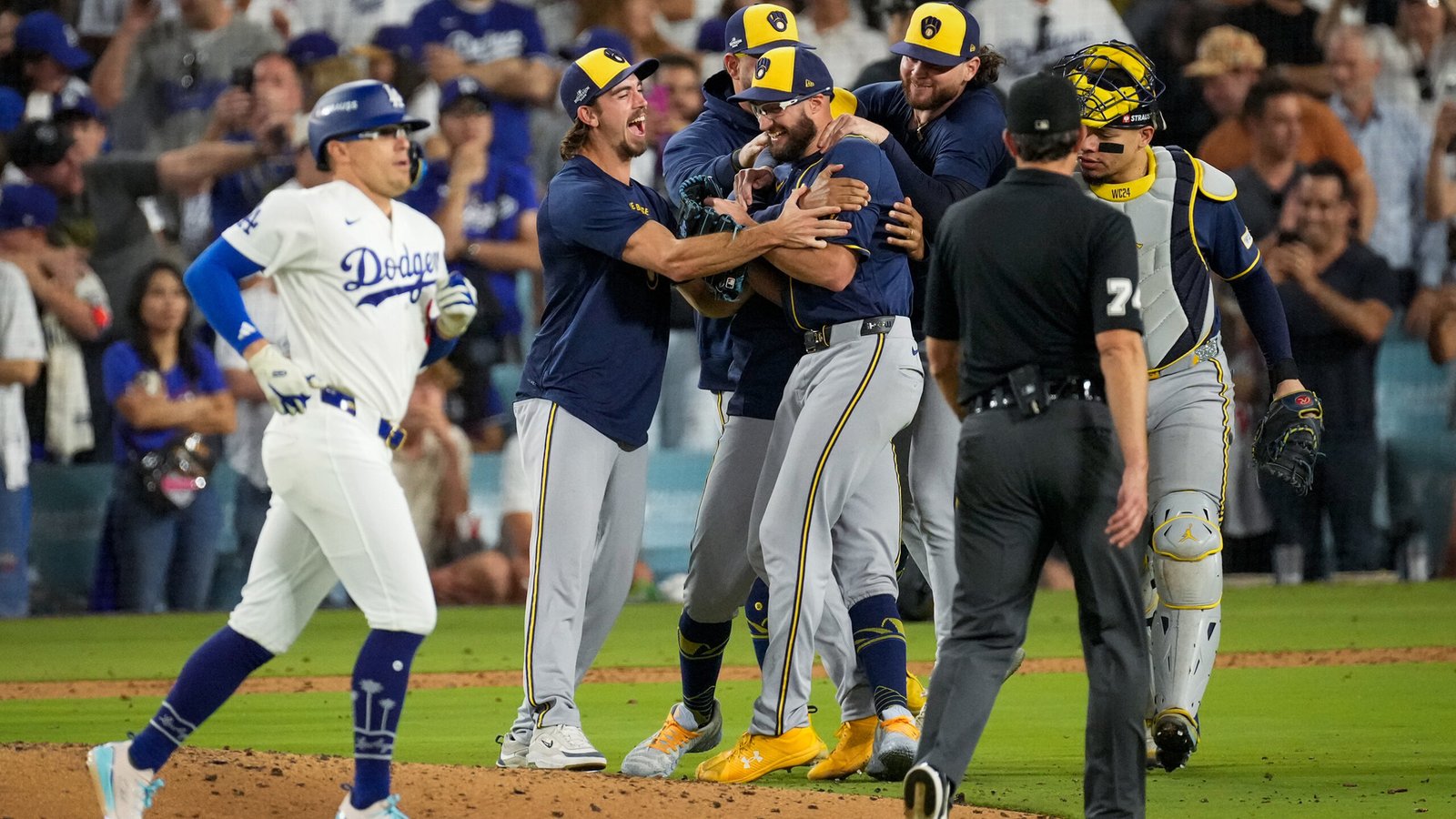
The Milwaukee Brewers enter the World Series with the better regular-season record and the stronger October bullpen numbers. The Tampa Bay Rays arrive with a different advantage: their starters have carried far more of the postseason workload. The best-of-seven series opens Friday, October 23, at American Family Field in Milwaukee, with Game 1 scheduled for 6 p.m. MDT.
The matchup turns on two connected questions. Can Tampa Bay keep Milwaukee’s patient offense off base, and can its starters work deep enough to reduce the number of innings decided by the bullpens? The Rays do not need to imitate the Brewers’ path through October. They need their own starting-pitching advantage to survive against a lineup that produced 832 regular-season runs.
When and where to watch
U.S. coverage is on FOX, FOX One and FOX Deportes, according to MLB’s announced schedule. In Canada, Sportsnet and Sportsnet+ carry the series in English. In French, TVA Sports carries the World Series. Streaming access depends on the applicable service and subscription.
All seven possible games are listed for 6 p.m. MDT, or 8 p.m. EDT. Games 5 through 7 are played only if needed. Milwaukee hosts Games 1 and 2 and any Games 6 and 7; Tampa Bay hosts Games 3 through 5 at Tropicana Field in St. Petersburg. The complete World Series Watch Guide provides the viewing reference.
| Game | Date | Venue |
|---|---|---|
| 1 | Friday, October 23 | American Family Field |
| 2 | Saturday, October 24 | American Family Field |
| 3 | Monday, October 26 | Tropicana Field |
| 4 | Tuesday, October 27 | Tropicana Field |
| 5 (if needed) | Wednesday, October 28 | Tropicana Field |
| 6 (if needed) | Friday, October 30 | American Family Field |
| 7 (if needed) | Saturday, October 31 | American Family Field |
Milwaukee’s advantage begins with getting on base
Milwaukee finished 103–59; Tampa Bay finished 98–64. The Brewers scored 96 more runs despite hitting 15 fewer home runs. Their .341 on-base percentage, compared with Tampa Bay’s .326, helps explain why simply preventing a home run is an incomplete assignment for the Rays’ pitchers.
The Brewers drew 668 walks, 154 more than the Rays. Those walks represented 10.6 percent of Milwaukee’s 6,299 plate appearances. Tampa Bay’s pitchers, meanwhile, issued 409 walks in 1,443 innings, or 2.55 per nine. That creates a specific contest within the series: an offense accustomed to extending innings against a staff that limited free baserunners across the full regular season.
Those figures do not establish that walks alone produced the run difference. They do identify a practical problem. Extra runners increase the damage of a single or an extra-base hit and give a manager more difficult choices about when to change pitchers. Tampa Bay can challenge Milwaukee’s approach by throwing strikes without giving away hittable pitches merely to avoid a walk.
| 2026 regular season | Tampa Bay | Milwaukee |
|---|---|---|
| Record | 98–64 | 103–59 |
| Runs scored | 736 | 832 |
| Runs per game | 4.54 | 5.14 |
| On-base percentage | .326 | .341 |
| Walks | 514 | 668 |
| Home runs | 169 | 154 |
| Stolen bases | 164 | 162 |
| Team ERA | 3.70 | 3.51 |
| Run differential | +86 | +214 |
Sources: MLB’s final standings and regular-season Rays and Brewers records. Runs per game and run differential are calculated from those totals.
The Rays have obtained more from their starters
Through the League Championship Series, Tampa Bay’s starters supplied 50 innings with a 1.98 ERA. Milwaukee’s starters provided 30⅓ innings with a 2.97 ERA. The Rays have obtained 62.5 percent of their postseason outs from starters; the Brewers have obtained 42.7 percent.
The difference changes the shape of a game. A deep Tampa Bay start could leave fewer outs for its relief group and fewer opportunities for Milwaukee to force a bullpen change with runners on base. An early exit would bring the Rays into the part of the comparison where the Brewers have been strongest.
Milwaukee’s relievers have a 1.33 ERA over 40⅔ innings, compared with Tampa Bay’s 3.60 in 30 innings. They have also allowed three of 18 inherited runners to score, against eight of 20 for the Rays. Inherited runners can be charged to the pitcher who put them on base, so that comparison measures a different task from a reliever’s ERA. It should not be added to earned runs.
| 2026 postseason before World Series | Tampa Bay | Milwaukee |
|---|---|---|
| Games | 9 | 8 |
| Record | 7–2 | 7–1 |
| Team OPS | .649 | .739 |
| Starter innings | 50 | 30⅓ |
| Starter ERA | 1.98 | 2.97 |
| Relief innings | 30 | 40⅔ |
| Relief ERA | 3.60 | 1.33 |
| Relief share of team outs | 37.5% | 57.3% |
| Inherited runners scored | 8 of 20 (40.0%) | 3 of 18 (16.7%) |
The postseason samples cover nine Rays games and eight Brewers games against different opponents. Starting pitchers who worked in relief are counted in the role they performed. OPS combines on-base percentage and slugging percentage; ERA expresses earned runs per nine innings. Baseball’s one-third and two-third innings represent outs, not decimal tenths. The figures describe the completed rounds, not projected World Series performance.
The individual relief records also matter. Aaron Ashby has thrown 12⅓ scoreless innings in six appearances for Milwaukee, while Trevor Megill has added 5⅔ scoreless innings in five. Tampa Bay closer Bryan Baker has seven scoreless innings in seven appearances, and Cam Booser has 4⅔ scoreless innings in six. Milwaukee’s stronger team result does not mean every Rays late-inning option has struggled.
Sources: MLB’s postseason pitching-role records for Tampa Bay and Milwaukee, with Rays and Brewers individual pitching totals.
Game 1 pitching
Tampa Bay announced Nick Martinez as its Game 1 starter Thursday, opposite Milwaukee’s Jacob Misiorowski. Drew Rasmussen will start Game 2 on Saturday, giving him an extra day of rest.
Martinez has averaged 4½ innings across two postseason starts, striking out six and walking three in nine innings. His 142 pitches amount to 71 per start. Misiorowski has recorded 25 outs across two starts, averaging 4⅙ innings, with 11 strikeouts and four walks. His 182 pitches amount to 91 per start. Those are completed workloads, not announced limits for Friday.
| 2026 postseason before World Series | Nick Martinez | Jacob Misiorowski |
|---|---|---|
| Starts | 2 | 2 |
| Innings | 9 | 8⅓ |
| ERA | 3.00 | 3.24 |
| Strikeouts / walks | 6 / 3 | 11 / 4 |
| Pitches | 142 | 182 |
Source: MLB postseason records for Martinez and Misiorowski. Average innings and pitches per start are calculated from their two starts each.
In the Associated Press’s October 22 report, Brewers manager Pat Murphy addressed Misiorowski’s short October starts: “He hasn’t been as crisp,” he said. Misiorowski did not finish the fifth inning in either outing. Batters swung at 94 of his 182 postseason pitches and fouled off 51. Murphy said opponents were looking for an area to attack and trying to exploit it.
For Milwaukee, an efficient Misiorowski start could reduce the number of outs required from a relief group that has already handled most of its October pitching. Both Game 1 starters have averaged fewer than five innings this postseason, making their opening matchup different from Tampa Bay’s broader starting-pitching advantage. The Misiorowski Pitching Data study examines his short October outings in more detail.
Freddy Peralta gives Tampa Bay another substantial pitching contribution to build around. Across four postseason appearances, three of them starts, he has allowed two earned runs in 16⅔ innings, a 1.08 ERA. Those are his full postseason totals, separate from his ALCS-only performance. His record includes both starting and relief work; it does not announce his World Series assignment.
Availability and the voices before the series
Milwaukee opened its NLCS-clinching game with Jackson Chourio, Brice Turang and William Contreras at the top of the batting order. Jake Bauers started at first base and Christian Yelich was the designated hitter. That October 15 lineup identifies the recent offensive core, rather than confirming Friday’s order.
Kevin Cash ruled Shane McClanahan out for the remaining postseason after forearm fatigue, MLB reported October 11. That earlier shutdown remains an availability constraint.
Cash called Milwaukee “a great team” after Monday’s ALCS clincher. Tampa Bay had not announced its rotation in that Tuesday report; Thursday’s announcement establishes Martinez for Game 1 and Rasmussen for Game 2.
The AP’s October 22 report also quoted Cash welcoming two teams that play differently from baseball’s recent norm. That report does not specify the occasion of his comment.
Woodruff said after Tuesday’s workout: “As far as a decision, I haven’t heard anything.” His World Series roster status remained unresolved.
Cash’s ALCS assessment and Woodruff’s workout comment retain their earlier dates. The Thursday starter announcement does not establish final World Series rosters or batting orders. Peralta’s possible Game 3 assignment remains a projection in that report. Prior-round appearances describe how players have been used; they do not confirm the next roster or lineup.
What to watch as the series begins
The first useful signs will be Milwaukee’s traffic on the bases and how many outs each starter can secure. Tampa Bay’s strike throwing has a full-season foundation, and its postseason starts have been long enough to shape games. Milwaukee brings the better on-base record, a larger regular-season scoring total and a relief group that has handled a heavy October share while allowing few earned runs.
A Rays starter reaching the late innings with few baserunners would make that starting-pitching advantage tangible. A Brewers rally built on walks would test Tampa Bay’s relief choices earlier. Watch those situations alongside the final roster announcements and confirmed starting assignments.