
History · MLB
How the 1980 Phillies Finally Turned Contention Into a Title
The Phillies’ first championship followed years of October disappointment and one final escape at Veterans Stadium.
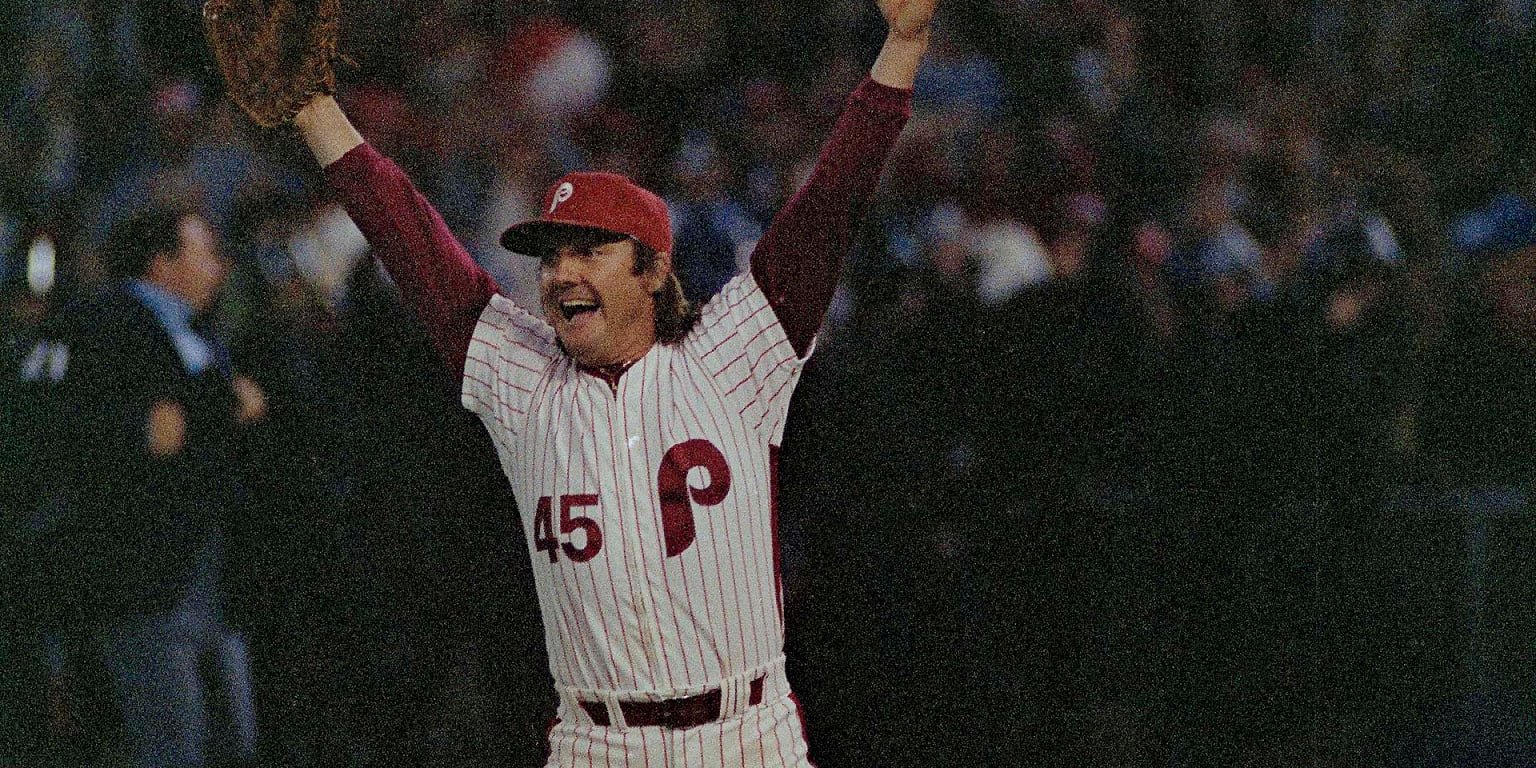
When Tug McGraw struck out Willie Wilson on October 21, 1980, the Philadelphia Phillies finally had the one result their earlier successes had not supplied. A 4–1 victory over Kansas City in Game 6 made them World Series champions for the first time.
The ending at Veterans Stadium has become the shorthand for the breakthrough: McGraw’s arms rising, teammates converging, a long wait over. The history behind it reaches beyond one relief appearance. Philadelphia’s established players had already won divisions and experienced October failures. In 1980, they completed the remaining steps.
A Contender Still Waiting to Finish
The Phillies entered the National League in 1883. Pennants in 1915 and 1950 had ended in World Series defeats. More recently, the club won three consecutive NL East titles from 1976 through 1978 without advancing beyond the league championship series.
That record separates the 1980 team from a sudden, unexplained champion. Mike Schmidt, Steve Carlton, Larry Bowa and Bob Boone were part of an established group. The question was whether a team with that experience could finally move through October, rather than whether Philadelphia could assemble a contender.
Schmidt helped settle the first requirement on October 4. His two-run home run in the 11th inning at Montreal gave the Phillies a 6–4 win and the division title. He finished the regular season with 48 home runs and 121 RBIs, then continued producing through the postseason.
Houston made the next stage substantially harder. The Phillies won the National League Championship Series three games to two, with the final four games requiring extra innings. They came back to win the last two in Houston, securing the franchise’s first pennant since 1950 before facing the Royals.
The Final Out Still Had to Be Earned
Philadelphia returned home for Game 6 leading the World Series three games to two. Carlton started, and Schmidt’s two-run single in the third inning gave him an early advantage. The Phillies carried a 4–0 lead into the eighth.
Carlton left after Kansas City put its first two hitters aboard in that inning. McGraw allowed one inherited runner to score but preserved the lead. The Royals then loaded the bases with one out in the ninth, bringing the potential tying run to first base.
Frank White’s foul popup produced the penultimate out. Boone reached for it, the ball escaped his glove, and first baseman Pete Rose caught it. McGraw then struck out Wilson. The win completed a four-games-to-two Series, with Schmidt named its Most Valuable Player.
October 21 ended the Phillies’ wait by joining two achievements: the sustained work of becoming a contender and the final success of a championship run. For a different first-title route, the 1969 Mets provide a useful comparison. Philadelphia’s breakthrough belonged to a team that had spent years arriving at October and, finally, finished it.
Sources and Notes
- Steve Ginader, SABR’s researched account of October 21, 1980, including its contemporary newspaper citations.
- Craig Muder, National Baseball Hall of Fame, on Schmidt’s division-clinching home run.
- Retrosheet’s Game 6 scoring record and MLB’s 1980 postseason record, for scores, series progression and the final game.
- The October 22, 1980 Big Spring Herald’s contemporary AP report, pages 1-B and 4-B, preserved by Texas Tech’s Southwest Collection.