
Fantasy
Marcus Mariota gets the London start and a strong superflex case
Jayden Daniels is out against Indianapolis, confirming Mariota’s Week 4 start. The Colts matchup offers upside, with Terry McLaurin’s availability still a final check.
Earlier Fantasy guide: This article addresses Week 4. Its injury reports and lineup recommendations are dated to that period. For current roster decisions, use the Fantasy player tools and latest Fantasy Pulse.
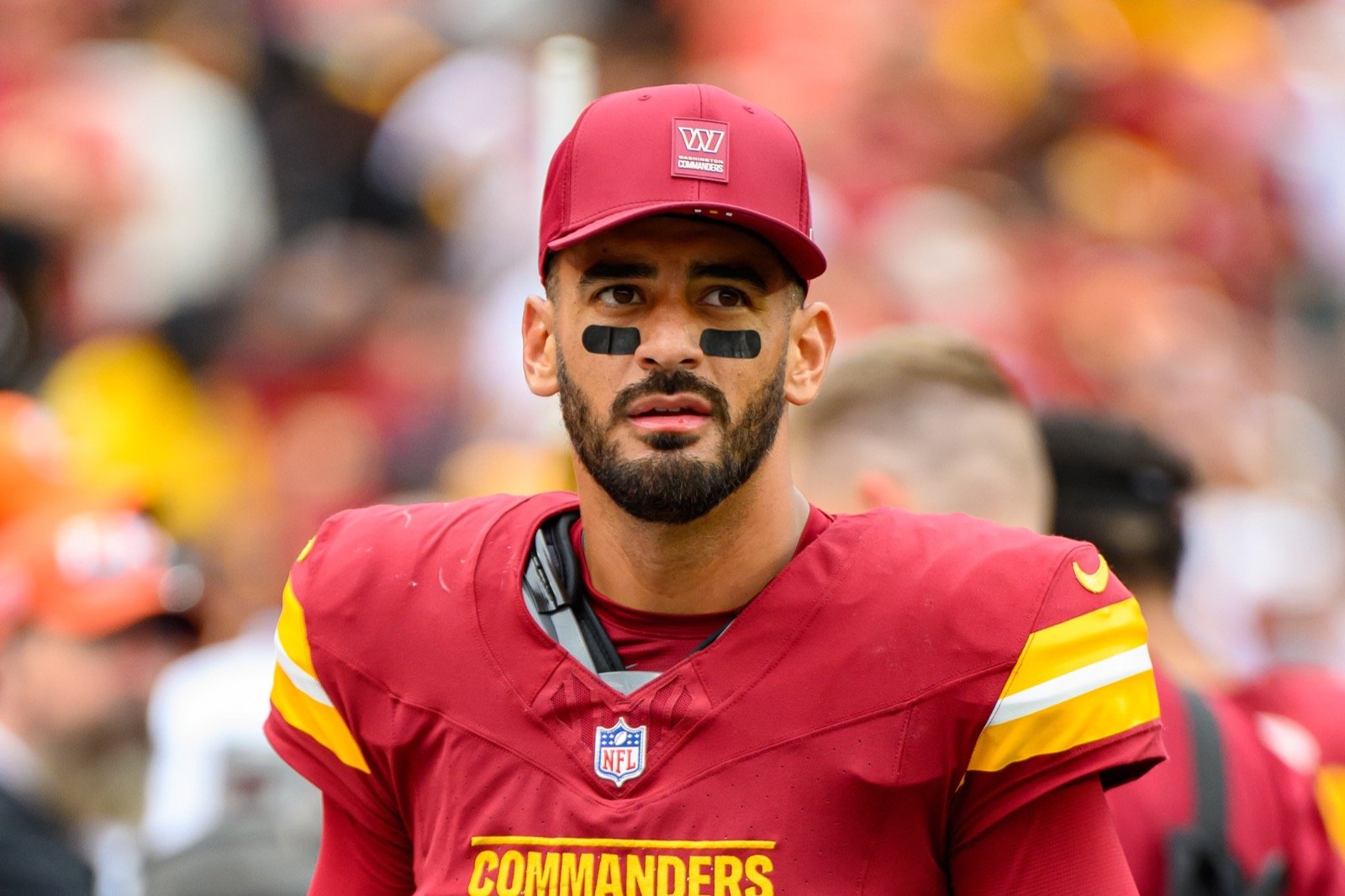
Marcus Mariota belongs in your Week 4 superflex lineup against Indianapolis after Washington ruled out Jayden Daniels on Friday. His confirmed starting role and the Colts matchup give managers short of a second quarterback a useful option for Sunday morning.
Coach Dan Quinn confirmed Daniels’s absence after three limited practices with an elbow injury. Mariota will make his second start of the season. In a conventional one-quarterback league, he remains a streaming candidate to compare with your usual starter, rather than a reason to bench an established elite quarterback. Washington’s Friday game-status report confirms the starting decision.
Terry McLaurin is questionable after a hamstring issue emerged Friday, and running back Rachaad White is out with a shoulder injury. McLaurin’s game-day status is a relevant final check for managers assessing Mariota’s supporting cast.
The game is in London: Washington faces Indianapolis at Tottenham Hotspur Stadium on Sunday, October 4, with kickoff scheduled for 9:30 a.m. Eastern, or 7:30 a.m. Mountain. The early window gives this decision a deadline well before the main Sunday slate. Washington’s official game preview confirms the venue and kickoff.
Seattle showed the upside and its dependence on touchdowns
Mariota completed 19 of 31 passes for 183 yards, three touchdowns and no interceptions in Washington’s 33–31 win over Seattle. He added 11 rushing yards on five carries. Under scoring that awards one point per 25 passing yards, four per passing touchdown and one per 10 rushing yards, that produces 20.42 fantasy points before any platform-specific adjustments.
Twelve of those points came from passing touchdowns; 7.32 came from passing yardage, with another 1.1 on the ground. Three passing scores on 31 attempts is a 9.7% touchdown rate for that game. One start does not establish that as a sustainable expectation.
Keeping the yardage and rushing output unchanged while reducing the passing touchdowns from three to one gives 12.42 points. That arithmetic is the reason to like Mariota without pretending he has a protected 20-point floor. Another strong week would need scoring success or more yardage to support it.
Indianapolis presents an opening, not a guarantee
The Colts’ first three opposing starting quarterbacks produced very different passing lines. Lamar Jackson threw for 324 yards and one touchdown, Patrick Mahomes for 382 yards and three touchdowns, and C.J. Stroud for 167 yards and one touchdown. These figures come from the published weekly player statistics, rather than a claim about a proprietary fantasy matchup grade.
| Quarterback | Attempts | Passing yards | Passing TD |
|---|---|---|---|
| Lamar Jackson | 25 | 324 | 1 |
| Patrick Mahomes | 47 | 382 | 3 |
| C.J. Stroud | 27 | 167 | 1 |
The three lines total 873 passing yards on 99 attempts, or 8.82 yards per attempt. That is encouraging evidence for a quarterback streamer, but the sample is only three games and contains Jackson and Mahomes. Their presence matters. Indianapolis has faced exceptional quarterbacks, and Mariota does not automatically inherit their production just because his name is next on the schedule.
Stroud’s 167-yard game shows that a low-yardage outcome is possible, too. The recommendation rests on Mariota’s confirmed role and a favorable opportunity, rather than a claim that Indianapolis cannot contain a passing game.
Washington’s official matchup preview adds team-level context: Indianapolis ranks 30th in passing defense at 276 yards allowed per game and 30th in scoring defense at 30.3 points allowed. Those are three-game rankings, not opponent-adjusted forecasts. The Colts also have seven sacks, tied for 11th, so favorable yardage results should not be mistaken for an absence of pass-rush resistance. The quarterback table uses individual passing yards; the team passing-defense figure reflects net yardage and therefore is not the same calculation.
The downfield tendency gives the upside some substance
There is more to the passing case than three touchdowns against Seattle. In its pregame reporting last week, Seattle cited NFL Next Gen Stats showing Mariota had thrown at least 10 air yards downfield on 44.4% of his attempts since the start of the previous season, highest among quarterbacks with at least 200 attempts in that sample. His completion rate on those throws was 50.9%, against a cited league average of 49.9%. The Seahawks’ official preview provides the historical context.
Those figures describe a willingness to pursue chunk gains across a historical sample. They are not a forecast of Washington’s London play calls. A productive deep completion could raise Mariota’s fantasy ceiling, but deeper throws can also produce empty possessions.
Count the rushing points you can justify
Mariota’s mobility is part of the appeal, but his name should not become shorthand for a rushing floor he has not shown in this particular sample. Five carries for 11 yards against Seattle contributed just 1.1 fantasy points. Those attempts do not, by themselves, establish a package of designed runs or a goal-line role.
Even modest rushing production can help. Twenty rushing yards are worth two points in a common scoring format, the equivalent of 50 passing yards. The mistake would be to build a recommendation around an assumed rushing touchdown. Six points from a quarterback rushing score can swing a matchup, but managers should treat that as an upside outcome rather than insert it into a baseline without evidence.
Six-point passing-touchdown leagues change the calculation again. Mariota’s Seattle line becomes 26.42 points under that rule, assuming the same yardage settings and no other adjustments. Losing one passing touchdown then costs six points instead of four. That format rewards a productive passing day more heavily, while also making an unsupported repeat of three touchdown passes a more consequential assumption.
Make the roster decision before the London alarm
Daniels managers in superflex or two-quarterback leagues have the clearest reason to add Mariota now that Washington has confirmed he will start. In a shallow one-quarterback league, compare him with other available starters before dropping a valuable season-long contributor.
In superflex, Mariota is a strong choice over a speculative receiver or running back whose role is uncertain. In one-quarterback leagues, use him when your current option has a weaker combination of availability, role and matchup. There is no need to bench an established elite quarterback to prove conviction in a streaming recommendation.
Review McLaurin’s availability and Washington’s game-day inactives before the 7:30 a.m. Mountain kickoff. If McLaurin is out, reassess the passing upside against your alternatives. Daniels is already ruled out; the remaining decision is how Mariota compares with your available alternatives. His starting job is confirmed, while the matchup supplies the reason to like his chances.
For the wider injury picture and alternative lineup decisions, consult the Fantasy Pulse notebook and the TSP Fantasy section.
Sources and methodology
- Friday quarterback and injury status
- Official Washington injury report
- Washington game preview
- Weekly NFL statistics
- Seattle preview and attributed Next Gen Stats
Availability updated October 2, 2026; statistical analysis first published September 30. Statistics through Week 3. Scoring examples are explanatory calculations, not point projections.
Sources and notes
- Thumbnail photograph: Joe Glorioso / All-Pro Reels, September 21, 2025; cropped and resized. https://commons.wikimedia.org/wiki/File:Marcus_Mariota_Commanders_2025.jpg
- Photograph and crop licensed CC BY-SA 4.0: https://creativecommons.org/licenses/by-sa/4.0/