

Iron Men
Harry Gallatin never missed. Robert Parish kept finding another season. LeBron James took the career record further. Behind one nickname are two very different tests of endurance.
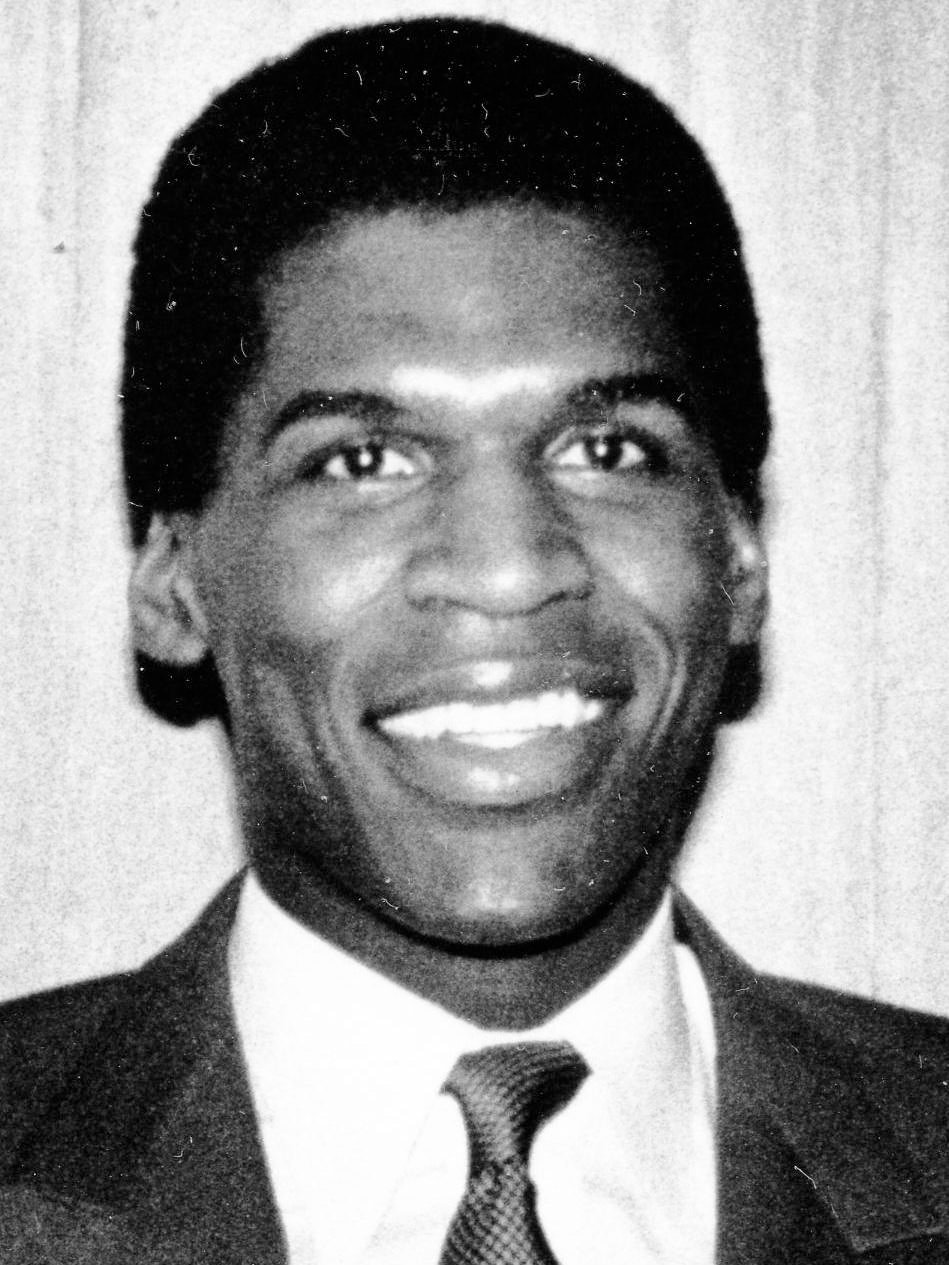
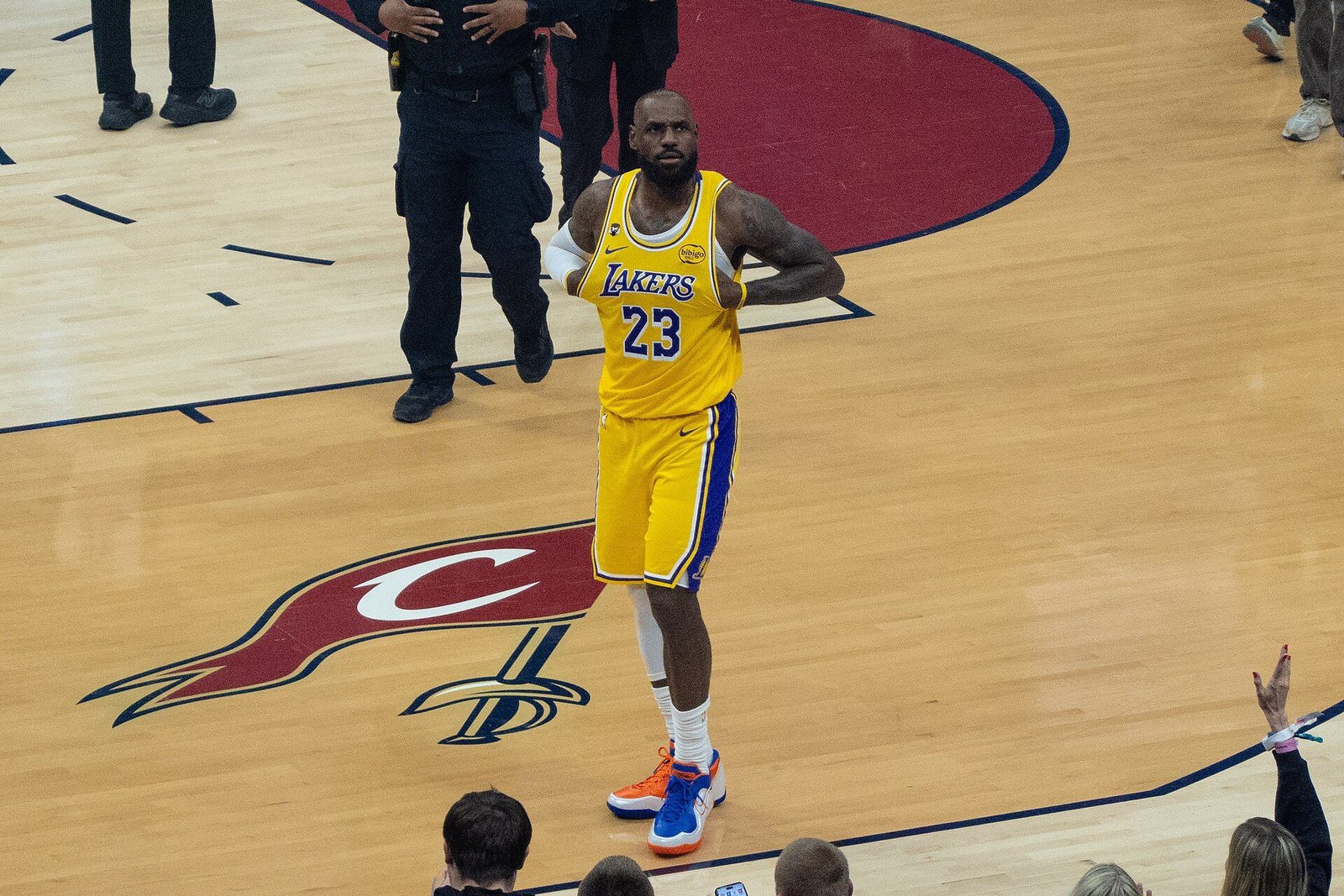
Robert Parish: City of Boston Archives, CC BY 2.0. LeBron James: Erik Drost, CC BY 4.0. Display-cropped photographs.


Harry Gallatin’s right foot was infected. His trainer could not understand how he stayed on it. Gallatin played 37 minutes, scored 27 points and took down 19 rebounds. The Knicks lost anyway.
The detail sits inside a February 1957 newspaper story about a much larger number. Gallatin was approaching his 654th consecutive appearance, the report said. Read a little further and the count changes character: it included 56 playoff games.1
That is the first rule of the iron-man story. Before admiring the number, find out what it counts.
Almost seven decades later, LeBron James passed Robert Parish with his 1,612th NBA regular-season appearance on March 21, 2026.2 James finished that regular season at 1,622.3 His record measures a career’s accumulation. Gallatin’s newspaper milestone measured an unbroken run, with postseason games mixed in.
Both belong in a history of durability. They do not belong in the same statistical column.
Two records, one nickname
A consecutive-games record stops growing the first time a player misses one. A career-games total allows him to recover, come back and keep adding. The distinction is not technical housekeeping. It changes the story being told.
A.C. Green’s NBA record is 1,192 consecutive games.4 James’s career total does not replace it. The streak and the career mark coexist; one did not evolve into the other and disappear.
The old newspaper vocabulary was looser. A headline could promise a “games played” record and leave the reader to discover whether it meant a streak, a career, or a count that included the playoffs. Following those distinctions produces a more interesting history than a single uninterrupted line of names.
The Horse
Gallatin’s teammates called him “Horse.” The Hall of Fame credits him with a then-record 682 consecutive games. Nine of his ten seasons were spent with the Knicks; the last was with Detroit. He was a seven-time All-Star and the league’s leading rebounder in 1954. Availability was part of a substantial basketball career, not a substitute for one.5
The February 1957 clipping brings the achievement down from the record book to the body. It describes chemical irritation on his right foot followed by a blistering infection. A day after the problem appeared, he played that long, productive game against Syracuse. Trainer Don Fredericks wondered how he managed it.1
“I play one game at a time,” Gallatin said.
It is a familiar athlete’s answer. Here it was almost a method of accounting: get through this game, then let the next one become the only game that matters. The count climbed in the background.
His published 654 was a checkpoint, not his final regular-season streak. Subtract the report’s 56 playoff appearances and the total is 598. The official 682 describes a different endpoint under a different counting rule. Those numbers can coexist without either being a printing error.
Schayes and the extra season
Dolph Schayes eventually went beyond Gallatin. A contemporary preview announced his coming 683rd consecutive regular-season game, explicitly identifying Gallatin’s 682 as the target. Schayes credited “Plane travel, good food and plenty of rest.”6 His streak ultimately reached 706.7
His career total introduces another complication.
Schayes played 63 games for Syracuse in the National Basketball League in 1948–49, before the franchise entered the NBA. Modern NBA statistical tables give him 996 regular-season appearances. Add the NBL season and the professional total is 1,059.8
This is why old reports can make him look like a different record holder from the one in a modern table. The extra 63 games were real. They were simply played on the other side of a league boundary.
The discrepancy matters most when Hal Greer enters the story. A contemporary report preserved in TSP’s archive says Greer became the all-time leader with game 1,060, at Phoenix on February 8, 1972. It names Schayes’s 1,059 as the mark he passed.9
Under an NBA-only count, the target was 996, so the crossing necessarily came earlier. The February 1972 milestone belongs to the broader professional ledger used in that report. Calling it the first time anyone passed 996 would be wrong; dismissing the newspaper because today’s table uses a different boundary would lose the event its readers actually celebrated.
Greer finished at 1,122 NBA regular-season games.10 He had not reproduced Gallatin’s perfect attendance. He had built a longer career. The nickname could accommodate both men even though the records could not.
Another night, another name
John Havlicek’s approach to Greer was visible before it happened. A November 1976 preview counted down to appearance 1,123 against Detroit. Havlicek remembered that he had once expected to play ten seasons; he was now in his fifteenth. The record offered a way to measure all the nights between the young player’s expectation and the veteran’s reality.11
The milestone came on November 20, 1976, in Detroit. Havlicek finished with 1,270 regular-season games.1112
Elvin Hayes passed that total in Philadelphia on February 8, 1984. The same report that marked game 1,271 had more spectacular performances to describe: Julius Erving scored 42 points and Houston rookie Ralph Sampson had 41. Hayes scored three. His accomplishment was not the best scoring night in the building. It was being there for another one.13
By retirement, Hayes had played 1,303 of a possible 1,312 regular-season games—nine absences in sixteen seasons.14 He provides the clearest overlap between the two meanings of iron man: near-perfect availability sustained long enough to take the career lead.
Kareem Abdul-Jabbar moved beyond Hayes with his 1,304th game on February 23, 1986. Again, the record shared its newspaper space with a more urgent drama. Magic Johnson’s late three-pointer forced overtime in a Lakers victory at Philadelphia. Abdul-Jabbar’s milestone appeared within the account of the game, one more remarkable thing that had happened before everybody went home.15
His eventual total, 1,560, became Parish’s target.
Still wanted
Parish reached 1,561 in Cleveland on April 6, 1996. He was a Charlotte Hornet, not a Celtic, and forty-two years old. At the first stoppage, with 9:48 left in the opening quarter, official Tommy Nuñez presented him with the ball. The contemporary AP account recorded a 90-second standing ovation.16
The ceremony celebrated the past. Parish was thinking about whether he would have another season.
Charlotte held an option on his contract. He told the reporter he was not tired of basketball, but did not know how much interest there would be in a player who would soon be forty-three. The record had not freed him from the ordinary uncertainty of an aging professional: somebody still had to want him on the team.
“What’s really amazing is that somebody still wants me,” he said.16
There would be another employer. Parish finished with the 1996–97 Chicago Bulls, won his fourth championship and retired after 21 seasons. His 1,611 regular-season appearances became the number that stood until James went past it in 2026.17
The longevity record rewards more than a body capable of surviving a schedule. It requires a player to remain useful through changes of teammates, coaches, roles and expectations. Parish’s question about another contract belongs beside the applause, not outside the story.
When first place changed hands
| Player | Milestone | Game at handoff | Career endpoint |
|---|---|---|---|
| Hal Greer | Feb. 8, 1972* | 1,060 | 1,122 |
| John Havlicek | November 1976 | 1,123 | 1,270 |
| Elvin Hayes | Feb. 8, 1984 | 1,271 | 1,303 |
| Kareem Abdul-Jabbar | Feb. 23, 1986 | 1,304 | 1,560 |
| Robert Parish | Apr. 6, 1996 | 1,561 | 1,611 |
| LeBron James | Mar. 21, 2026 | 1,612 | 1,622† |
*Greer’s contemporary milestone counted Schayes’s 63 NBL games. It is not the earlier NBA-only crossing. †James’s total through the end of the 2025–26 regular season. Streak records and playoff appearances are excluded. Sources: notes 2–3 and 9–17.
The number that keeps moving
James’s record-breaking appearance and his season-ending total answer different questions. The first marks the change at the top; the second records where his career stood when the 2025–26 regular season ended. Playoff appearances belong in a separate column.23
There is no need to make every era identical to appreciate the scale. Gallatin’s streak and Hayes’s near-perfect attendance were different achievements from Parish’s twenty-first season. Schayes’s NBL year cannot be erased merely because it complicates the arithmetic. Green’s consecutive-games record remains its own pursuit.
The common thread is less tidy, and more human. Players have to get through the next game. Then they have to earn the next season.
For Gallatin, the question was whether the foot would hold. For Parish, it was whether the phone would ring. The record book turns all of that into one more appearance.
Notes & sources
Associated Press, “NBA Record-Breaker: Gallatin Will Play 654th In Row For Knicks Tonight,” Toledo Blade, February 19, 1957, publisher-supplied scan reviewed for this edition. The report explicitly includes 56 playoff games and supplies the foot-infection episode, trainer’s name, game figures and Gallatin quotation. The 598 figure is subtraction, not a separately claimed milestone.
↩1 ↩2Tim Reynolds/AP, LeBron James passes Robert Parish for most regular-season games, NBA.com, updated March 22, 2026. The record-breaking game occurred March 21.
↩1 ↩2Brian Martin, 19 stats before LeBron James’s 19th playoff run, NBA.com, April 13, 2026. Confirms 1,622 regular-season games at the end of 2025–26. Totals in this feature are frozen at that season’s end, not represented as a live counter.
↩1 ↩2Los Angeles Lakers, December 1, 2010 game notes. Green’s 1,192-game consecutive streak ran from November 19, 1986, through April 18, 2001.
↩Naismith Memorial Basketball Hall of Fame, Harry Gallatin. The 682-game streak, ten-season career, team history and honors.
↩“Dolph Schayes To Set ‘Games Played’ Record Tonight,” publisher-supplied contemporary newspaper crop. Reviewed for the 683-game milestone, its explicit regular-season definition, and Schayes’s quotation. Publication and issue date are not visible in the supplied crop.
↩NBA.com, Archive 75: Dolph Schayes. Confirms the completed 706-game streak. This is a consecutive-games figure, not a career total.
↩Basketball-Reference, Dolph Schayes NBA record and NBL record; NBA.com, Dolph Schayes career profile. The latter displays both the 996-game NBA figure and the historical 1,059-game total. The NBL season accounts for the 63-game difference.
↩“Hal Greer Breaks Record,” publisher-supplied contemporary newspaper scan. The item states that Greer’s 1,060th regular-season appearance came February 8 at Phoenix and surpassed Schayes’s 1,059. Full publication details are not visible in the crop. The 1972 chronology is also supported by the companion “Hal Greer Ties All-Time Mark With 1,059 Game,” UPI, News Register, February 7, 1972, in the publisher’s archive.
↩NBA.com, Hal Greer career profile. Final NBA regular-season total: 1,122.
↩“Havlicek to break games played record,” Mississippi Press, November 19, 1976, publisher-supplied scan. The preview is cross-checked with the November 20, 1976 Boston–Detroit box score and SCP Auctions’ catalog of Havlicek’s record-game ball, which describes the inscribed date and Havlicek’s accompanying letter of authenticity.
↩1 ↩2NBA.com, John Havlicek career profile. Final regular-season total: 1,270.
↩“76ers 118, Rockets 107,” publisher-supplied contemporary newspaper crop; Basketball-Reference, Houston at Philadelphia, February 8, 1984. The clipping records Hayes’s 1,271st appearance and the game’s scoring figures; the box-score record identifies the date.
↩NBA.com, Archive 75: Elvin Hayes. Regular-season attendance: 1,303 of 1,312 possible games.
↩Associated Press, “Overtime win: Magic gets offensive; Lakers stop 76ers,” Camarillo Daily News, February 24, 1986, page A8. Publisher-supplied scan reviewed for Abdul-Jabbar’s 1,304th appearance in the previous day’s game. His final 1,560-game total is also identified as Parish’s target in the contemporary AP report cited below.
↩Associated Press, “Hail to the Chief: Parish breaks NBA games-played record,” The Island Packet, April 7, 1996, publisher-supplied scan. Source for the previous evening’s milestone, presentation, ovation, contract uncertainty and quotation.
↩1 ↩2Naismith Memorial Basketball Hall of Fame, Robert Parish; Louisiana Sports Hall of Fame, Robert Parish. Career endpoint, 21 seasons and four championships. Contemporary rankings printed in old biographies should be read in their historical context.
↩
About the reporting
This feature was rebuilt around contemporary newspaper scans in the publisher’s archive and checked against NBA, team, Hall of Fame and statistical records. The Gallatin, Schayes, Greer, Havlicek, Hayes, Abdul-Jabbar and Parish clippings were reread for this edition. Missing publication details have not been invented. Quotes come from the cited historical reporting, not new TSP interviews.
Updated September 2, 2026. This edition clarifies that consecutive-game streaks and cumulative career totals are separate, continuing records; it does not present them as one official succession. It also distinguishes modern NBA-only totals from the historical NBA-plus-NBL count. Regular-season totals are current through the end of 2025–26. The original article URL and publication date are preserved.