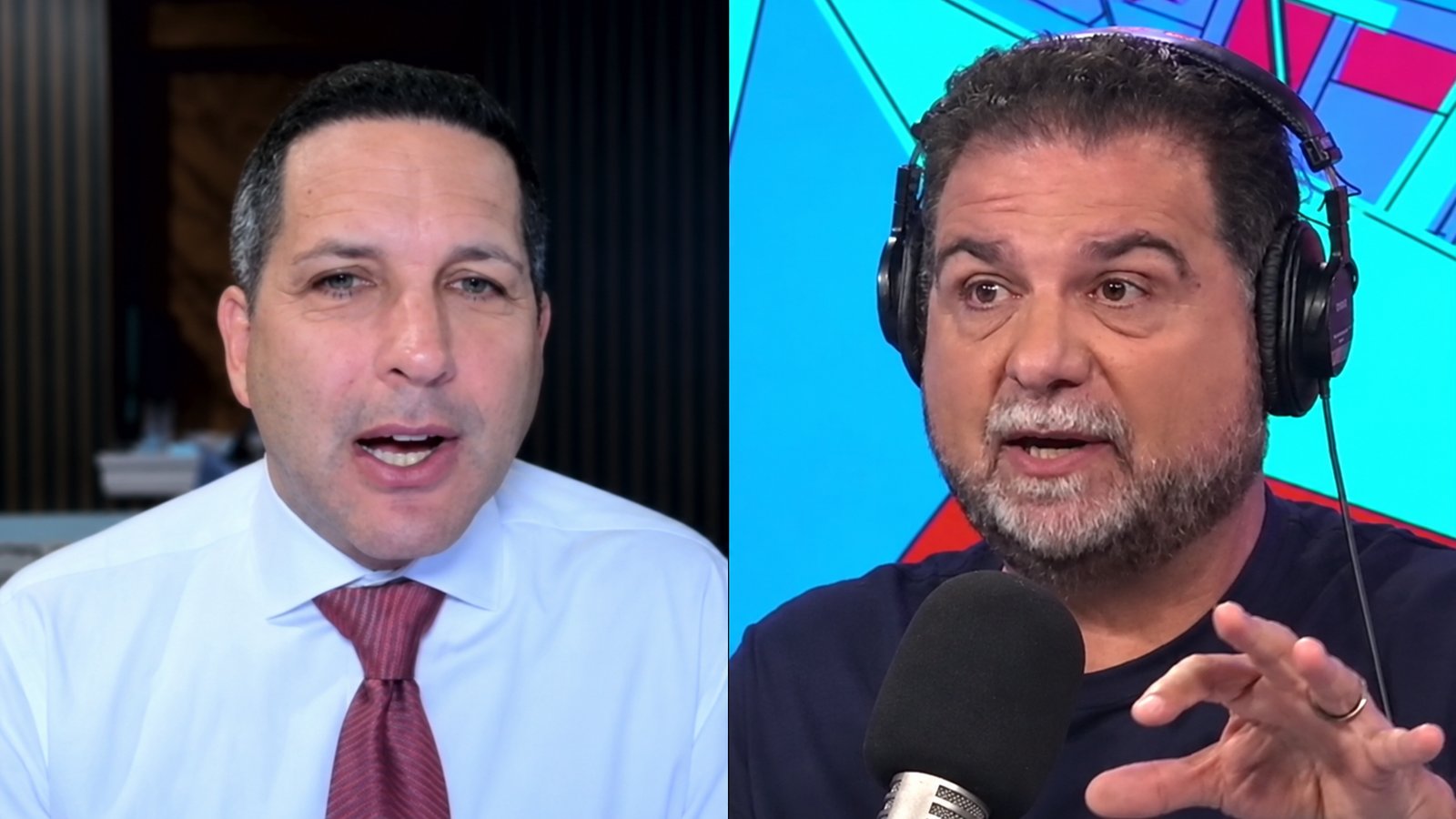
“Adam Schefter is the high end of how information gets contaminated because it’s the illusion of objectivity when everyone now knows, hey, some of this is compromised the way that he gets his information,” Dan Le Batard said.
Speaking on the October 13 edition of The Dan Le Batard Show, Le Batard criticized the relationships behind NFL reporting and described Schefter as an example of sports coverage moving toward promotion. His comments followed a discussion of Schefter’s reporting about Marvin Harrison Jr.’s trade from Arizona to Houston.
“It’s not a clean transaction where he’s so informed that he’s just plugged in with the teams and coaches,” Le Batard said.
He had just argued that pressure to promote teams would extend beyond local broadcasts, identifying Schefter as one of the places where he expected that change to appear.
“I’m saying all of this is creeping. I’m saying it’s going to happen everywhere, and one of the places it’s going to show up is with Adam Schefter being however compromised you think he is or isn’t because he becomes more and more a salesperson robot for the sport,” he said.
The relationships behind the reporting
Le Batard connected his criticism to the role of agents in supplying information and the consolidation of NFL media operations at ESPN. He described an industry in which the relationships that produce scoops can also raise questions about whose interests a report serves.
When a panelist described doubts about Schefter’s motivations, Le Batard corrected the term: “No, they’re questioning his objectivity.”
He pointed to the earlier “Mr. Editor” controversy involving Schefter and former Washington executive Bruce Allen. Schefter sent Allen an unpublished story in 2011; when the exchange became public in 2021, Schefter acknowledged a mistake while denying that he surrendered editorial control. A University of Texas media-ethics case study records the exchange and his response.

The NFL’s ownership stake
Le Batard also cited the business connection between ESPN and the NFL. Disney’s filing records a 10 percent noncontrolling ESPN interest for NFL Enterprises after ESPN acquired NFL Network and other media assets in January 2026. The stake belongs to the NFL, while NFL Network is among the acquired assets.
Those arrangements formed part of Le Batard’s criticism of the industry’s incentives. The transaction does not itself establish that a particular report was manipulated.
“And I just believe more and more over the next 10 years, these people are going to look and sound like infomercial salespeople on behalf of the product,” he said.
What he believed about the Harrison report
Le Batard’s criticism extended beyond the Harrison story. On that specific report, he said he believed Schefter’s explanation that Harrison had been told he would be traded before the destination was finalized.
“The only news he had at the time was that Marvin Harrison had been sent home, told he wasn’t playing in the game, and was going to be traded. So he didn’t report the team,” Le Batard said, recounting Schefter’s explanation.
Le Batard suggested that an agent could have known the player was being sent home without having confirmation of the destination from either team. That was his inference about the source, not a source identified by Schefter.
The discussion mentioned an earlier version of the reported compensation. Arizona’s October 12 announcement listed Harrison and a 2027 sixth-round pick going to Houston for second- and seventh-round picks in 2027.
Why the Marlins entered the discussion
Le Batard used changes to the Miami Marlins’ broadcast team as another example of the direction he feared sports coverage would take.
“They kept the people who have social media followings and they kept the people who are not critical of the team,” he said.
The Miami Herald’s Barry Jackson reported that promotion and subscription sales had become factors in the Marlins’ broadcast decisions. His account also identified broadcasting ability and executive preferences, and said Kyle Sielaff’s replacement was not about subscription sales. It did not establish a blanket prohibition on criticism.
Le Batard portrayed a future in which the people reporting on sports would increasingly be expected to sell them.
“And I believe that more and more, your reporters are going to be salespeople for sports. They’re going to be cheerleaders for sports,” he said.
Watch the discussion
Cover sources: The Pat McAfee Show, via Awful Announcing, and The Dan Le Batard Show. AI-assisted composite of separate broadcast frames.