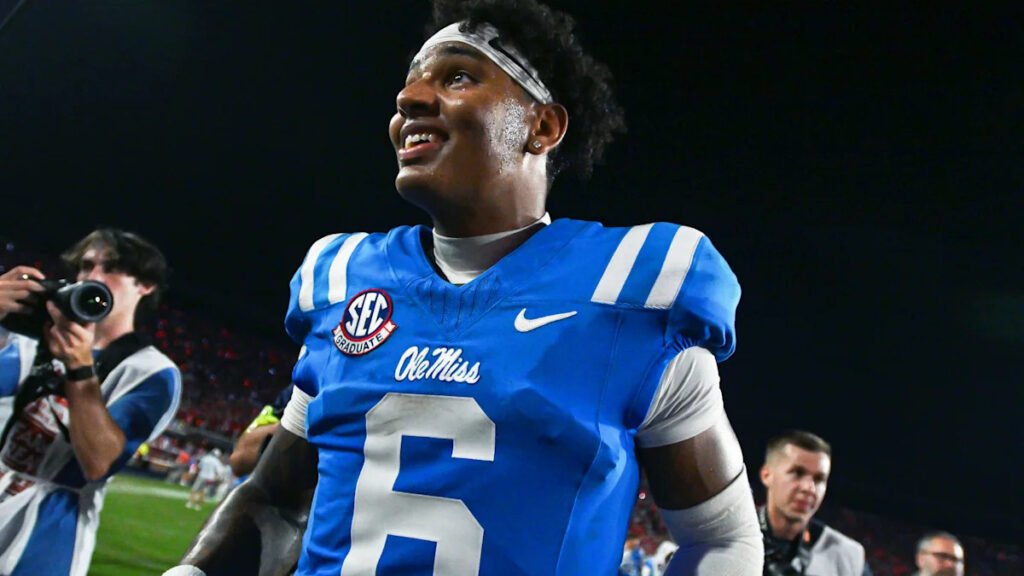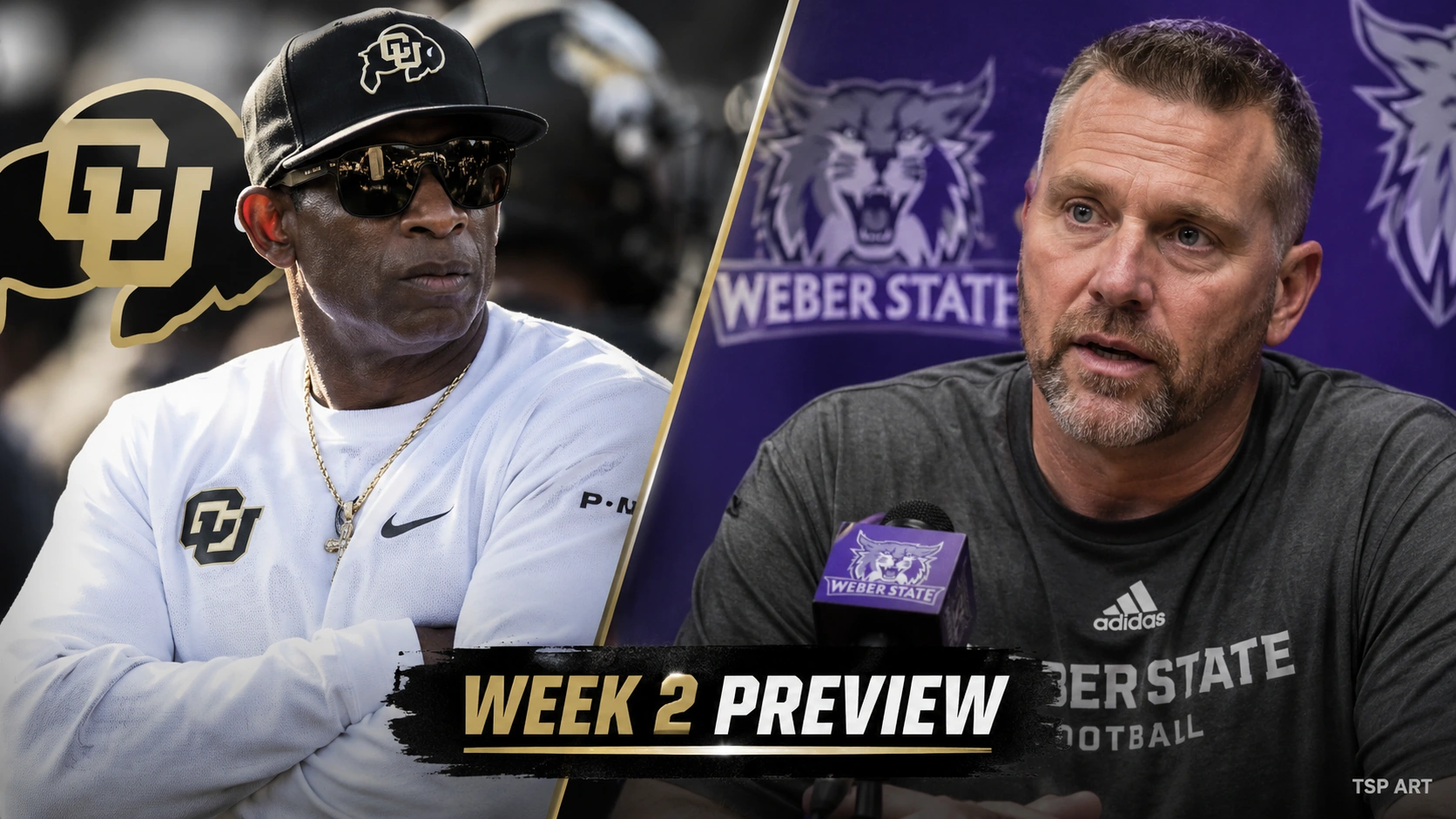
Julian Lewis saved his best passing for Colorado’s last possession at Georgia Tech. His late touchdown pass to Charlie Williams tied the score before Daniel Gerlach’s extra point put the Buffaloes ahead 14-13. Boo Carter then preserved the win with a field-goal block as time expired. Saturday’s home opener against Weber State asks whether Colorado can find that rhythm before it needs another late escape.
Weber State’s run defense gives Colorado a favorable matchup, but also a question about how to use it. The Buffaloes can keep feeding their backs while asking Lewis to punish a defense drawn toward the line of scrimmage. That would represent more useful progress than piling up passing yards after the result is settled.
A running advantage, but work left for Lewis
Colorado ran for 183 yards on 49 attempts at Georgia Tech and held possession for 34:09. Weber State allowed 368 rushing yards on 52 carries at Southern Utah, where the Wildcats lost 47-42. Those results favor the Buffaloes, although 148 of Southern Utah’s rushing yards came from quarterback Will Burns. Colorado should not assume it can reproduce that performance with a different offense.
Weber State coach Eric Kjar was direct about what needed to change after that loss. “I think we just need to be more physical up front, be a little bit more gap sound and fit run better,” he said, according to the Standard-Examiner.
Colorado’s interior line has an opportunity to exploit those problems. Sustained gains on the ground would force Weber to commit more defenders to the run and give Lewis more favorable passing situations.
Left guard Chauncey Gooden is central to that work. CU Athletics credited him with allowing no pressure or sack in the opener, when he also played eight defensive snaps. His description of the job was straightforward: “I take pride in moving somebody off the ball and doing my job at a high level.”
Lewis finished the opener 14-of-27 for 124 yards, with one touchdown and no interception. He completed four of six passes for 60 yards on the winning possession, which ended with Charlie Williams’ 20-yard touchdown reception. The composure deserves credit, but it also leaves a clear question for Saturday: can Colorado find those completions before it is forced into a two-minute offense?
The answer should show up on early downs, when Colorado still has the option to run. Accurate throws beyond the underneath routes would give Weber another problem to solve without asking Lewis to force the ball downfield.
DeAndre Moore Jr. and Danny Scudero combined for eight catches and 49 yards against Georgia Tech. Colorado needs more yardage from that volume. Improving it is a shared task for Lewis and his receivers; their Week 1 totals alone do not establish where individual plays broke down.
Dahle’s mobility and Kjar’s volume test the defense
Freshman Nate Dahle is listed ahead of Cash McCollum on the depth chart reported September 9, with Devin Brown recovering from an injured finger on his throwing hand when that report was published. Dahle started at Southern Utah and now faces his first Power Four opponent.
His first start was productive without being consistently efficient: 21 completions in 44 attempts for 282 yards, two touchdowns and one interception. He also ran for 85 yards on 12 attempts. That mobility gives Weber a way to escape pressure, but the incompletions and late interception show why Colorado should make him work through difficult passing downs.
“He’s a freaking baller,” running back Spencer Ferguson told the Standard-Examiner after the game. “He just does his thing, he slings it, makes quick decisions.”
Colorado’s task is to interrupt that rhythm without opening the middle of the field for the quarterback to run. An edge rusher beating his blocker does not finish the job if Dahle can step through an unprotected lane.
Lamont Lester Jr. recorded all three Colorado sacks at Georgia Tech. The defensive front helped hold the Yellow Jackets to 51 net rushing yards on 30 attempts. Against Dahle, pressure that keeps the quarterback contained will be more valuable than an aggressive rush that lets him extend a possession.
Noah Kjar is the receiver Colorado most needs to account for. He has 15 catches for 264 yards and four touchdowns through two games, and Weber targeted him 20 times at Southern Utah. His involvement is substantial enough that Colorado should be prepared to adjust help toward him rather than repeatedly leaving the same matchup untouched.
That adjustment cannot come at the expense of every other threat. Ferguson ran for 91 yards and two touchdowns last week. Weber can punish a defense that treats the game exclusively as a contest between its pass rush and a freshman quarterback.
The Wildcats have also moved Robert Young into a starting receiver role as Tate Kjar works back from a high ankle sprain. That September 9 report did not establish either player’s final game-day availability.
Coach Prime’s special-teams warning
Deion Sanders used his Tuesday press conference to identify the passing game and secondary as areas needing correction. His sharpest assessment concerned special teams.
“Special teams need to be special. I don’t know why we call them special teams and they’re not special.”
Deion Sanders · September 8
Colorado allowed a 100-yard kickoff return at Georgia Tech and had a fourth-quarter field-goal attempt blocked before Carter saved the game. Sanders described the coverage problem as a personnel issue and said it had been addressed. That explanation now needs a better result on the field.
Weber has already blocked three kicks in two games. Zach Smith blocked the late extra-point attempt that secured the win at Northern Colorado. At Southern Utah, Porter Hadley blocked a punt and Smith returned the loose ball for a touchdown.
For Colorado, sound protection and coverage would do more to demonstrate a correction than another spectacular recovery after a breakdown. Weber has already shown it can turn a kicking mistake into points.
The matchup board
Select a matchup to open the evaluation.
Colorado ballGooden and the interior line vs. Weber’s run fits
Watch the space between blockers, not just the final rushing total. Colorado benefits if its interior movement forces Weber to bring extra help toward the run. Lewis then has to use the passing opportunities that response creates.
Weber State ballLester’s pressure vs. Dahle’s escape lanes
The rush needs to close around the quarterback rather than run beyond him. A hurried incompletion or a throw short of the first-down marker can be a good defensive result without producing a sack.
Special teamsColorado’s protection vs. Weber’s block unit
Identify the rush before the snap and maintain the protection through the kick. Colorado should not need a rescue play from its own return or block unit to offset another avoidable concession.
Players to watch
Open a player card for this week’s focus.
ColoradoJulian LewisQuarterback
Look for useful completions before the offense needs a late-game rescue. A high passing total is less important than converting favorable downs into scoring opportunities.
ColoradoChauncey GoodenOffensive line
His work at left guard is central to a matchup that favors Colorado. Consistent movement inside would make it harder for Weber to protect its secondary without conceding rushing yards.
ColoradoLamont Lester Jr.Defensive line
The follow-up to his three-sack opener is about keeping Dahle contained as well as beating blockers.
Weber StateNate DahleQuarterback
The freshman can extend plays with his legs. Colorado should test whether he can find a second answer when his preferred throw is covered.
Weber StateNoah KjarWide receiver
His target volume makes him the clearest receiving priority. Watch whether Colorado changes its coverage help after Weber establishes how it wants to use him.
Weber StateZach SmithLinebacker / special teams
He has influenced both early Weber games with major defensive or special-teams plays. His early impact makes Colorado’s protection on kicking downs an important part of the matchup.
The Sporting Page outlook
Colorado is the pick because its strongest offensive performance from Week 1 matches up with Weber State’s most obvious defensive weakness. That advantage should help the Buffaloes dictate the game without asking Lewis to carry an unreasonable load.
Weber’s route to an upset begins with doing enough against the run to keep Colorado from controlling possession. Dahle and Noah Kjar can threaten the secondary, and the kicking units have already produced game-changing plays. To make those strengths count, Weber needs a defensive performance that keeps the score within reach.
For the Buffaloes, the best evidence of progress would arrive while the game is still being contested by the first units. Efficient passing alongside the run would be worth more than a large late total against a worn-down opponent. That is the distinction to carry into next week’s trip to Northwestern.