

Tennis
How Muchova Built Her WTA Finals Season on Three Surfaces
Two titles and two runner-up finishes took Karolina Muchova through hard courts, clay and grass. The results show the reach of her best weeks, with important differences between them.
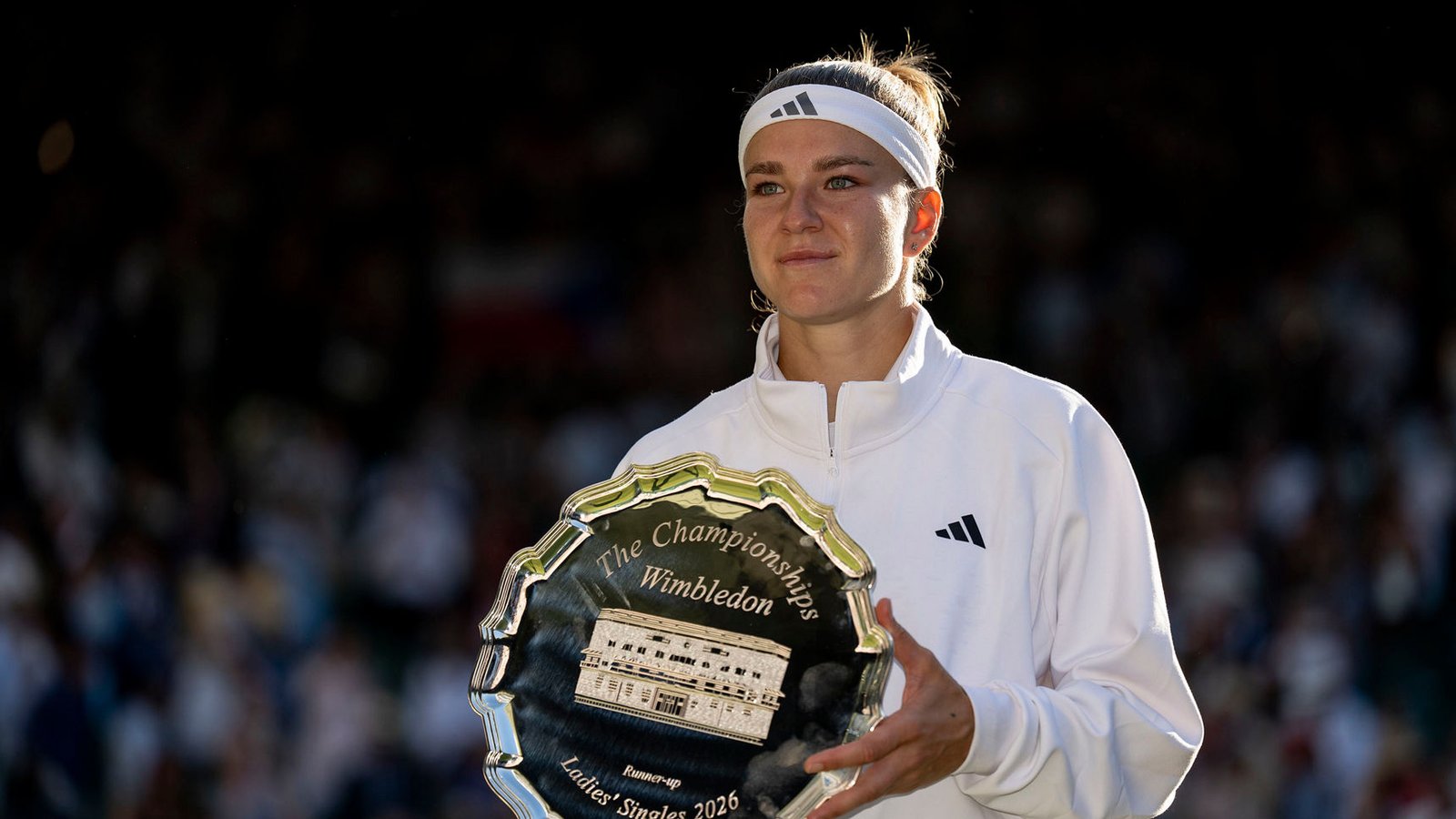
Karolina Muchova’s place at the WTA Finals was settled Wednesday, but the season that earned it took shape months earlier. Her four singles finals in 2026 were spread across hard courts, clay and grass. Two produced titles; the other two ended against Elena Rybakina and Linda Noskova, opponents who have also qualified for the season-ending event.
The eighth and final singles berth puts Muchova in position to make her first WTA Finals appearance after injury prevented her from competing when she qualified in 2023. The useful distinction in this year’s results is between the breadth of her best weeks and the consistency of the entire season. Reaching finals on three surfaces establishes the first. It does not settle the second.
Four finals, three different settings
| Event | Surface / level | Outcome | Final opponent and score |
|---|---|---|---|
| Doha, February 14 | Hard / WTA 1000 | Champion | Beat Victoria Mboko 6–4, 7–5 |
| Stuttgart, April 19 | Clay / WTA 500 | Runner-up | Lost to Elena Rybakina 7–5, 6–1 |
| Bad Homburg, June 27 | Grass / WTA 500 | Champion | Led Naomi Osaka 6–1, 1–0 when Osaka retired |
| Wimbledon, July 11 | Grass / Grand Slam | Runner-up | Lost to Linda Noskova 6–2, 5–7, 6–3 |
Doha supplied the first breakthrough. Muchova’s 6–4, 7–5 win over Victoria Mboko gave her a first WTA 1000 title and her first tour singles trophy since Seoul in 2019. It also required a response within the final: Mboko led 4–2 in the second set before Muchova recovered, broke again at 5–5 and served out the match.
That result matters separately from the eventual Finals qualification. It was a completed championship match at the tour’s highest regular-event level. Muchova did not have to wait for grass to produce a title-winning week, and a temporary second-set deficit did not extend the final to a decider.
Stuttgart adds evidence beyond the title count
The clay final ended more decisively against her. Rybakina won 7–5, 6–1, but Muchova’s route included victories over Coco Gauff and Elina Svitolina. The WTA’s final report notes that she entered that week a combined 0–9 against those two opponents.
Those wins make Stuttgart more informative than a runner-up label alone. Muchova advanced through opponents she had previously failed to beat, on a different surface from Doha. The final also supplies counterevidence to any claim that reaching the last match meant she had solved every matchup: after recovering from 5–2 down to 5–5 in the opening set, she lost eight of the final nine games to Rybakina.
Grass brought both a title and a major final
Bad Homburg and Wimbledon gave her consecutive tournament finals on grass. The first must be read with its ending intact. Osaka retired with a foot injury while trailing 6–1, 1–0. Muchova earned the title, but that final cannot be treated as a completed two-set comparison of their play.
Wimbledon supplied a different test. Against Noskova, Muchova recovered from 5–2 down in the second set and forced a third before losing 6–2, 5–7, 6–3. The two grass finals therefore show different things: a championship week that ended early in the deciding match, followed by a major run that continued through a three-set final.
What that record can tell us about the Finals
The WTA’s 2026 Grand Slam record also places Wimbledon beside a fourth-round Australian Open finish and third-round exits at Roland Garros and the US Open. Her major results were uneven. A Wimbledon final should not be allowed to stand in for all four tournaments.
The four-final comparison is a selection of her deepest runs, not a surface-by-surface win rate. Tournament levels, opponents and the retirement at Bad Homburg differ. What it establishes is that her best results were not confined to one surface or one month. The upcoming Finals will test her against the qualified field; October’s qualification confirms her place, rather than predicting how those matches will finish.
Sources and notes
- https://www.wtatennis.com/news/4596744/karolina-muchova-secures-final-qualification-place-for-fage-wta-finals-indian-wells
- https://www.wtatennis.com/news/4450588/muchova-reigns-in-doha-for-first-wta-1000-first-title-since-2019
- https://www.wtatennis.com/news/4490060/rybakina-outshines-muchova-in-stuttgart-for-first-repeat-title-13th-overall
- https://www.wtatennis.com/news/4527496/muchova-secures-first-grass-court-title-in-bad-homburg
- https://www.usopen.org/amp/en_US/news/articles/2026-07-11/linda_noskova_defeats_karolina_muchova_to_claim_2026_wimbledon_title.html
- https://www.wtatennis.com/players/322191/karolina-muchova/record
- https://www.wimbledon.com/en_GB/news/wimbledon_2026_karolina_muchova_final_
More from The Sporting Page
 Business of Sports
ATP Prize Money, Bonuses and Profit Sharing: How the Payments Differ
 Business of Sports
Wimbledon’s £64.2 Million Prize Pot: Where the Money Went in 2026
 Business of Sports