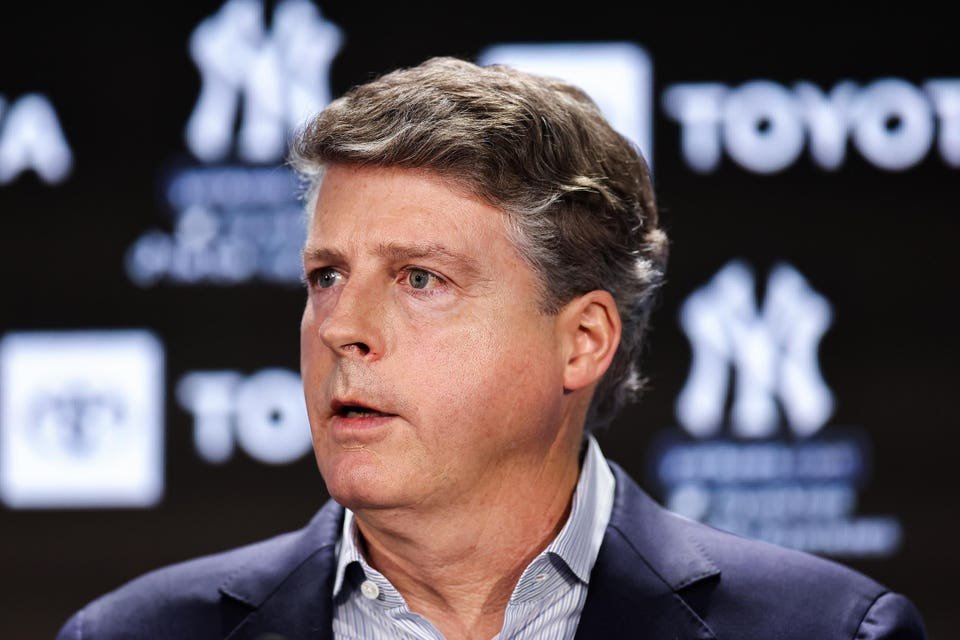
Hal Steinbrenner will continue running the Yankees with a new investor on the board and a $2.6 billion financing agreement behind the business. Apollo is taking an ownership interest, providing credit and giving existing shareholders a way to sell, all within an arrangement that leaves the family in charge.
The agreement was announced August 11, but September reporting has filled in more of its structure. The New York Post described an eventual 16% Apollo position, with the Steinbrenners retaining slightly more than 60%. Other reports detailed payments spread over several years and a change in Major League Baseball’s rules allowing larger private-equity investments.
For the Yankees, the appeal reaches beyond the size of the commitment. The agreement can accommodate owners who want to sell some shares, a family that wants to keep control and a business seeking money for growth and refinancing. Understanding who gets paid explains more about the transaction than the $2.6 billion total alone.
Buying into the business around the Yankees
Apollo’s investment is in Yankee Global Enterprises, the parent company whose holdings extend beyond the team. YGE also owns interests in YES Network, Legends Hospitality, AC Milan and New York City FC, according to the companies’ announcement.
The investment reaches beyond what happens at Yankee Stadium. Television, hospitality and soccer holdings sit within the same parent company, although YGE owns only part of some of those businesses. Apollo’s share of the parent therefore should not be read as a direct, identical percentage of every company in the portfolio.
Existing shareholders are also part of the arrangement. Sportico reported September 19 that the Steinbrenners were selling at least 4% of YGE, alongside sales by some limited partners. The Yankees and Apollo declined to comment on the family’s share sale.
The Post’s September 20 report gave a different figure, citing a person who described the family’s sale as no more than 3% of its controlling stake. The reports do not provide enough detail to establish whether they are measuring the same shares on the same basis.
Both accounts describe a family retaining control while selling a relatively small part of its investment. Apollo’s reported total position also includes interests beyond those purchased from the Steinbrenners, which is why the size of the family’s sale and the size of Apollo’s stake should be considered separately.
For shareholders, a transaction like this provides a way to turn part of a long-held investment into cash without selling the entire business. For the family that continues running it, bringing in a minority investor can accommodate those sales while preserving its authority.
Where the $2.6 billion goes
The official announcement identifies two uses for the financing: supporting growth and refinancing existing debt. It describes a mixture of credit and equity without providing a detailed payment schedule.
Forbes’ Maury Brown, citing CNBC’s Mike Ozanian, reported a package divided into three components:
| Reported component | Amount | What the reporting describes |
|---|---|---|
| Initial ownership investment | $800 million | An initial 8% interest in YGE |
| Further ownership investment | $800 million | Payments over four years for new shares |
| Loan | $1 billion | Borrowing included in the financing package |
| Total financing | $2.6 billion | The combined reported commitments |
The distinction between buying existing shares and issuing new ones explains where the equity money goes. When Apollo buys shares from a current owner, the seller receives the proceeds. When YGE issues new shares, the company receives the money and the ownership is spread across more shares.
The loan has a different purpose and cost. It supplies cash that must be repaid under the borrowing agreement. If some of that cash replaces existing debt, it passes through the company to the previous lender. The benefit then depends on whether the replacement borrowing offers better rates, a more manageable repayment schedule or other useful terms.
That makes the full commitment an incomplete measure of the Yankees’ new spending capacity. Money paid to selling shareholders does not enter the operating budget, and money used to repay an old loan cannot also fund another purchase. The amount available for growth depends on what remains after the required payments.
The reported schedule also spreads part of the investment across four years, so the full commitment should not be read as a single payment already delivered to YGE.
Apollo gets a board seat while the family stays in charge
The companies have been explicit about the leadership arrangement. Hal Steinbrenner remains the Yankees’ managing general partner and MLB control person, while Apollo Sports Capital chief executive Al Tylis receives a newly created seat on YGE’s board.
Board representation gives Apollo a formal place in the company’s governance. The announcement does not set out its complete voting rights or identify decisions that might require its consent, so the board seat alone cannot establish the extent of its influence.
The rights attached to an investor’s shares can matter as much as its ownership percentage. Different classes of stock can carry different payment priorities or conversion terms, so investors with similar percentages may have different claims on the business.
This is how continued family control can coexist with a substantial outside investment. The Steinbrenners retain responsibility for running the franchise, while Apollo receives the financial and governance rights negotiated in the agreement. The public announcement establishes the leadership; the contracts would explain the full relationship between the owners.
Baseball has also made more room for such investments. Front Office Sports reported September 22 that owners voted during the summer to raise the limit for an individual private-equity investor from 15% to 20%. The outlet attributed the previously unannounced change to a person familiar with the matter.
Under the reported rule, an investor cannot hold a larger percentage than the controlling owner when that owner has less than 20%. A separate requirement sets the controlling owner’s minimum at 15%.
Apollo’s reported 16% position would fit below the revised maximum. Earlier coverage assessing the transaction against a 15% ceiling was therefore working with a different understanding of the league’s rules. The later reporting explains how MLB can allow a larger institutional stake while keeping a controlling owner responsible for the club.
What the valuation figures actually measure
The ownership reports have produced another prominent number: the Post put the valuation significantly above $12 billion, while Sportico reported that YGE was valued at more than $10 billion.
A valuation above $12 billion would also satisfy the description of one above $10 billion, so those reports do not necessarily conflict. Neither provides a complete calculation that can be reproduced from the financing total. The company being valued, the treatment of debt and the share terms all affect the result.
The first step is to separate lending from the purchase price. The reported $1 billion loan buys a claim to repayment. Counting it as money paid for shares would overstate the equity purchase price and distort any valuation calculated from that price.
Even the equity portion needs context. In a straightforward purchase, paying $800 million for 8% would imply a $10 billion equity value. That calculation assumes the price and percentage refer to the same company and the same share basis. Different classes of shares, later issuances and debt adjustments can make the actual transaction more complicated.
The parent company’s wider holdings add another consideration. A valuation covering YGE cannot automatically be compared with an estimate covering the baseball franchise alone. Doing so could attribute value from the other businesses to the team or overlook differences in the liabilities included.
The reported prices are useful evidence of what investors will pay. A precise comparison with another franchise still requires matching the assets, debts and ownership rights being measured.
What changes for the baseball operation
Apollo executive Sam Porter discussed the Yankees agreement at Front Office Sports’ September 15 Asset Class event. He said the club had “a lot of latitude and leeway” in using the financing to develop its business. Yankees limited partner Peter Freund described an opportunity to “free up some capital to invest in the Yankees.”
Their comments help explain the attraction for the organization. Refinancing can make existing obligations easier to manage, while issuing new shares can fund expansion in exchange for an ownership interest. The benefits and costs depend on the borrowing terms and the rights granted to the new investor.
Neither executive identified a specific amount committed to player contracts in the published account. Any effect on payroll will depend on the cash available after the financing’s other uses and on how management chooses to spend it. A stronger financial position can broaden those choices without committing the Yankees to a particular roster budget.
For Apollo, the return will depend on the lending and ownership terms, including payments it is entitled to receive and the future value of its stake. For the Steinbrenners, the arrangement allows the family to preserve control while bringing in a financial partner and accommodating shareholder sales.
The result will become clearer through the company’s decisions: which debts it replaces, what new investments it makes and how the baseball operation benefits. The financing gives the Yankees more ways to fund those decisions. Hal Steinbrenner remains responsible for making them.
This article analyzes company announcements and published reporting. The Sporting Page has not reviewed the financing contracts or conducted interviews with the parties.