
Business of Sports · NBA
DAZN’s $119.99 Grizzlies Pass: What Fans Get Beyond the Free Games
The announced package includes 78 local games and 15 promised free broadcasts. That puts the standard pass near $1.90 per additional game, with the final inventory still subject to free-date and NBA Cup decisions.
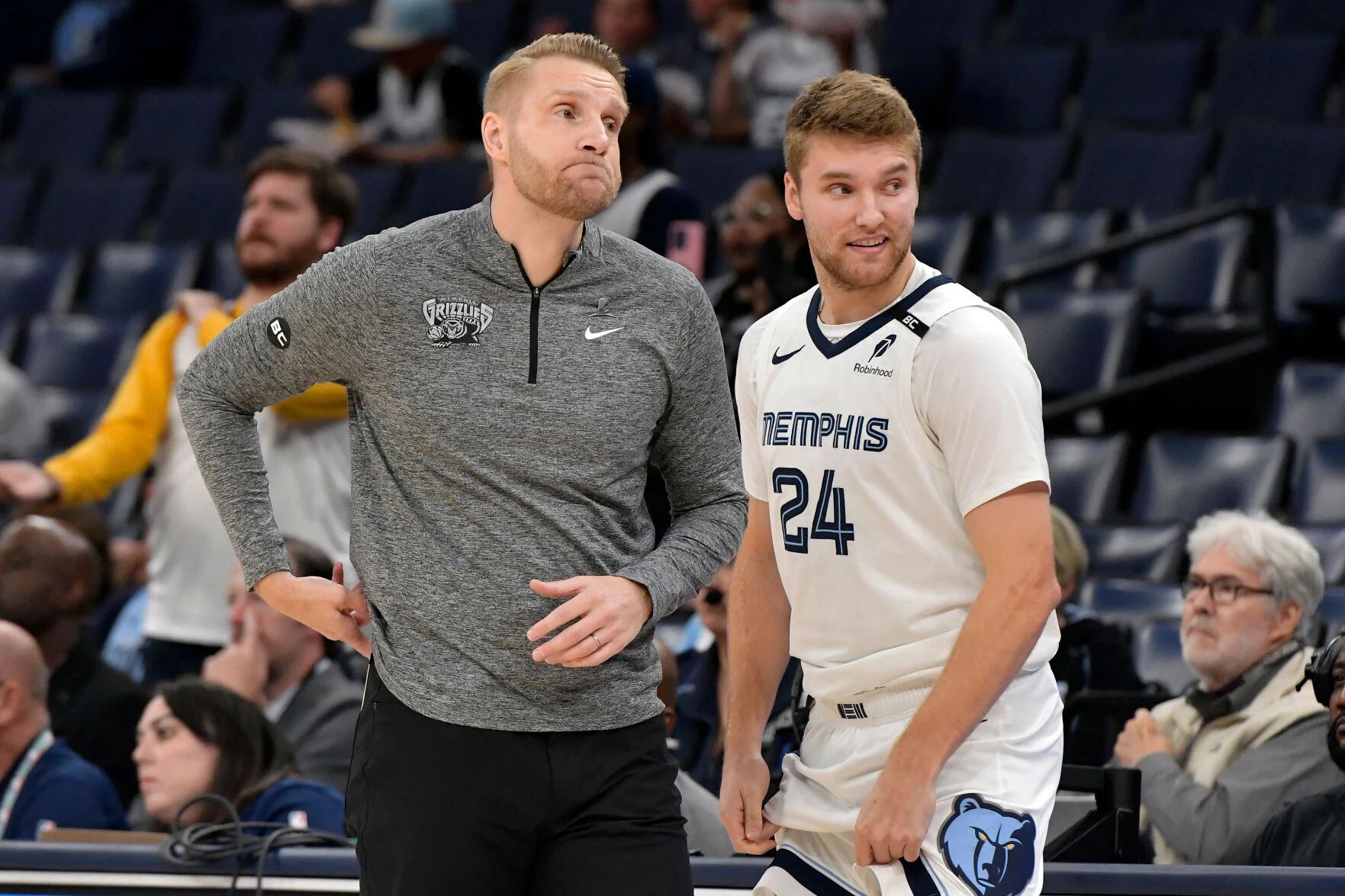
Under DAZN’s announced package, a $119.99 Grizzlies season pass works out to about $1.90 for each additional regular-season game beyond the 15 promised free broadcasts. That is the useful starting point for a Memphis fan deciding whether to subscribe. Dividing the price by an 82-game NBA season gives a lower figure, but counts games the advertised local package does not establish.
The calculation follows the announced 2026–27 offering: 78 locally available games from the 80 matchups assigned dates, with 15 available without a paid subscription. Subtract the free allocation and 63 remain. This is an analysis of that announced inventory for viewers in the Grizzlies’ U.S. broadcast territory, using advertised U.S.-dollar prices checked October 17. It is not a completed audit of the final 82-game season.
Start with the local games
In its September 10 announcement, DAZN committed to carrying 78 of Memphis’ 80 announced regular-season games. The NBA’s current Memphis schedule lists two national windows on other platforms: Houston at Memphis on January 18, on Peacock and NBCSN, and Portland at Memphis on February 6, on Prime Video.
Those are separate viewing requirements. A local season pass does not buy access to either national service. The two NBA TV dates on the schedule are different: the local package still includes them. Simply subtracting every game with a national television label would remove games fans can watch locally and understate the package.
The league initially fixed opponents and dates for 80 games per team. Two additional regular-season games depend on NBA Cup results. Their distribution cannot be assigned to the Grizzlies pass in advance. A Cup championship appearance would also need separate treatment because that game does not count toward the regular-season total. None of those unresolved games is used to improve the price-per-game calculation here.
| Measure | Games | What it means |
|---|---|---|
| Dated regular-season schedule | 80 | Two additional regular-season games remain Cup-dependent |
| National games outside the local package | 2 | January 18 and February 6 |
| Announced DAZN local inventory | 78 | Includes the free allocation |
| Promised free regular-season games | 15 | Eight dates named in the October 2 announcement; seven to follow |
| Additional games under the announced paid offering | 63 | 78 local games minus 15 free games |
Free on DAZN and free on television are the same games
A free DAZN account provides access to the app’s free games. The over-the-air arrangement with WATN/ABC24 is a simulcast. A game shown free through the app and on the station is one game with two viewing routes. It does not create a second free game to subtract from the paid package.
The October 2 announcement named the first eight dates, beginning with the October 23 trip to Golden State. The published broadcast announcement said the remaining seven would follow. Those eight matchups can be identified individually. The other seven free allocations cannot yet be matched to game IDs from that announcement, so the 63-game figure describes the promised package rather than a fully dated list of paid-only games.
| Date | Matchup |
|---|---|
| Oct. 23, 2026 | at Golden State |
| Nov. 2, 2026 | vs. New Orleans |
| Nov. 11, 2026 | vs. Denver |
| Nov. 16, 2026 | at Washington |
| Nov. 25, 2026 | vs. LA Clippers |
| Dec. 12, 2026 | vs. Milwaukee |
| Dec. 16, 2026 | vs. Miami |
| Dec. 23, 2026 | vs. Toronto |
What the price-per-game figures answer
Dividing $119.99 by all 78 announced local games produces $1.54 per game, rounded to the nearest cent. Dividing it by the 63 additional games produces $1.90. Both calculations use the same price. They answer different questions: the first spreads the cost over everything carried locally; the second measures the games a paying fan gains beyond the promised free offering.
The difference is about 37 cents per game before rounding. It is not an added fee. DAZN charges for the package, rather than charging those amounts for individual games, and subscribers receive replays and team programming as well. The comparison assigns the full pass price to live regular-season access so the denominator remains clear.
A fan who expects to watch only 20 of the additional games would effectively spend $6 for each game watched. Someone who watches all 63 gets the $1.90 figure. That example is a personal-use calculation, not a prediction about audience behavior. Games watched on the free tier should remain outside either fan’s paid-use count.
A season pass is almost exactly six monthly charges
Grizzlies Season Ticket MVPs receive a complimentary Season Pass, according to the team’s current product page. Those members should check their included access before buying another subscription.
The advertised standard monthly price is $19.99. Six charges total $119.94, five cents below the season price; seven total $139.93, or $19.94 more. The season label alone therefore does not establish a large saving. The number of charges a viewer actually incurs matters, along with the billing, renewal and cancellation terms shown at checkout.
The $139.99 Ultimate season pass costs $20 more than the standard season pass. It buys additional product features, including more simultaneous streams and multiview, rather than a larger announced local-game inventory. A comparison of game availability should hold that inventory constant instead of counting a premium interface feature as an extra basketball game.
Promotional tickets also have a different value from viewing access. A fan who can attend an eligible game might value them; a distant subscriber might not. Assigning an assumed resale price to those tickets would turn an advertised pass comparison into a speculative discount, so no ticket value is deducted here.
Check territory before comparing subscriptions
This calculation applies to the Grizzlies’ local offering. It is not a Canadian DAZN price or a nationwide U.S. package. The NBA’s League Pass blackout guide says U.S. local-team games are unavailable live on League Pass in the affected market. A cheaper out-of-market subscription therefore does not automatically replace a local pass.
For an eligible Memphis viewer, the buying question is how many additional games are worth paying to watch, after checking the free dates and any existing access. The 15 free games are a useful alternative for an occasional viewer. The 63-game calculation measures the additional games in the announced package while the remaining free dates and Cup-dependent games are resolved.
DAZN’s wider local-team rollout includes different subscriptions and distribution arrangements. The Memphis calculation should not be applied to another team without checking its own price, local schedule and free allocation.
Sources and method
Prices and package terms checked October 17, 2026. Inventory uses the 80 dated regular-season matchups on the NBA’s Memphis schedule and DAZN’s announced 78-game local offering. The 15 promised free games are deducted once. Eight have named dates in the cited October announcement; seven remain unassigned in that source. Two Cup-dependent regular-season games, any Cup championship game, preseason, postseason, taxes, promotions and non-game programming are excluded from the denominator. Arithmetic is TSP’s; prices are advertised U.S.-dollar amounts, not a completed checkout quote.