
Business of Sports · NBA · NFL
Who Is Gayle Benson? How the Saints Owner Got Her Money and Power
The New Orleans native inherited the Saints and Pelicans after a bitter family fight. Her background, fortune and ownership record explain who is behind the warning.
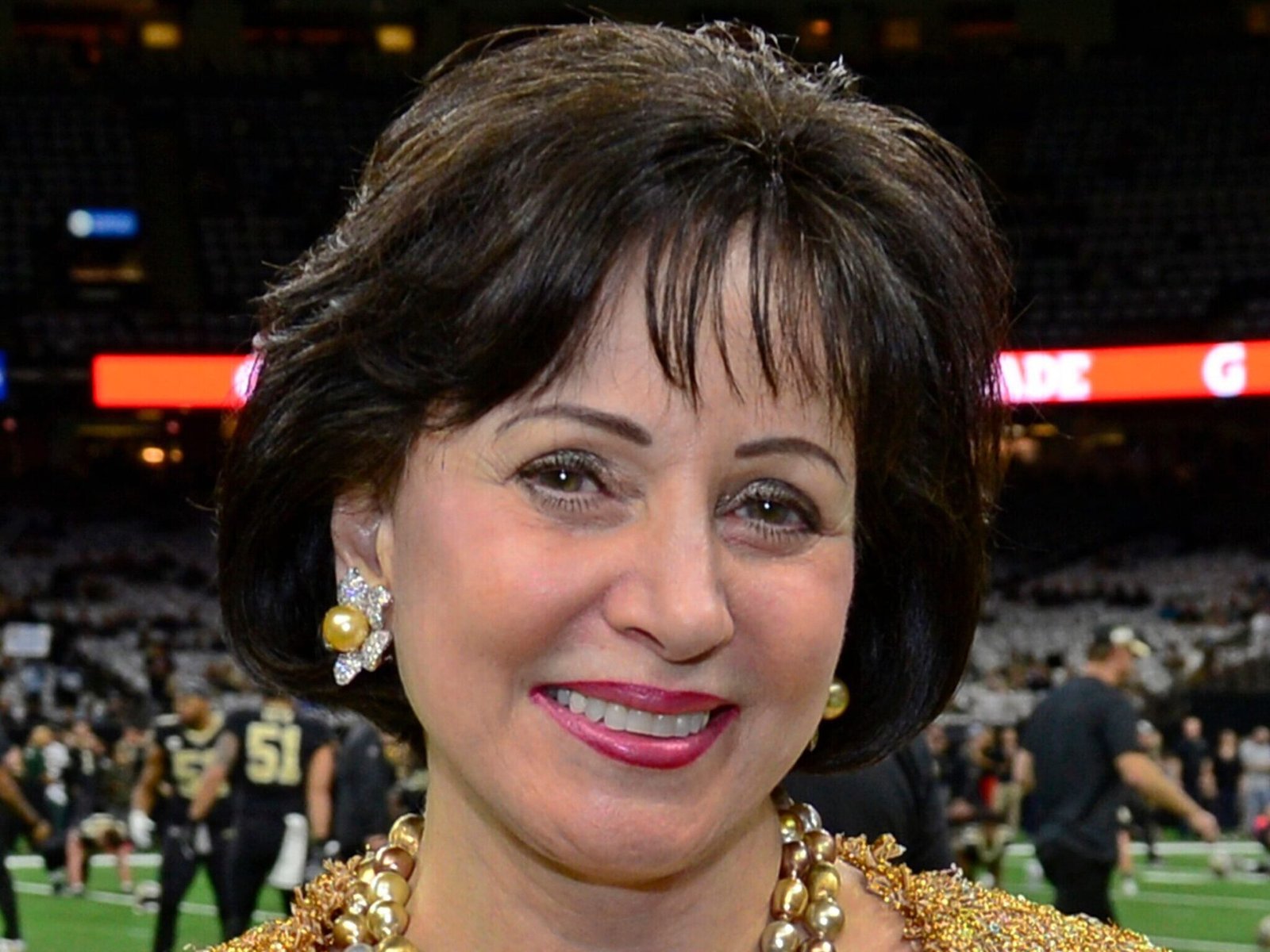
Gayle Benson has told the people running and playing for the New Orleans Saints that their performance is unacceptable. The owner’s public warning reached from head coach Kellen Moore and general manager Mickey Loomis to the players, with the team sitting at 1–4.
For anyone encountering her through that speech, the immediate questions are straightforward: Who is she? Where did she come from? How did she become rich enough to own an NFL team?
Benson is a New Orleans native who worked in interior design and property renovation before marrying Saints owner Tom Benson in 2004. When he died in 2018, she succeeded him as principal owner of both the Saints and the NBA’s New Orleans Pelicans. Her present fortune rests overwhelmingly on that inheritance and the value of the franchises.
Understanding her requires following two connected histories: the woman who built a working life before meeting Tom, and the transfer of a sports empire after a bitter family dispute. Eight years into her ownership, her decisions also deserve scrutiny on their own terms.
The warning that put her back in the spotlight
Benson spoke at the Greater New Orleans Quarterback Club on October 13. She said she would not accept the Saints’ level of performance as their standard and committed herself to making decisions necessary to improve the team. She assigned responsibility for coaching preparation, roster construction and execution across the organization.
NFL.com’s report of the remarks described an owner placing her leadership group under public pressure. She did not announce a firing or identify a specific personnel change. The force of the statement came from making accountability explicit while leaving the next decision open.
Her own club’s follow-up reporting showed Moore and quarterback Tyler Shough acknowledging the disappointment. The owner’s message created a standard against which their next performances, and her response to them, can be judged.
That distinction matters when assessing her power. Benson can replace the executives who assemble the roster and the coaches responsible for it. She also chooses how long to retain them. A demand for accountability ultimately reaches the owner making those choices.
Before the franchises: a life in New Orleans
Born Gayle Marie LaJaunie on January 26, 1947, Benson grew up in Algiers, across the Mississippi River from much of the city’s tourist landscape. She attended local Catholic schools and graduated from Martin Behrman High School in 1966. She is 79.
In an interview carried by Louisiana Public Broadcasting’s Louisiana Legends, she recalled sharing a small shotgun house with her parents, brother and sister. Her account emphasized cramped rooms, neighborhood life and a family routine shaped by Catholic faith. Those recollections describe an upbringing far removed from the private aircraft and owners’ meetings associated with her later life.
Her early employment included reception work at a dental office and managing a local operation for a New York jewelry business. She moved into renovating property and interior design. A 2015 Times-Picayune profile by Katherine Sayre traced that progression before Benson’s inheritance became a reality.
The city remained central to those activities. Her design work involved homes, hotels and commercial interiors, while restoring older property connected her business to New Orleans’ existing buildings. The experience gave her a professional identity and contacts before she became part of the Benson family.
She has described running her own design business for roughly three decades. That is her account of a long working career. It does not establish that the business produced anything approaching her current wealth; the public record identifies the franchises as the central source of the billionaire fortune.
What her design career tells us
Sayre’s reporting described a correspondence course in interior design and projects associated with hotels including the Ritz-Carlton and Fairmont. It also reported work involving Tom Benson’s automobile dealerships before the couple personally met. Their business worlds had crossed before their courtship.
In later interviews, Benson emphasized practical habits carried over from running a small business: maintaining relationships, answering messages and paying attention to details. These are her explanations of how she approaches ownership. They are useful evidence of her management philosophy, although they cannot substitute for evaluating a team’s results.
The difference in scale is considerable. A design business depends on individual projects, clients and collections. A major sports franchise also operates within a league, shares national revenues, negotiates major commercial relationships and relies on specialized executives. Ownership gives someone the authority to hire those specialists and decide whether their work is satisfactory.
Her transition therefore involved learning a different industry. In a 2021 NFL interview, Benson said Tom asked her after their marriage to devote herself to learning the football business so she would be prepared to lead if he could not. She credited him with teaching her to hire capable people, provide resources and let them work.
That preparation is part of her story. So is the route by which she obtained the position: her husband selected her as his successor, and the legal structure he established put her in control.
Meeting Tom Benson
The couple’s courtship began through St. Louis Cathedral in New Orleans. Benson has recalled reading at church and then accepting an invitation to an arena football game involving the VooDoo, another of Tom’s sporting interests. She told the NFL that the game was their first real date.
They married on October 29, 2004, at the Immaculate Conception Memorial Chapel in San Antonio. Both had been married previously. By then Tom had owned the Saints for nearly two decades and had already built the business fortune that made purchasing the team possible.
Gayle became a visible presence beside him at games, league functions and charitable events. The Saints’ Super Bowl championship followed the 2009 season, during their marriage, with Sean Payton coaching and Drew Brees at quarterback. It preceded her period as the principal owner.
The years alongside Tom gave her proximity to the operation before she took responsibility for it. They also placed her in the middle of a succession struggle involving relatives who had expected to inherit influence over the teams. The family dispute became a major public story in 2015.
Where the original money came from
Tom Benson’s wealth began in the automobile business. He worked in bookkeeping for a New Orleans Chevrolet dealership, moved to San Antonio to help manage a struggling dealership and ultimately took control of the business. Other dealerships, property investments and banking interests followed.
A contemporary 1987 Los Angeles Times profile documented the scale of the enterprise: dealerships, banks and commercial real estate spread across Louisiana and Texas. Football was an addition to an existing business empire.
In 1985, he led the group that bought the Saints from John Mecom Jr. for approximately $70 million. The Times reported the transaction at $70.2 million. The purchase involved an ownership group; describing it as Gayle buying the Saints, or as Tom simply writing a personal check for the entire price, distorts the history.
Tom later became the sole owner. His banking business also produced a substantial transaction: a Bloomberg obituary published by Fortune reported that Benson Financial was sold to Norwest in 1996 for $78 million in stock.
In 2012, he bought New Orleans’ NBA franchise, then called the Hornets, from the league for about $338 million. The club became the Pelicans in 2013. The Saints and Pelicans were therefore acquired at different times, under different circumstances, long before their combined value reached today’s level.
The financial sequence is clear: commercial businesses helped create Tom’s buying power, he acquired the sports assets, and ownership of those assets eventually passed to Gayle. The franchises’ subsequent appreciation helps explain why present estimates of her wealth are so much larger than the original purchase prices.
The family fight behind her inheritance
Tom’s decision to designate Gayle as his successor displaced expectations involving his adopted daughter Renee Benson and her children, Rita and Ryan LeBlanc. They challenged his mental competency and contested arrangements affecting family trusts. Allegations made during that fight should be understood as litigation claims.
The competency case produced a ruling in Tom’s favor. Judge Kern Reese found him competent in 2015; a Louisiana appeals court upheld that determination in 2016. The Associated Press reported the appellate outcome, and Tom publicly welcomed the decision. It allowed his choices about succession to stand.
A separate dispute concerned the value of assets used to replace nonvoting team shares in trusts benefiting Renee and her children. That distinction is important: control of a franchise and an economic interest in it are different things. Voting shares determine who exercises ownership authority; nonvoting shares can carry financial value without the same control.
The 2017 settlement reporting described confidential terms resolving the trust litigation. It also explained that Tom had retained the controlling shares. A settlement over exchanged assets was distinct from the court’s finding that he was competent to make decisions.
Nor did the dispute mean every relative received nothing. The same reporting documented a separate Texas settlement placing Renee in charge of the approximately $1 billion Shirley Benson trust, which held banking, dealership and property assets. Those arrangements should not be collapsed into a simple claim that Gayle took the entire family’s property.
After Tom died on March 15, 2018, his will became public. It directed his estate through a trust and named Gayle as the beneficiary, excluding the estranged relatives from that will. The full details of private trusts were not all publicly disclosed. The practical result was that Gayle became the controlling owner of New Orleans’ two major professional teams.
How rich is she, and what does the number mean?
Forbes’ real-time profile estimated Benson’s net worth at $11.2 billion as of October 15, 2026. The date matters because billionaire estimates change. Older articles quoting a lower figure describe an earlier valuation, rather than necessarily documenting money she spent or lost.
Net worth estimates combine the assessed value of assets and liabilities. They do not mean she has $11.2 billion sitting in a bank account. Privately held franchises are also not publicly traded shares with a continuous market price. A valuation is an estimate; an actual sale establishes what a particular buyer will pay.
The Bloomberg Billionaires Index’s explanation likewise identifies team ownership as the dominant source of her fortune. Its methodology uses its own asset estimates and dated franchise valuations. Numbers from different publishers should not be added together as though they formed one audited balance sheet.
For readers asking how she got her money, the answer remains inheritance, followed by ownership of assets whose estimated value has risen. Her earlier work matters to her biography. It does not explain the scale of the fortune that followed Tom’s death.
The businesses beyond football and basketball
Benson has also directed investments after inheriting the teams. In December 2021, Benson Capital announced its acquisition of Corporate Realty, a commercial real estate firm operating in New Orleans and the Gulf South. The acquisition announcement linked it to expanding the investment operation and building on an existing relationship with the company.
Benson Capital Partners subsequently announced a real estate fund with more than $50 million in commitments from 10 investors at its initial closing in January 2023. Biz New Orleans reported that it followed a $56 million venture capital fund investing in early-stage businesses, including technology and biotechnology companies.
Committed capital in a fund is not automatically the founder’s personal money. These vehicles can combine Benson’s investment with money from other participants. The distinction prevents a fund announcement from being mistaken for an additional personal fortune of the same size.
Her official biography also lists automotive holdings, real estate and GMB Racing, the thoroughbred operation established in 2014. Taken together, the interests extend her influence beyond the stadiums, into employment, property and business funding in the region.
Private wealth and a publicly owned stadium
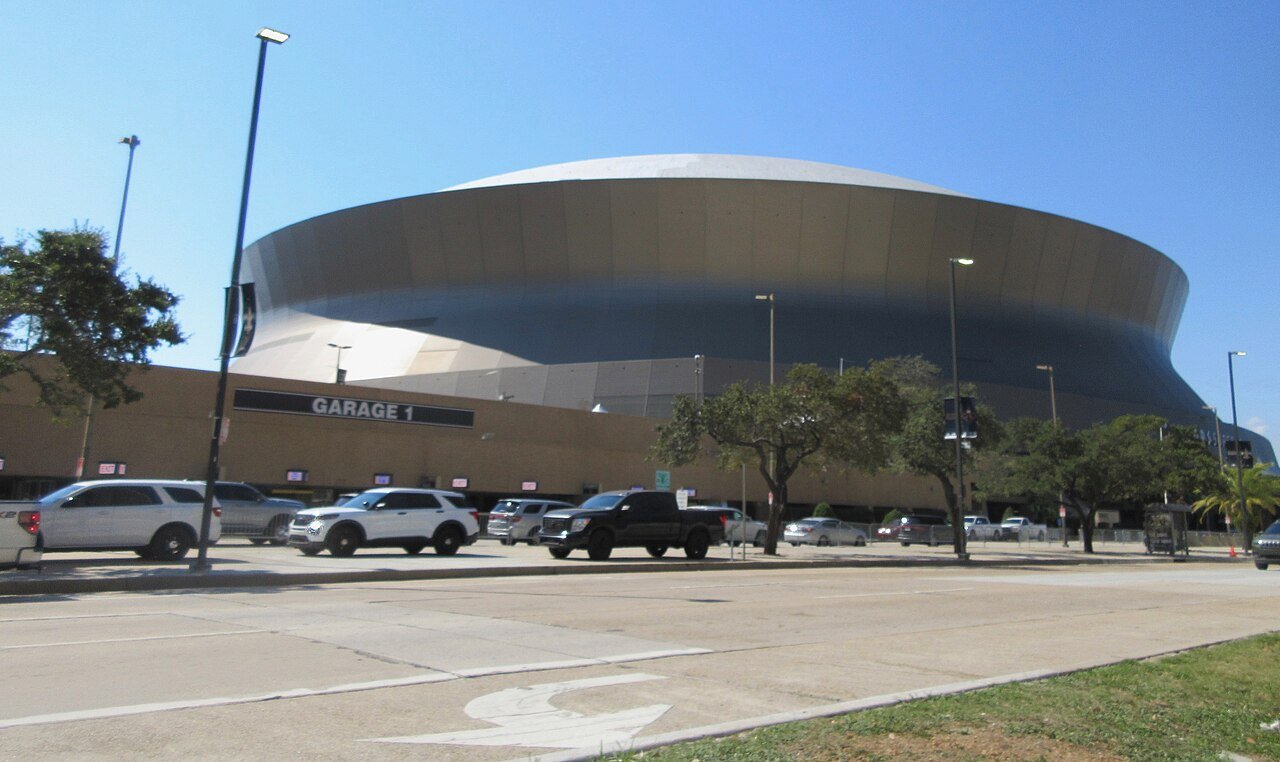
The size of Benson’s fortune also raises a practical question for fans: who pays for the building in which the Saints play? The Superdome belongs to the Louisiana Stadium and Exposition District, a public body. The team’s financial contribution and Benson’s personal net worth are separate parts of the discussion.
An official Super Bowl host committee briefing describes the financing of the $560 million renovation completed in August 2024. The Saints covered $180 million. LSED provided $326 million through sources including refinanced debt, event revenues, hotel and motel taxes, and operating cash flow. The state supplied another $54 million through pandemic aid and capital appropriations.
Those figures show a substantial team commitment alongside substantial public financing. The project added amenities and modernized a building used for football and major events. It was also the subject of hard bargaining between the franchise and the public officials responsible for the facility.
In May 2024, the AP reported that the Saints made an $11.4 million renovation payment after a public standoff with state officials. Lauscha had criticized the commission’s conduct; the eventual payment eased the dispute. The episode illustrates the commercial negotiations that continue beneath the language of civic partnership.
Owning the Saints gives Benson a prominent role in those negotiations. It also gives residents grounds to examine the commitments on both sides. A team contribution is not automatically a personal charitable donation, and public investment in a stadium is not money the owner alone supplied. Keeping those categories clear helps explain both the reach of her influence and the public interest in how she exercises it.
Her ownership record belongs in the picture
The Saints remained successful immediately after the transfer. They won the NFC South in 2018, 2019 and 2020 and reached the NFC Championship Game in the 2018 season. Their official historical record documents consecutive 13–3 seasons followed by a 12–4 campaign.
Those teams retained Brees, Payton and much of the structure developed under Tom. Subsequent seasons required different decisions as the quarterback retired and the coaching leadership changed. Dennis Allen’s tenure ended with his dismissal during the 2024 season. The Saints hired Moore in February 2025 after his Super Bowl-winning work with Philadelphia.
Benson presented Moore’s hiring as a step toward restoring a winning program. Her October 2026 warning is consequently directed at a coach hired under her ownership and an organization whose continuing leadership she has supported.
There has been a major basketball reset as well. In April 2025, the Pelicans replaced David Griffin with Joe Dumars as executive vice president of basketball operations. Reuters reported that the change followed a 21–61 season. In the official announcement, Benson described consulting players, coaches and league officials before choosing him.
These are ownership decisions with measurable consequences. Long relationships can provide stability, but an owner must also decide when continuity is failing. Her public insistence on accountability puts that judgment under the same spotlight as the people she employs.
Charity, faith and a serious controversy
The Gayle and Tom Benson Charitable Foundation has supported health care, education and other regional causes. The giving has produced tangible institutions. In 2010, for example, the Bensons delivered $5 million toward the cancer center bearing their names at Ochsner.
Ochsner announced plans for a new children’s hospital in 2023 following a foundation gift and held a groundbreaking in April 2025. The hospital’s announcement put the construction project at $300 million. It did not identify that entire project cost as Benson’s donation; treating the two figures as interchangeable would exaggerate the gift.
Her Catholic faith also connects personal history, philanthropy and public influence. Those connections have generated one of the gravest controversies surrounding the organization: team executives’ assistance to the Archdiocese of New Orleans during its clergy sexual-abuse crisis.
In February 2025, investigations by the Associated Press and WWL Louisiana/The Guardian examined internal emails from the period beginning in 2018. The reporting described a more extensive effort to manage publicity than the teams’ earlier characterizations had suggested.
WWL’s account described communications executive Greg Bensel offering his help with Benson’s approval, coordination over media strategy and proposed interview questions. The issue was the use of a sports organization’s staff, relationships and reputation to assist the church during a crisis involving abuse survivors.
Benson’s 2020 statement defended the help as an effort to promote honesty and transparency and denied that team personnel recommended individual names for inclusion on the church’s disclosure list. The Saints reiterated their denial of involvement in adding or removing names when the 2025 emails were reported.
The AP investigation documented why those explanations faced renewed scrutiny. A fair account of Benson’s public life includes both the documented assistance and the organization’s response. Her charitable work does not settle the questions raised by the emails.
What eventually happens to the teams?
In 2021, Benson and her advisers publicly outlined a plan for the franchises to be sold after her death, with proceeds intended to support charitable causes in the New Orleans area. The Associated Press reported the announced succession plan following interviews with the Times-Picayune and WVUE-TV.
Dennis Lauscha, president of the Saints and Pelicans, was identified as the person who would oversee the sales. The stated objective was to find ownership committed to keeping the clubs in New Orleans. That announced intention concerns eventual succession; it is not an announcement that either franchise is currently for sale.
The Times-Picayune’s detailed account explained that proceeds would be subject to obligations including taxes, debts and other interests before charitable distributions. It also noted that executives did not release the underlying private trust documents. A future sale price and the eventual amount available for giving remain different questions.
For now, Benson exercises the authority Tom arranged for her to inherit. She has used it to retain trusted executives, change leadership and invest beyond sports. Her latest Saints speech promises that poor performance will carry consequences. The next test is how she uses the power behind those words.
Sources and notes
- Cover photo: Joe-scott11. Archival photograph, cropped for display under CC BY-SA 4.0. Source: https://commons.wikimedia.org/wiki/File:Benson-headshot.jpg
- Cover photo licence: https://creativecommons.org/licenses/by-sa/4.0/