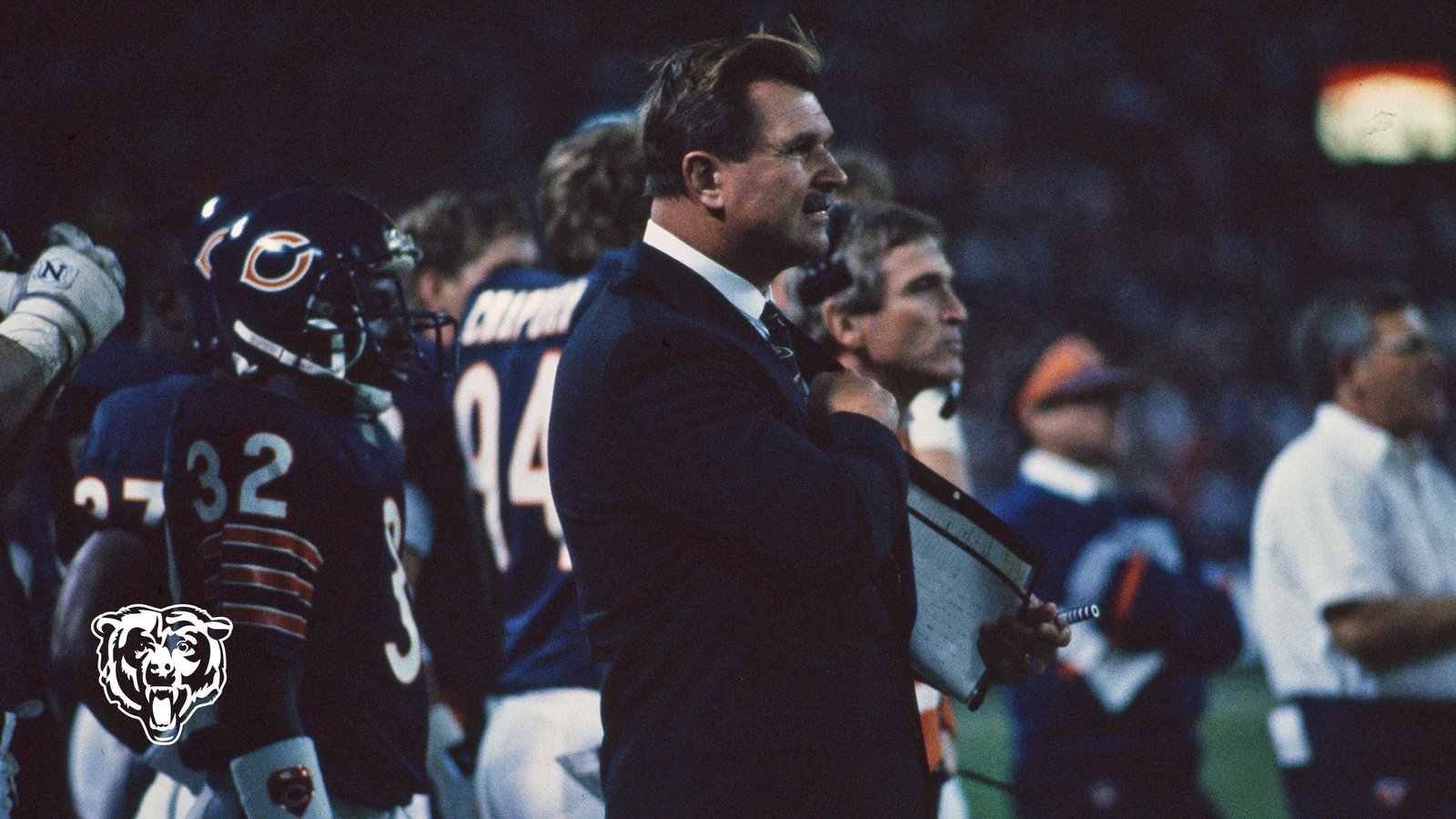
You can’t tell the story of football without Mike Ditka.
Chris Berman offered that remembrance to Christopher Russo on Mad Dog Unleashed, looking back on a friend whose career took him from the receiving tight-end position to the Chicago Bears’ sideline and a place beside Berman on television.
Ditka died Friday, October 9, at 86, his family announced. The Pro Football Hall of Fame confirmed the death of its 1988 inductee, whose career included championships with Chicago as a player and head coach. Berman’s conversation with Russo returned to both careers, and to the person he knew away from the public performances.
I was lucky to call him a friend,
Berman said. But how do you think of the Chicago Bears without Mike Ditka and his mustache, right?
Russo’s own tribute placed Ditka in a Chicago conversation that included Michael Jordan, Walter Payton, Ernie Banks, George Halas and Bobby Hull. He recalled the championships, the commercials and a personality that remained familiar well beyond the football season.
He played there. He won there. He coached there. He won there.
Russo said. He was that city. He represented that city.
Before Da Coach, a different kind of tight end
Berman wanted listeners who knew the coach and broadcaster to remember the player. He compared the generations who recognized Ditka’s public face with those who knew John Madden principally through television and the video game bearing his name.
Mike Ditka actually was a great tight end. He was.
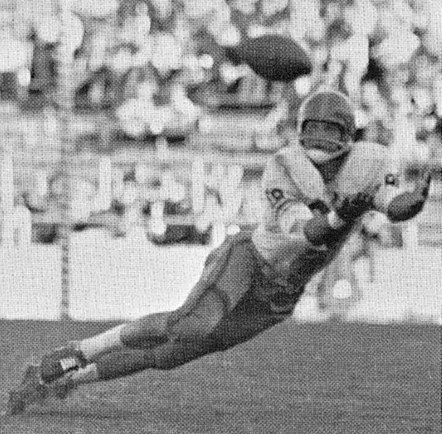
Ditka arrived in Chicago in 1961 after an All-American season at Pitt. His rookie totals were 56 receptions, 1,076 yards and 12 touchdowns. Those numbers came in a 14-game season, years before the modern receiving tight end became a familiar centerpiece of NFL offenses.
So he and John Mackey, who was a couple years behind him, changed that position forever. It became an offensive weapon,
Berman said.
Berman traced the position through later generations, including Kellen Winslow, Ozzie Newsome, Tony Gonzalez and Rob Gronkowski. His comparison with Gronkowski concerned the combination of blocking strength and receiving ability, rather than an assertion that Ditka had played the same offense.
Gronk and he were similar, like really powerful blockers, but really great receivers.
Ditka helped Chicago win the 1963 NFL championship. His playing career later took him to Philadelphia and Dallas, where he caught the final touchdown in the Cowboys’ 24-3 Super Bowl VI victory over Miami. The Hall of Fame welcomed him in 1988 as its first tight-end inductee.
A receiving career that began at 1,076 yards
Ditka’s receiving yards by season, 1961–1972

Landry, Halas and a return to Chicago
Russo recalled Tom Landry as Ditka’s coaching mentor. After his Dallas playing career, Ditka joined the Cowboys’ staff and added a Super Bowl XII championship as an assistant. He later wrote to Halas about his ambition to coach the Bears.
The Bears’ centennial history records that letter and Ditka’s introduction as head coach on January 20, 1982. The relationship had included disagreements during Ditka’s playing years. Asked about the falling out, Berman distinguished the reunion he remembered from the details he could not confidently supply.
I’m a little hazy on that. I don’t want to just hazard a guess.
He then returned to Ditka’s wish to go back: His heart was Chicago.
Berman recalled interviewing Ditka during the 1982 training-camp period. His recollection centered on the fit between the coach, the team and Chicago’s long association with defensive toughness.
He personified on offense and then as a coach the monsters of the midway moniker,
Berman said. He was a perfect Chicago Bear.
A caller introduced as Andre in Chicago offered his own memory of that change. He remembered being in seventh grade when Halas hired Ditka and a sophomore when the Bears became champions.
He changed a culture that still exists with the Chicago Bears,
Andre said. Russo agreed: He did change the culture.
The Bears of 1985
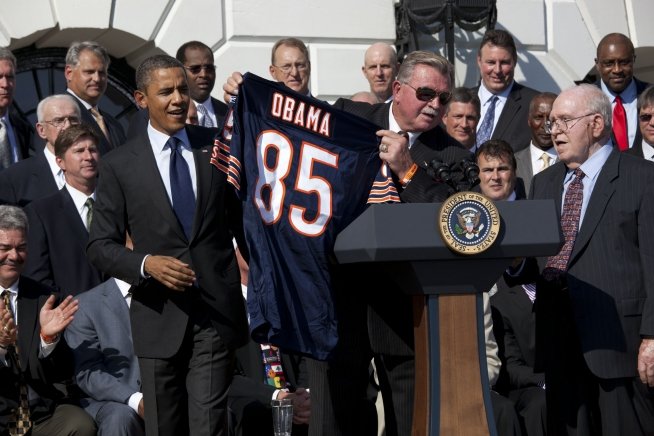
The 1985 Bears completed a 15-1 regular season and won all three playoff games. They shut out the Giants 21-0 and the Rams 24-0 before beating New England 46-10 in Super Bowl XX on January 26, 1986.
I mean, you remember the playoffs. Shut out the Giants. Shut out the Rams. Gave up 10 to the Patriots,
Berman said.
Russo called that defense The best defense I’ve ever seen.
He also recalled an offense with Walter Payton, Jim McMahon, Willie Gault and a strong line. His tribute credited Ditka with allowing the team’s personalities to remain visible.
Ditka was smart enough to let them show their personality. He had personality himself,
Russo said. Ditka orchestrated that championship.
Russo asked Berman about Ditka’s relationship with defensive coordinator Buddy Ryan, whose defense was central to the title. Both men were carried from the field after the Super Bowl, a scene Berman remembered while describing their competing personalities.
These are two hard-headed guys,
Berman said. They appreciated what each other meant for each other.
Chicago allowed 10 points across three playoff games
Chicago’s cumulative points against the combined points of its three opponents

The touchdown Ditka wished Payton had scored
The interview also returned to an absence in that Super Bowl victory. Payton rushed for 61 yards on 22 carries without scoring. Defensive tackle William Perry, used in the backfield, scored on a one-yard run.
Russo asked whether Ditka had lived to regret not getting Payton a touchdown in the blowout. Berman answered from his years working with Ditka.
I know he lived to regret that,
Berman said. But I know he lived to regret that, and he regretted that.
Berman recalled the affection and respect for Payton behind that disappointment. Russo had raised it in his earlier monologue, imagining the opportunity Ditka would have wanted if the game could be played again.
I think if he could do that over again, he would have figured out a way to get Walter, get him in the end zone in that situation,
Russo said.
The colleague behind the public persona
Berman’s memories of the television studio included another side of Ditka. While discussing the coach’s competitive relationships, he described the kindness he had come to know away from the camera.
Berman described Ditka as one of the kindest people behind the scenes,
recalling the colleague he had come to know.
He recalled Ditka taking part in the show’s Halloween sketches, known as Ditkaween, and enjoying the contrast between those appearances and the stern public image. The broadcaster’s experience with Ditka also included the Saturday meetings that preceded their Sunday work.
Berman remembered how little airtime Ditka sometimes needed. After others had discussed a subject at length, he could add a short judgment that gave Berman a natural point to move on.
He could do it in 20 or 25 seconds and it’s Mike Ditka.
In the continuation of the interview, Berman put that television skill another way: He was really good at putting a period at the end of the sentence.
New Orleans, and the city that remained his own
Ditka’s final head-coaching job was with New Orleans from 1997 through 1999. The Saints traded their six remaining 1999 draft selections and two 2000 picks to Washington to select Ricky Williams fifth overall. Williams became their entire 1999 draft class.
Asked about that experience, Berman separated the football outcome from the people and place. His answer began with his belief that Ditka had enjoyed New Orleans, then qualified the question of regret.
So I think football-wise, he regretted the trade. I don’t think in the end he regretted going to New Orleans, except they never were very good.
The conversation closed in Chicago, with Russo asking where Ditka belonged among the city’s sporting figures. Berman considered the difficulty of fitting Jordan, Payton, Halas, Banks and Hull into four places before returning to what Ditka represented.
He almost represents the way that the city views itself, I think,
Berman said. So he had to be on there.
Source conversation: Supplied recordings of Mad Dog Unleashed on SiriusXM Mad Dog Sports Radio. Excerpts retain the original speakers. Christopher Russo is the host; Chris Berman or ESPN’s Jesse Rogers is identified where appearing. The original broadcast date is not independently established.
- Mike Ditka’s official player profile and season statistics
- Pro Football Hall of Fame’s Ditka tribute and coaching chronology
- Bears centennial history: Halas, the letter and Ditka’s return
- Chicago’s consecutive 1985-season playoff shutouts
- New England’s official Super Bowl XX record
- Saints historical chronology and the 1999 Williams trade
- TSP’s existing report of Ditka’s death