
History
Seven Years After Vienna: Eliud Kipchoge’s Sub-Two-Hour Marathon
On October 12, 2019, Kipchoge covered the marathon distance in 1:59:40.2. The exhibition broke a barrier without becoming a ratified world record.
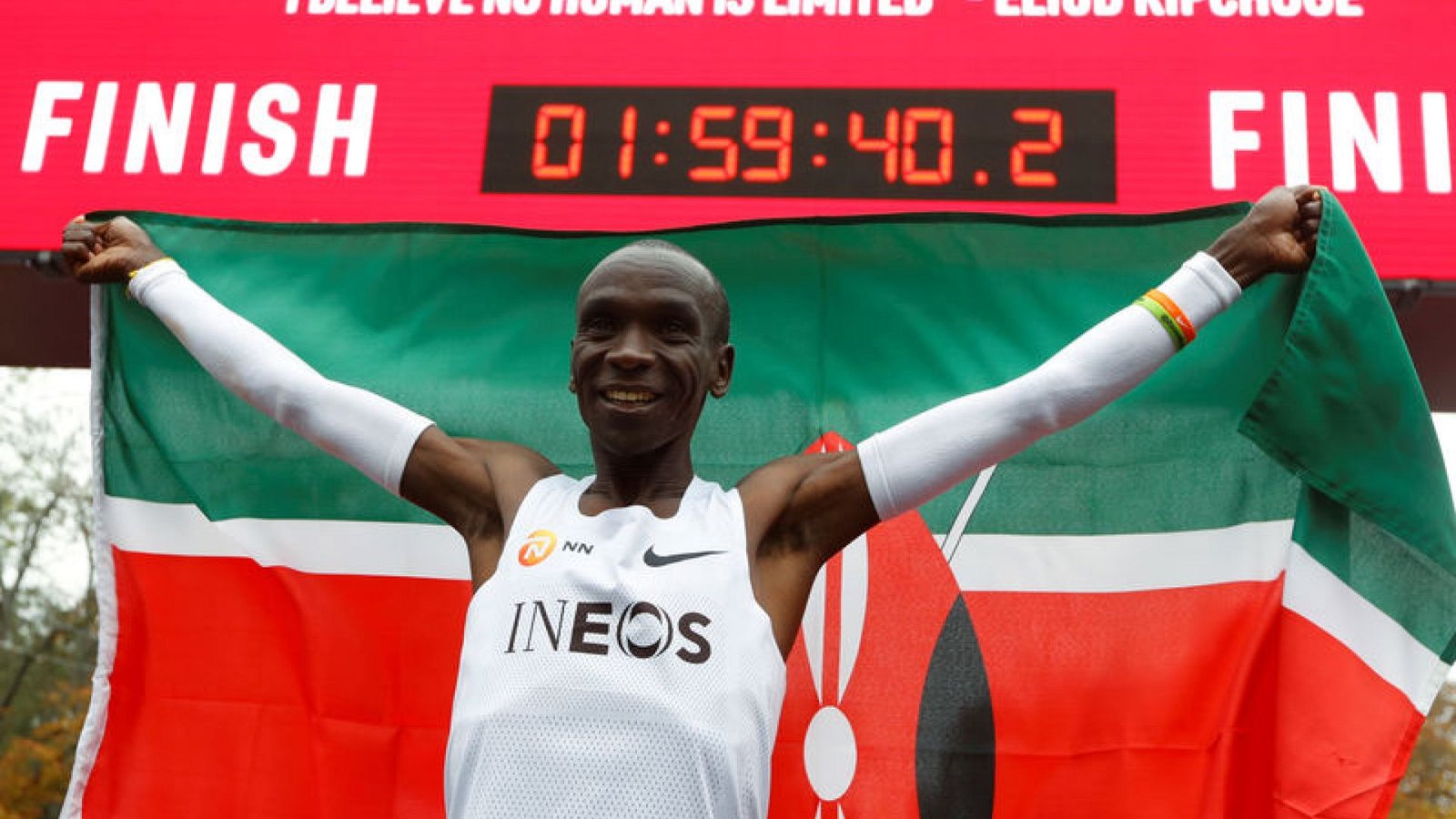
Seven years ago, Eliud Kipchoge crossed the finish line in Vienna with a time that changed the way the marathon distance could be imagined: 1:59:40.2.
The date was October 12, 2019. At the INEOS 1:59 Challenge, the Kenyan became the first person to cover the marathon distance in less than two hours. The event’s official archive records the time and the carefully organized performance effort behind it.1
A barrier broken under controlled conditions
Vienna’s achievement needs its full context. The attempt was an exhibition created around Kipchoge, with rotating pacemakers and planned support. It was not an open race conducted under the usual record-eligible marathon conditions.
World Athletics said the performance would not be ratified as a world record. The Reuters account of the event also identified the lack of open competition and the use of rotating pacemakers as reasons for that distinction.23
That does not change the distance he covered or the time displayed at the finish. It changes how the performance belongs in the record book. Calling it an exhibition achievement preserves both the athletic accomplishment and the rules used to compare official race results.
The scale of the pace
Covering 42.195 kilometres in 1:59:40.2 works out to roughly 2 minutes 50 seconds per kilometre. The arithmetic helps explain the size of the task: that pace had to continue for the full marathon distance, with very little room for a sustained slowdown.
The support system helped Kipchoge maintain that effort. It also made the run a collective planning exercise around one athlete, rather than the tactical contest among competitors that shapes an ordinary marathon.
Seven years later, Vienna remains a landmark because it demonstrated a possibility in a controlled setting. Its place in history does not require describing it as an official world record or confusing the experiment with a conventional race.
The useful way to remember October 12, 2019, is to retain both parts of the story: Kipchoge ran the distance under two hours, and the conditions made the result ineligible for record ratification.