

The Dutch Leonard Affair
In 1926, Dutch Leonard produced two old letters connecting Ty Cobb and Smoky Joe Wood to a wager on a Tigers–Indians game—and accused Tris Speaker of helping arrange the result. The letters were real. What they proved was another matter.
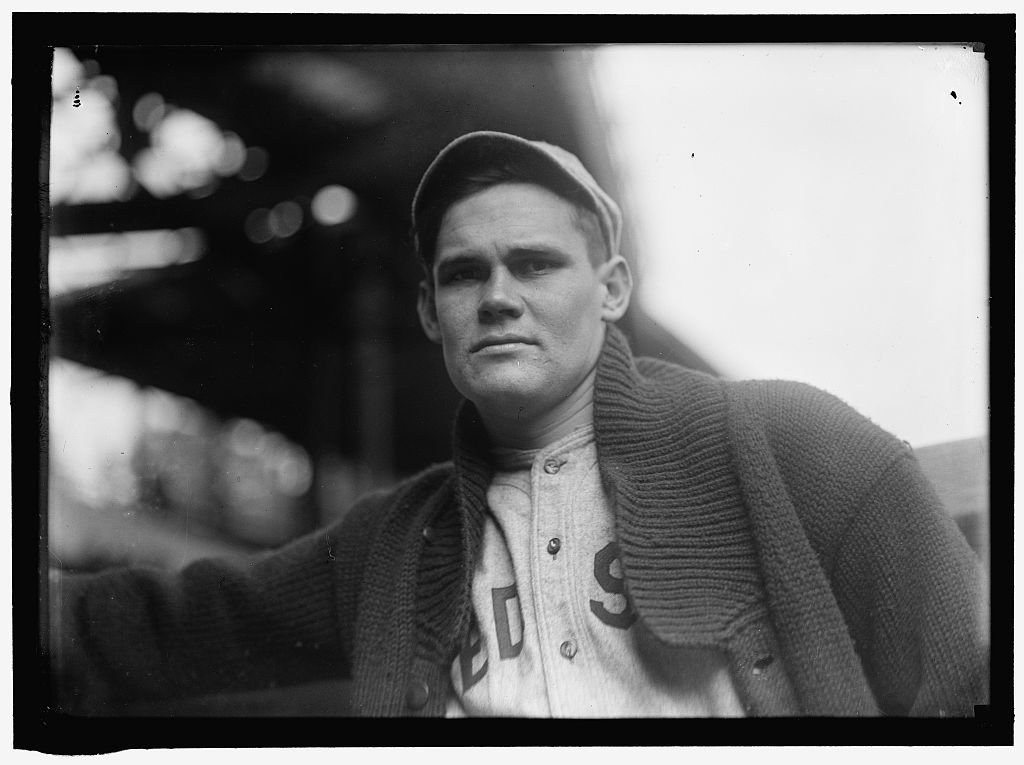
On September 24, 1919, the Detroit Tigers beat Cleveland 4 to 1 at Navin Field. Afterward, according to Detroit pitcher Dutch Leonard, he and teammate Ty Cobb met beneath the grandstand with Cleveland player-manager Tris Speaker and outfielder Smoky Joe Wood.12
Cleveland had secured second place. Detroit was still chasing the New York Yankees for third, a finish worth roughly five hundred dollars in World Series money to each Tigers player. Leonard later said Speaker promised that Cleveland would not stand in Detroit's way the following afternoon. With the outcome supposedly settled, Leonard said, the four men discussed betting on a Tigers victory.3
Detroit won the next day, 9 to 5. Most of the proposed money could not be placed, but a smaller wager apparently was. Wood later wrote, "We won the $420." Seven years after the game, Leonard produced that letter and another from Cobb. Together, they became the heart of a case baseball never fully resolved.
The documents strongly suggested that money had been wagered. But did they prove Leonard's larger charge—that the result had been arranged before the teams took the field?
A Bet That Could Not Be Placed
Most accounts put the proposed pool at five thousand five hundred dollars, although they disagree over whether Leonard or Speaker intended to contribute fifteen hundred. Cobb's share was said to be two thousand dollars and Wood's one thousand. Cobb suggested that Fred West, a park attendant and gate tender at Navin Field, take the money to local bookmakers.4
Detroit was already a 10-to-7 favorite, and the bookmakers would not accept the full amount. West managed to place six hundred dollars, a winning wager that returned four hundred and twenty in profit. Leonard's share came to a hundred and thirty dollars.4
Leonard left Detroit before the first pitch. Kahanowitz's reconstruction says he first gave Wood a fifteen-hundred-dollar check toward the wager. SABR's Landis biography puts Leonard's intended stake at one thousand. Without the original testimony or check, the amount remains uncertain. Leonard was absent from the game, not from the betting plan he later described.5
On September 25, Detroit scored four times in the first two innings and never trailed. Cleveland starter Elmer Myers struggled, and his defense committed three errors. Some later accounts described Myers as floating pitches to the plate, but that characterization does not establish what he intended. Neither Leonard nor Wood appeared in the game.6
The two stars at the center of Leonard's accusation complicated the picture further. Cobb went 1 for 5 with two stolen bases. Speaker, supposedly helping Detroit win, went 3 for 5 with two triples. A box score cannot disprove a private agreement, but this one did not look like a team simply going through the motions.7
Even the victory failed to deliver its supposed purpose. Detroit finished fourth at 80 and 60, one game behind New York. The Tigers never received the third-place money Leonard said they had been chasing.8
Cobb was not yet Detroit's manager. Hughie Jennings held that job in 1919; Cobb replaced him in 1921. The distinction matters because several later accounts incorrectly gave Cobb managerial authority over the disputed game.9
What the Letters Said
That winter, Cobb and Wood each wrote to Leonard, who kept both letters. They became the principal surviving contemporaneous documents from the men Leonard accused, and their wording has shaped nearly every account of the affair.
Cobb's letter, dated October 23, 1919, was sent from Augusta, Georgia. It opened with "Dear Dutch" and said that "Wood and myself" were "considerably disappointed in our business proposition." Cobb referred to difficulty getting money placed and to arrangements involving West, but named no dollar amount. The published versions are transcriptions and excerpts, and they differ in some details. At the Chicago hearing seven years later, Cobb and Wood admitted writing the letters. They argued that the gambling references concerned horse racing, not baseball.10
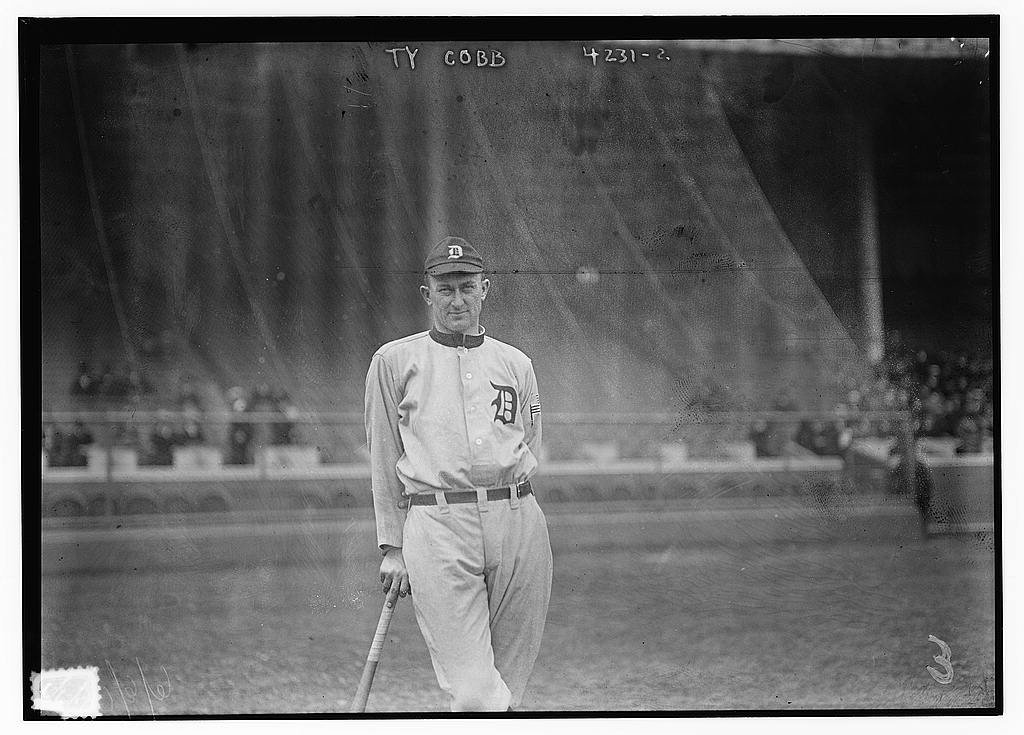
Wood's letter was more specific. Written from Cleveland, it enclosed a certified check for Leonard and said West had managed to place six hundred dollars at 10-to-7 odds. "We won the $420," Wood wrote. It is the clearest surviving statement that a wager was placed and paid. Wood added another detail that would complicate later accounts: "Cobb did not get up a cent."11
The letters have clear limits. Neither uses the word "fix" or describes Cleveland deliberately losing, and Speaker is named in neither. They point strongly toward a wager. They do not independently establish Leonard's account of a prearranged result, or place Speaker in the plan without Leonard's testimony.12
The Man Who Held the Letters
Hubert Benjamin "Dutch" Leonard had been an exceptional pitcher. In 1914, his second major-league season, he posted a 0.96 earned-run average, still the lowest single-season mark of the modern major leagues. He later threw two no-hitters and won twice in World Series play. When his career ended, his record stood at 139 wins, 113 losses, and a 2.76 ERA.13
Leonard and Cobb had disliked each other for years. In 1914, Leonard hit Cobb with a pitch. Cobb answered by bunting toward first and spiking Leonard's foot, drawing blood; he later acknowledged doing it deliberately.14 Their conflict sharpened after Cobb became Detroit's manager. On July 14, 1925, Leonard surrendered twenty hits and twelve runs to Philadelphia, yet Cobb left him on the mound for all nine innings. Cobb biographer Charles Alexander wrote that the team physician had warned against overworking Leonard. SABR's Leonard biography reports that even Athletics manager Connie Mack pleaded for the pitcher to be removed. Cobb kept him in.15
Later that month, Cobb placed Leonard on waivers. SABR's Leonard biography says Cobb used his influence to discourage another club from claiming him; Speaker's Cleveland team passed as well. Detroit then assigned Leonard to Vernon of the Pacific Coast League, but he refused to report. At thirty-three, he returned to the grape ranch he had developed near Fresno. In 1926, he brought the old letters to Tigers owner Frank Navin, beginning the process that carried them to Ban Johnson.16
Twenty Thousand Dollars and a Quiet Exit
Navin forwarded the letters to Byron Bancroft "Ban" Johnson, the American League president and one of the most powerful officials in the sport. Baseball was only five years removed from the Black Sox trial, and the letters implicated two famous active players in another 1919 gambling allegation. Johnson treated them as grounds for removing Cobb and Speaker.17
SABR's biography of Landis reports that Johnson paid Leonard twenty thousand dollars for the documents. Later accounts have often described the payment as money for Leonard's silence, but the sources cited here establish the payment more clearly than its terms or funding. On September 9, 1926, the American League board met privately and decided to ease Cobb and Speaker out without publicly airing the accusation. Cobb resigned in early November. Speaker followed on November 29.18
Had the departures remained unexplained, they might have passed as the retirement of two aging player-managers. Instead, the case became part of a larger fight over who governed baseball: Johnson, who had built the American League, or Commissioner Kenesaw Mountain Landis.
Landis Takes Over
Landis had become baseball's first commissioner in 1920, after the Black Sox scandal discredited the old three-man National Commission. His authority was intentionally broad. Johnson, accustomed to ruling the American League, repeatedly clashed with him over discipline, contracts, and the limits of the commissioner's office.19
Landis opened his own investigation. He called Cobb, Speaker, Wood, and Fred West to testify in Chicago. Leonard refused to attend, saying he feared Cobb and would not face him there. His absence denied the inquiry the chance to question its central accuser in front of the men he had implicated.20
On December 20, 1926, Landis released Leonard's correspondence and transcripts from the investigation; newspapers carried the story nationally the following day. Associated Press copy identified four celebrated players in an alleged plan to throw a game. Cobb answered with an open letter in the Detroit News: "Here I am. After 22 years in hard, desperate and honest work, dismissed from baseball in disgrace without even having a chance to face my accuser." In his testimony, Cobb acknowledged knowing that money had been wagered on the September 25 game but denied placing a bet himself. Speaker denied attending the meeting beneath the grandstand.21
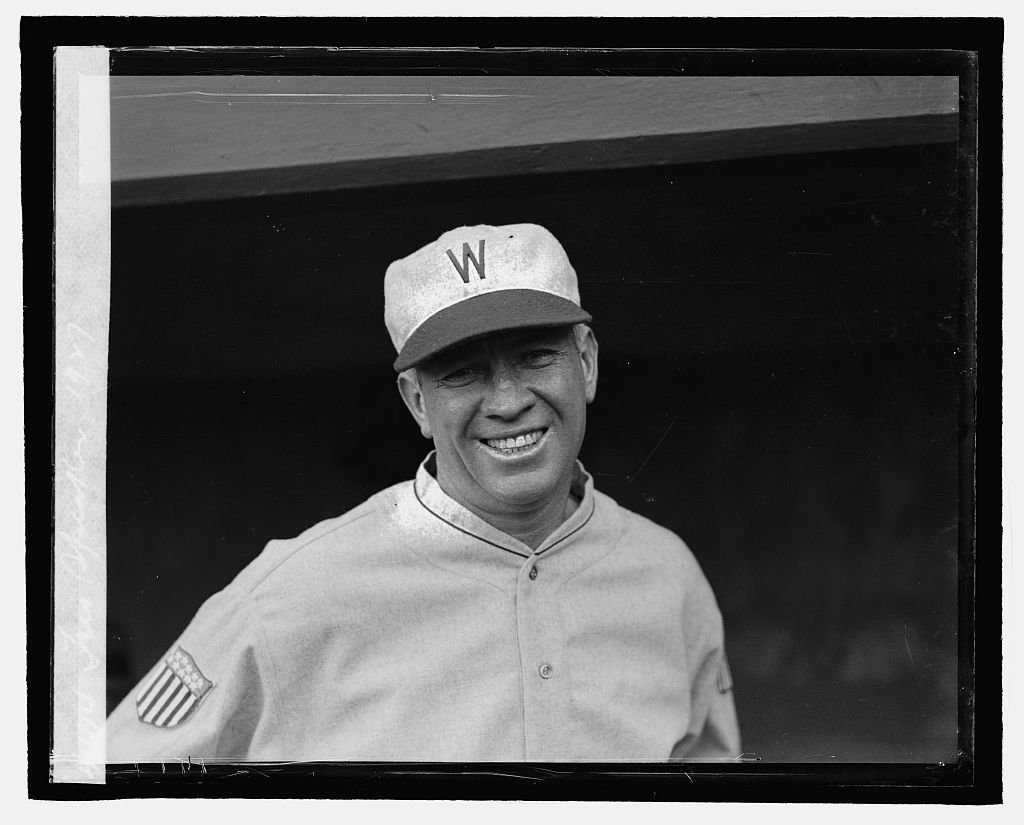
Landis heard forty witnesses on January 5, 1927. Twenty-two days later, he issued his ruling: "These players have not been, nor are they now, found guilty of fixing a ball game. By no decent system of justice could such finding be made."22
The wording was narrow. Landis did not declare the letters false or find that no wagering had occurred. He ruled that the evidence before him could not sustain the charge that Cobb and Speaker had fixed the game. Major League Baseball historian John Thorn later quoted Landis privately complaining about scandals from before his commissionership. In the wake of the Leonard and Risberg cases, Landis proposed a limitations period for old accusations and explicit penalties for betting on baseball.23
Johnson maintained that he had acted properly. At a January 17 press conference, he said the two letters indicated that their writers knew of a plan to bet on a "framed ball game." He simultaneously said he believed Cobb had not personally wagered and still considered him honest. Of Speaker, Johnson said he was prepared to produce further evidence in court. No such proceeding followed.24
Landis reinstated Cobb and Speaker to their former clubs, which then released them. Cobb signed with Connie Mack's Philadelphia Athletics for a reported forty-thousand-dollar salary, a twenty-five-thousand-dollar signing bonus, and ten thousand dollars in other bonuses. At seventy-five thousand dollars, he was baseball's highest-paid player in 1927. He batted .357 that season and collected his 4,000th career hit. Speaker joined Washington, then played beside Cobb in Philadelphia in 1928.25
Johnson fared worse. American League owners stripped him of his powers by a 7-to-1 vote. He resigned on July 8, 1927, ending the tenure of the man who had founded and led the league for more than a quarter-century.26
The Interview at Notre Dame
Decades later, Smoky Joe Wood gave a different account. Lawrence Ritter interviewed him for the oral-history project that became The Glory of Their Times. Notre Dame's catalog dates its Wood recordings to October 15, 1963; a transcript published later has sometimes been assigned a 1965 date. The remarks about the Leonard affair did not appear in Ritter's 1966 book. They reached a wider audience in 2019, when Ian Kahanowitz included them in Baseball Gods in Scandal.27
Wood told Ritter that "there was a bet placed on the ballgame" and that he had handled the money. Asked about Cobb and Speaker, he replied: "Cobb and Speaker put up some of this money to make the bet."28
That version conflicts with Wood's 1919 letter, which said Cobb "did not get up a cent," and with the denials he gave during the 1926 investigation. Wood also told Ritter that Cobb had never given a complete account: "I don't think Cobb could afford that to tell the story. Cause I know the story. I never told that to a soul in my life."29
Wood's recollection materially strengthens Leonard's claim that the four men discussed or financed a wager. It also makes Wood a difficult witness: his 1919 letter, his 1926 testimony, and his later interview do not agree. The recording corroborates betting. It still does not establish, on its own, that Cleveland deliberately lost.30
A Second Scandal
As Landis dealt with Leonard's accusation, another old case surfaced. On December 30, 1926, the Chicago Tribune published an interview with Swede Risberg, one of the banned Black Sox. Risberg claimed that White Sox players had paid Detroit players to lose a four-game series in 1917. At the hearing that followed, several players acknowledged that money had changed hands but described it as a reward for Detroit pitchers who had beaten Boston, not payment for losing to Chicago. Landis cleared everyone Risberg had accused.31
The two cases became intertwined in the press and in baseball's response. After the hearings, Landis proposed a limitations period for old accusations, a one-year suspension for betting on a baseball game in which the bettor had no duty to perform, and permanent ineligibility for betting on a game in which the bettor did. The major leagues adopted the proposals in 1927. Their descendants remain in Rule 21.32
The Comparison That Will Not Go Away
Rule 21 makes Pete Rose an unavoidable comparison. The Dowd investigation documented repeated betting on baseball while Rose managed Cincinnati, including wagers on Reds games. Rose accepted permanent ineligibility in 1989. That status kept him out of Hall of Fame consideration during his life. In May 2025, after Rose's death, Commissioner Rob Manfred ruled that permanent ineligibility ends at death. Rose may now be considered by the Hall, a separate institution, but he has not been elected.33
The comparison has limits. Rose was investigated for repeated wagering under an explicit rule while managing a team. Leonard accused Cobb and Speaker of more serious conduct—arranging an outcome before betting on it—but the surviving record does not prove that larger allegation nearly as well. Cobb and Speaker were cleared and later entered the Hall of Fame. Cobb received 222 of 226 votes in the first election, and Speaker was elected the following year.34
The Black Sox scandal supplies the closer historical setting. Members of the 1919 White Sox conspired with professional gamblers to rig the World Series, although the exact financing and individual roles remain the subject of historical argument. Modern salary research also rejects the familiar explanation that an exceptionally underpaid roster was driven into the fix by Charles Comiskey. Leonard described something different in Detroit: players wagering for themselves on an outcome they supposedly understood in advance. If his full accusation was true, it was an inside arrangement rather than an externally financed sale of a championship.35
The explicit betting penalties now associated with Rule 21 were adopted after the Leonard and Risberg investigations, not in 1921. They did not govern conduct in 1919. By 1927, however, the Major League Agreement had given Landis broad disciplinary authority. The case turned less on mechanically applying a later rule than on what he could establish from the record before him.36
The Rose investigation filled 225 pages and seven volumes of exhibits, drawing on handwriting analysis, telephone and bank records, betting documents, and testimony from associates. The Leonard affair offered two suggestive letters, an accuser who refused to appear, and later recollections that conflicted with earlier testimony. Whatever moral comparison one draws, the two cases did not arrive with comparable proof.37
What Can Be Said
The strongest conclusion is that a wager was made. Wood wrote that "we won the $420" and sent Leonard a certified check. Cobb described a failed "business proposition" involving Wood and West. West acknowledged acting as an intermediary, and Cobb admitted knowing that money had been placed on the game. Wood later said he had handled it. Taken together, those pieces make baseball-related betting the best-supported conclusion in the case.38
The fix is harder to prove. Neither letter describes one, and Speaker appears in neither. He went 3 for 5 with two triples, and Leonard did not appear in Chicago to submit his account to questioning. Wood's later recollection connects Speaker to the money but still does not describe how Cleveland supposedly arranged to lose. The game may have been fixed, but this record does not justify presenting that as settled fact.39
Landis's ruling spared baseball the disgrace of two great players, but it also reflected a real weakness in the proof. Wood's later interview would have strengthened the case that the four men discussed or funded a wager. It would not have supplied the missing evidence that the outcome itself had been arranged.40
What Remains Missing
The original letters remain the most important missing piece for most readers and researchers. Modern accounts rely on excerpts and transcriptions that are not always identical. A published facsimile and critical transcription would show precisely what Cobb and Wood wrote, rather than what later writers remembered or selected.41
The twenty-thousand-dollar payment also needs a firmer documentary trail. The record cited here does not establish whose funds were used or what, beyond delivery of the letters, Leonard agreed to provide. Wood's recording and transcript should likewise be checked directly against the version published in 2019, especially because the archive catalog and later accounts disagree about the interview date.42
Fred West may offer the clearest path forward. His testimony concerned the actual placement of the wager, yet he remains a minor figure in most retellings. A focused review of the Landis papers at the Chicago History Museum could clarify what he told the commissioner and whether any supporting financial record survived.43
Leonard never supplied the fuller account historians would want. He returned to his California ranch, built a grape and raisin business worth millions, and died there on July 11, 1952, at sixty. A nephew later remembered the family asking him to record his baseball memories. Leonard always declined. The letters he saved show that money was wagered. They do not tell us every promise made beneath the grandstand.44
Endnotes
- Cleveland Indians vs. Detroit Tigers box score, September 24, 1919, Baseball-Reference.com. Final score: Detroit 4, Cleveland 1. Leonard's later testimony placed the under-the-grandstand meeting after this game.
- SABR BioProject, "Dutch Leonard," Society for American Baseball Research; SABR BioProject, "Smoky Joe Wood," Society for American Baseball Research; SABR BioProject, "Tris Speaker." These biographies establish the players' identities, club roles, and earlier relationships.
- SABR BioProject, "Dutch Leonard." Leonard's account stated that Speaker told Cobb Cleveland would not contest the next day's game, enabling Detroit to pursue third-place World Series money. Charles C. Alexander, Ty Cobb, 185–194, describes the share as approximately $500 per player.
- Charles C. Alexander, Ty Cobb (New York: Oxford University Press, 1984), 185–194. Alexander assigns proposed wagers of $2,000 to Cobb, $1,500 to Leonard, and $1,000 each to Speaker and Wood. The SABR BioProject biography of Kenesaw Mountain Landis instead assigns $1,500 to Speaker and $1,000 each to Leonard and Wood. Both accounts put the proposed pool at $5,500 and identify Fred West as the intermediary. Alexander provides the 10-to-7 odds and the $600/$420 final wager; the $130 share for Leonard is also reported in SABR's Dutch Leonard biography.
- Ian S. Kahanowitz, Baseball Gods in Scandal: Ty Cobb, Tris Speaker, and the Dutch Leonard Affair (North Attleboro, Massachusetts: Summer Game Books, 2019). Kahanowitz's summary of the later testimony describes Leonard leaving before the game and giving Wood a $1,500 check. The SABR Landis biography assigns Leonard a proposed $1,000 stake. The original hearing record or check is needed to resolve the discrepancy.
- Cleveland Indians vs. Detroit Tigers box score, September 25, 1919, Baseball-Reference.com. Final score confirmed: Detroit 9, Cleveland 5. On Myers and the floated pitches: Dan Taylor, Baseball at the Abyss: The Scandals of 1926, Babe Ruth, and the Unlikely Savior Who Rescued a Tarnished Game (Lanham, Maryland: Rowman & Littlefield, 2023).
- SABR BioProject, "Ty Cobb"; SABR BioProject, "Tris Speaker." Cobb went 1 for 5 with two stolen bases; Speaker went 3 for 5 with two triples. SABR notes these performances did not fit the pattern of a simple scripted outcome.
- 1919 American League final standings, Baseball-Reference.com. Chicago White Sox first (88–52); Cleveland Indians second (84–55); New York Yankees third (80–59); Detroit Tigers fourth (80–60).
- C. Paul Rogers III, "Hughie Jennings," SABR BioProject. Jennings managed the Tigers from 1907 through 1920. Cobb replaced him as player-manager for the 1921 season. See also: Bill Pearch, "April 14, 1921: Harry Heilmann's Walk-Off Hit Wins Ty Cobb's Managerial Debut for Tigers," SABR Games Project.
- Charles C. Alexander, Ty Cobb, 185–194, provides a partial reconstruction of the Cobb letter, including the "Dear Dutch" opening and "business proposition" phrasing. The published sources consulted for this article reproduce excerpts and transcriptions rather than a common facsimile, and some wording varies. On the horse-racing defense: William M. Anderson, "May 10, 1927: Ty Cobb Returns Home to Detroit with Philadelphia A's," SABR Games Project; Brien Kocsis, "Throwing the World Series: A Statistical Review into Six Series from 1906–1924" (Retrosheet, 2024), https://retrosheet.org/Research/Kocsis/Throwing_the_World_Series.pdf.
- Retrosheet research paper, Kocsis, "Throwing the World Series"; Alexander, Ty Cobb, 185–194. The "We won the $420" and "Cobb did not get up a cent" lines are drawn from Wood's letter as excerpted in these sources.
- Retrosheet, "Throwing the World Series." The paper states that there was no documentary evidence connecting Speaker to the affair beyond Leonard's word. Speaker is not named in either surviving letter.
- SABR BioProject, "Dutch Leonard"; Baseball-Reference.com career statistics. Leonard's 0.96 ERA in 1914 remains the lowest single-season mark in the modern major leagues. His career totals were 139–113 with a 2.76 ERA. His no-hitters came on August 30, 1916, against St. Louis and June 3, 1918, against Detroit. He was 2–0 in World Series play.
- SABR BioProject, "Dutch Leonard"; Alexander, Ty Cobb. The spiking incident is confirmed in both sources.
- SABR BioProject, "Dutch Leonard"; Alexander, Ty Cobb. SABR's biography attributes the warning about overwork to Alexander and reports Connie Mack's plea during the July 14, 1925 loss.
- SABR BioProject, "Dutch Leonard." Leonard was placed on waivers in July 1925, assigned to Vernon after clearing, and refused to report. The biography describes his return to the Fresno-area ranch and his delivery of the letters in 1926.
- SABR BioProject, "Kenesaw Mountain Landis"; SABR BioProject, "Ban Johnson." The biographies document Johnson's treatment of the letters, the Black Sox context, and the rivalry over authority between Johnson and Landis.
- On the $20,000 payment and September 9 American League board meeting: SABR BioProject, "Kenesaw Mountain Landis." The source states that Johnson paid Leonard for the letters and that the board planned to ease Cobb and Speaker out quietly; it does not identify the funding source or fully define the conditions attached to the payment. Sources variously date Cobb's resignation to November 2, 3, or 4. Speaker announced his resignation on November 29.
- SABR BioProject, "Kenesaw Mountain Landis"; SABR BioProject, "Ban Johnson." The Landis–Johnson rivalry and the precedent disputes (Carl Mays, O'Connell bribery) are covered in both biographies.
- SABR BioProject, "Dutch Leonard"; Matthew E. Stanley, "Ty Cobb and Tris Speaker Are Accused of Fixing Baseball Games," EBSCO Research Starters: History. Both describe Leonard's refusal to appear in Chicago; Stanley summarizes contemporary reports of Leonard's fear of confronting Cobb.
- SABR BioProject, "Kenesaw Mountain Landis," dates Landis's release of the correspondence and testimony to December 20, 1926. Associated Press reports appeared nationally on December 21, including "Cobb Involved in Big Scandal: 4 Noted Players Are Named by Landis," as printed in The Bulletin (Bend, Oregon), December 21, 1926, 6. Cobb's open letter: Ty Cobb, as told to Bert Walker, "Cobb's Own Story of Dismissal," Detroit News, December 23, 1926, reproduced in the St. Louis Post-Dispatch, December 23, 1926, 30. On Cobb's and Speaker's testimony: "Baseball Scandal Up Again, With Cobb and Speaker Named," New York Times, December 22, 1926, 1.
- SABR BioProject, "Ty Cobb." Landis's ruling language: "These players have not been, nor are they now, found guilty of fixing a ball game. By no decent system of justice could such finding be made."
- SABR BioProject, "Kenesaw Mountain Landis." On Landis's private complaint about old scandals: John Thorn, "Cobb & Speaker & Landis: Closing the Books," 1927: The Diary of Myles Thomas, ESPN, March 21, 2018. On the subsequent rules proposals and their adoption: "1926 Winter Meetings: Changing of the Guard," SABR Baseball Research Journal.
- "Johnson Accepts Landis Challenge," New York Times, January 18, 1927, 18. Johnson's full January 17, 1927 press conference is reproduced in this source. The "indicate knowledge on the part of the writers of a plan to bet on a framed ball game" characterization is Johnson's own language. Johnson's stated belief that Cobb had not personally wagered and his promise to present Speaker evidence in court are from the same transcript.
- "Athletics Get Cobb for $75,000 for Year," New York Times, February 9, 1927, 14. Cobb's $40,000 salary, $25,000 signing bonus, and $10,000 in other bonuses are itemized in William M. Anderson, "May 10, 1927: Ty Cobb Returns Home to Detroit with Philadelphia A's," SABR Games Project, citing Anderson, The Glory Years of the Tigers: 1920–1950, 71. On the .357 average and the July 18, 1927 milestone: Skip Desjardin, "Ty Cobb and the St. Louis Browns," Seamheads.com, December 2, 2009; SABR Games Project, "May 10, 1927." The higher $85,000 figure widely cited in secondary sources appears to conflate the 1927 contract with additional 1928 compensation.
- SABR BioProject, "Ban Johnson." Johnson's resignation on July 8, 1927, the 7 to 1 owners' vote, and his death on March 28, 1931, are documented in the biography.
- Lawrence S. Ritter, The Glory of Their Times: The Story of the Early Days of Baseball Told by the Men Who Played It (New York: Macmillan, 1966). The published Wood material does not include the Leonard affair. Notre Dame Rare Books and Special Collections, "Ritter Audio Tapes," lists Joe Wood recordings and a transcript under October 15, 1963: https://rarebooks.library.nd.edu/collections/sports/baseball/special-ritter_audio_tapes.html. Kahanowitz's later presentation has been described with a 1965 date. The discrepancy remains unresolved in the consulted sources.
- Kahanowitz, Baseball Gods in Scandal. The Hesburgh Library interview is published for the first time in Kahanowitz's appendix. Wood's statements "There was a bet placed on the ballgame" and "Cobb and Speaker put up some of this money" are from this source.
- Kahanowitz, Baseball Gods in Scandal; Retrosheet, "Throwing the World Series." Wood's statements about Cobb's incomplete account and never having told anyone appear in Ritter's interview as transcribed by Kahanowitz. The 1919 Wood letter provides the conflicting statement about Cobb not putting up money.
- Kahanowitz, Baseball Gods in Scandal; Retrosheet, "Throwing the World Series." Wood's 1919 letter, 1926 testimony, and later interview conflict. His later recollection therefore corroborates betting but cannot independently establish a fixed outcome.
- "1926 Winter Meetings: Changing of the Guard," SABR Baseball Research Journal; SABR BioProject, "Kenesaw Mountain Landis." These sources describe Risberg's accusation, the competing explanation for the money, and Landis's exoneration of the players.
- "1926 Winter Meetings: Changing of the Guard," SABR Baseball Research Journal. The article states that Landis proposed the limitations period and betting penalties after the investigations and that the major leagues adopted them. Current Major League Rule 21 retains the one-year and permanent-ineligibility distinction.
- The Dowd Report (May 1989); Major League Baseball, "Decision on ineligibility status after death impacts Rose, others," May 13, 2025, https://www.mlb.com/news/mlb-ineligibility-status-after-death-decision. Rose accepted permanent ineligibility on August 24, 1989. MLB removed Rose and sixteen other deceased people from the ineligible list in 2025; the decision made them eligible for Hall of Fame consideration but did not elect them.
- National Baseball Hall of Fame, "When the First Five Were Chosen," records Cobb's 222 votes from 226 ballots in 1936. The Hall's Tris Speaker profile records his election in 1937.
- Bill Lamb, "The Black Sox Scandal," SABR; "Eight Myths Out: The Black Sox Scandal," SABR; Michael Haupert, "How Cheap Was Charles Comiskey? Salaries and the Black Sox," SABR, December 9, 2019. These sources distinguish the established conspiracy from unresolved details about financing and individual participation, and document why the simple underpayment explanation does not withstand modern salary research.
- "1926 Winter Meetings: Changing of the Guard," SABR Baseball Research Journal, dates the relevant betting proposals and their adoption to the aftermath of the 1926–1927 investigations. On the commissioner's broad private authority under the January 1921 Major League Agreement: "Baseball's First Commissioner: The Hiring of Judge Kenesaw Mountain Landis," SABR.
- The Dowd Report comprised 225 pages with seven volumes of exhibits. Evidence included FBI handwriting analysis of betting slips, phone records, bank statements, and testimony from nine associates. See also "Dowd Report," Baseball-Reference.com Bullpen.
- Retrosheet, "Throwing the World Series"; Alexander, Ty Cobb; Kahanowitz, Baseball Gods in Scandal. The Wood letter, Cobb letter, certified check, later Wood interview, West's role, and Cobb's admission collectively support the conclusion that baseball-related wagering occurred. Cobb's admission is reported in Associated Press copy printed in The Bulletin, December 21, 1926, 6.
- Retrosheet, "Throwing the World Series"; SABR BioProject, "Dutch Leonard"; Kahanowitz, Baseball Gods in Scandal. Speaker's absence from the letters, the game performances, Leonard's refusal to appear, and Wood's failure to describe a mechanism for deliberately losing all limit the fixing allegation.
- SABR BioProject, "Kenesaw Mountain Landis"; Kahanowitz, Baseball Gods in Scandal. Both illuminate the institutional stakes and the gaps in the evidence. No source cited here establishes that Ritter or an archive deliberately suppressed the interview.
- Alexander, Ty Cobb; Kahanowitz, Baseball Gods in Scandal; Retrosheet, "Throwing the World Series." The consulted sources reproduce or reconstruct the letters differently. Direct comparison with the original documents remains the preferred next research step.
- SABR BioProject, "Kenesaw Mountain Landis"; Notre Dame Rare Books and Special Collections, "Ritter Audio Tapes"; Kahanowitz, Baseball Gods in Scandal. These sources establish the payment, archive holdings, and published transcript while leaving the payment's funding and interview-date discrepancy unresolved.
- Kenesaw Mountain Landis Papers, Chicago History Museum. The collection finding aid identifies material relating to the commissioner's investigations. A review centered on West's testimony and any related financial records may clarify the wager's placement.
- SABR BioProject, "Dutch Leonard"; "Dutch Leonard: The Ballplayer Who Challenged Fresno's Racism," Discover Nikkei, March 6, 2023. Leonard died July 11, 1952, in Fresno, of a cerebral hemorrhage. Estate valued at over $2.1 million.