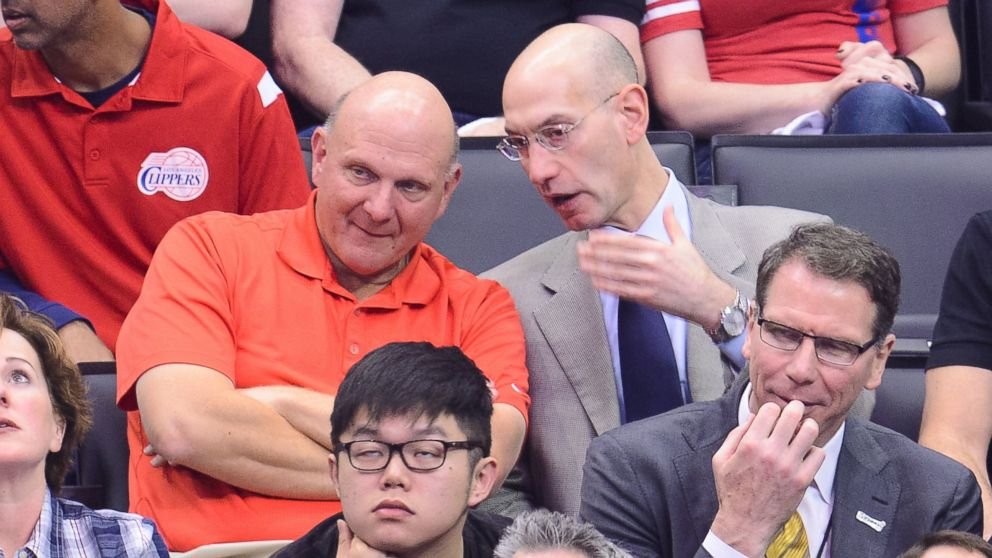
Steve Ballmer is helping Adam Silver sell the appearance of fair play again. The Sporting Page sees the Clippers fiasco as a performance of accountability, with Ballmer’s public retreat supplying the ending that makes the commissioner look effective.
On September 2, the NBA fined the Clippers $30 million and stripped five first-round draft picks over salary-cap circumvention involving Kawhi Leonard. Ballmer received a one-year suspension from league and team activities.
The Clippers initially promised to challenge the findings. On September 13, Ballmer announced that the organization would comply and had paid the fine, despite continuing disagreements with the report. “Team owners should support, not distract,” he said.
Ballmer was useful to Silver during the Sterling crisis, too. In 2014, after Silver banned Donald Sterling, Ballmer’s $2 billion purchase helped resolve the ownership dispute. NBA.com later credited that purchase with raising franchise values across the league. Silver got an ownership change, while the owners got a new demonstration of what their teams could be worth.
This time, Ballmer is the owner being punished. His acceptance nevertheless gives Silver another public resolution without answering whether the NBA’s financial rules protect fair competition.
We examined that distinction in “Adam Silver’s Clippers Crackdown Is Not an Integrity Policy.” The unresolved question was whether owner–player business arrangements receive the same scrutiny across the league. One case cannot supply that answer.
The warning signs were already there. In 2015, the NBA fined these same Clippers $250,000 for presenting DeAndre Jordan with an improper third-party endorsement opportunity. That was enforcement, but the latest findings hardly suggest the underlying problem disappeared.
Former Sixers minority owner Michael Rubin also described himself in 2024 as having been “violating every rule the NBA had,” discussing conflicts involving Fanatics’ betting business and NBA-player investments. That was not a finding that Rubin committed the same violations as Ballmer. It was a revealing description of how ownership and players’ outside business interests can overlap.
The NBA has ordered five years of monitoring for the Clippers. That addresses one organization; it does not show fans how consistently similar arrangements elsewhere are examined.
For TSP, the NBA still looks like the Wild West. Competition cannot feel organic when supporters are asked to trust financial boundaries without a convincing account of how those boundaries are policed. As an assurance of fair play, this spectacle looks like a sham.
Here is our prediction: this episode will not produce consistent, league-wide enforcement of cap-circumvention rules. Another isolated punishment will not answer that criticism. The test is whether comparable conduct receives comparable treatment, regardless of the owner involved.
When the spectacle fades and that standard remains unmet, remember that The Sporting Page said it here.