
History
Don Larsen’s perfect game: the defense behind 27 straight outs
Larsen needed 97 pitches to beat Brooklyn in 1956. A deflected grounder, Mantle’s catch and a disputed final pitch belong in the story too.
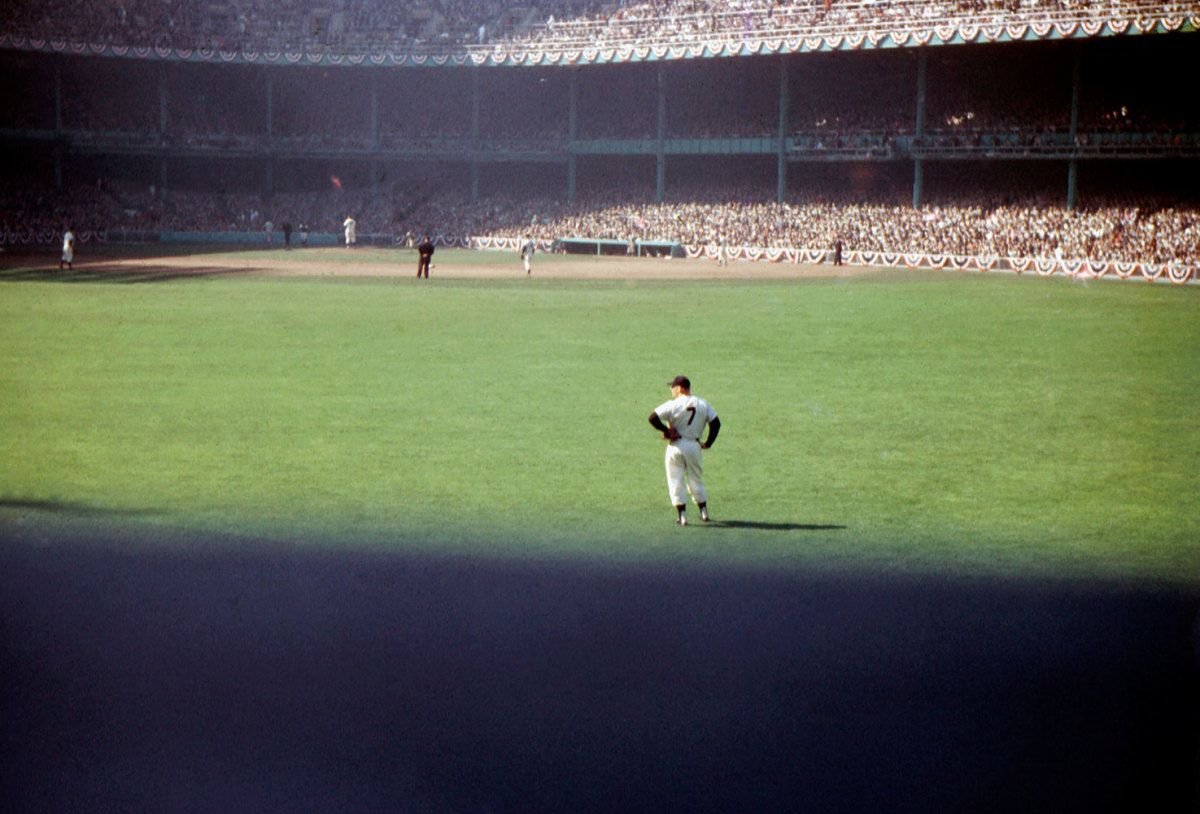
Don Larsen retired all 27 Brooklyn Dodgers he faced at Yankee Stadium on October 8, 1956. The New York Yankees won Game 5 of the World Series 2-0, taking a three-games-to-two lead in a contest that had been tied when the afternoon began.
The 97-pitch perfect game was the first in World Series history. Its familiar ending, Yogi Berra leaping into Larsen’s arms after Dale Mitchell was called out on strikes, can make the afternoon seem like a pitcher’s uninterrupted procession. The record also contains hard-hit balls, a fortunate deflection and a narrow margin that left Brooklyn within one swing of a tie.
A second chance in a tied Series
The Dodgers were the defending champions. They had won the first two games of the 1956 Series in Brooklyn before New York took the next two at home. Larsen’s previous appearance had been a short one: manager Casey Stengel removed him in the second inning of Game 2, which the Yankees lost 13-8, as the National Baseball Hall of Fame’s account records.
That left Game 5 to decide which team would go back to Brooklyn one victory from the championship. Larsen was 27 and in his fourth major-league season. Brooklyn’s starter, Sal Maglie, had a much more established record of major-league success. Neither pitcher allowed a hit through the first three innings.
Larsen’s route through the lineup began with strikeouts of Junior Gilliam and Pee Wee Reese, followed by Duke Snider’s fly to right. A perfect game required every batter to be retired, regardless of how the out was recorded. The Yankees’ fielders soon became essential to keeping that possibility intact.
The plays behind the clean scorecard
Jackie Robinson led off the second with a sharp ground ball toward third. It struck Andy Carey’s glove and went to shortstop Gil McDougald, who threw Robinson out. The Retrosheet play-by-play reproduced by Baseball Almanac records the deflection from Carey to McDougald. A ball that had escaped one fielder still produced an out because another could finish the play.
Mickey Mantle supplied the first hit of the game and New York’s first run with a home run in the fourth. In the next inning, he preserved the lead by catching Gil Hodges’ drive in deep left-center. Charles F. Faber’s SABR reconstruction describes Mantle racing back for the ball; the play-by-play confirms the out to center. The catch kept both the score and Larsen’s perfect game unchanged.
Sandy Amoros then pulled a drive toward the right-field stands that was ruled foul. He subsequently grounded out. Those two swings explain why a scorecard containing no Brooklyn hits does not establish that its hitters made no threatening contact.
New York added an insurance run in the sixth. Carey singled, Larsen moved him to second with a sacrifice bunt, and Hank Bauer brought him home with a single. Maglie allowed five hits over eight innings, so the Yankees’ offense had given Larsen two runs rather than a large cushion.
The last pitch and the games still to come
Carl Furillo began the ninth with a fly ball to Bauer in right. Roy Campanella grounded out from Billy Martin at second to Joe Collins at first. Dodgers manager Walter Alston then sent Mitchell to hit for Maglie with two outs.
Mitchell reached a 1-2 count and fouled off a pitch before the final offering. He began to swing and held up, believing the pitch was high. Umpire Babe Pinelli called him out. SABR’s account preserves Mitchell’s objection; the official result was a strikeout and Larsen’s 27th consecutive out. A later debate over the pitch does not change the recorded outcome.
The Hall of Fame records that Larsen reached a three-ball count against only one batter and completed the game in 97 pitches. Berra’s catcher’s mitt and baseballs from the afternoon survive in the museum’s collection, alongside photographs and tickets.
The perfect game gave New York the Series lead, but it did not clinch the championship. The Series continued for two more games before New York won in seven. Larsen’s place in that result rests on a particular kind of pitching achievement: nobody reached base. Bob Gibson’s 17 strikeouts in the 1968 World Series established a different single-game standard, centered on how many hitters a pitcher could retire himself.
Sources and notes
- Craig Muder, National Baseball Hall of Fame, perfect-game account and surviving artifacts: https://baseballhall.org/discover/inside-pitch/larsen-perfect-game
- Charles F. Faber, SABR Games Project, October 8, 1956; includes source notes and later recollections: https://sabr.org/gamesproj/game/october-8-1956-don-larsen-throws-a-perfect-game-in-the-world-series/
- Retrosheet play-by-play, reproduced by Baseball Almanac: https://www.baseball-almanac.com/boxscore/don_larsen_perfect_game_play_by_play.shtml