TSP Fantasy Analysis
Jalen Coker and Kaelon Black headline the first major waiver run of the season, but TSP’s Week 2 board is built from playing time, routes, touches, scoring-area usage, injuries and matchup context rather than last week’s touchdowns alone.
Week 1 is where fantasy football creates its loudest mistakes.
A receiver catches two touchdowns and suddenly looks like a league-winner. A running back finishes with eight fantasy points and gets ignored even though his workload changed. A tight end scores once on three targets and becomes a popular claim while another player quietly runs nearly every route and sees twice the opportunity.
The box score tells us what happened. The waiver wire requires a second question.
Why did it happen, and can the role survive Week 2?
That is the basis of TSP’s first full waiver board of the season. We started with the Week 1 usage file, then layered in current injuries, depth-chart movement, Week 2 matchups and whether the player is realistically available in a normal fantasy league.
Internal method: TSP Week 1 Layer 1 usage file. One week is a small sample, so the metrics are used to identify role changes rather than declare permanent player value.
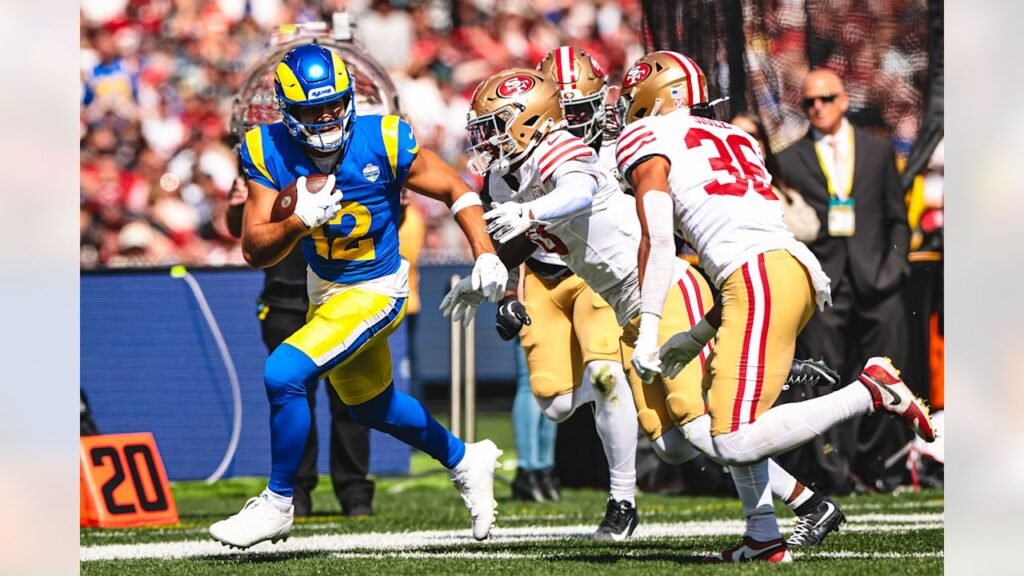
Before making a normal claim, search for Deebo Samuel Sr. He is rostered in most leagues, but not all of them. San Francisco lost rookie receiver De’Zhaun Stribling for at least a month, and Samuel already opened the year with six catches, 48 yards, a touchdown and a 12-yard rush. If he is available, he belongs ahead of the normal waiver pool.
The Week 2 priority board
WR · Carolina
FAAB 25–35%
RB · San Francisco
FAAB 20–30%
RB · Arizona
FAAB 15–22%
WR · New Orleans
FAAB 15–22%
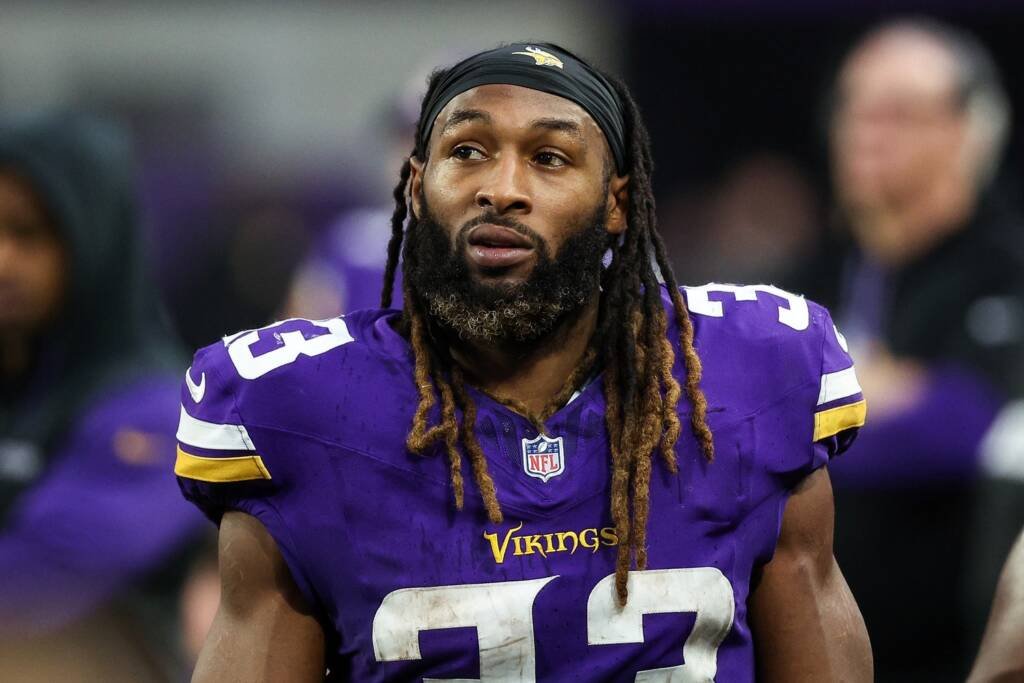
TE · Minnesota
FAAB 12–18%
WR · Miami
FAAB 12–18%
TE · Las Vegas
FAAB 10–16%
WR · Buffalo
FAAB 7–12%
TE · Houston
FAAB 5–9%
WR · Cleveland
FAAB 4–8%
The three claims that define this week
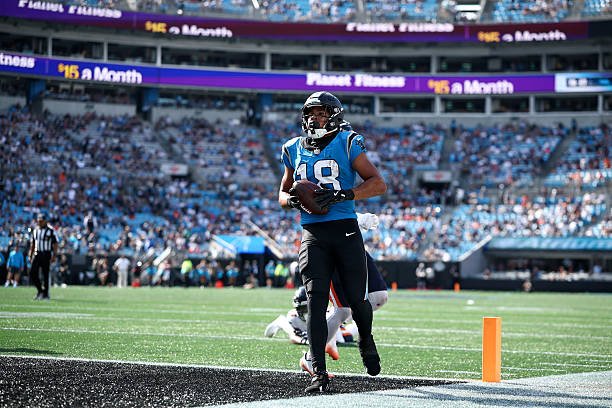
Coker is the cleanest combination of production and opportunity. He caught eight of nine targets for 138 yards and two touchdowns in Carolina’s Week 1 loss to Chicago. The points will attract attention, but the reason to spend is that the Panthers repeatedly treated him like a core receiver.
His ankle deserves monitoring after he finished the opener in a precautionary boot, but Carolina indicated that he expected to practice. The waiver case remains intact as long as the week does not bring a setback.
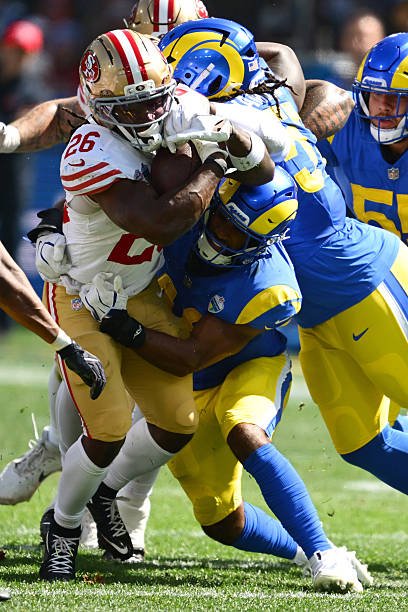
Black is different. His value comes from a workload fantasy managers did not expect. Fourteen carries for 65 yards behind Christian McCaffrey are meaningful on their own. They also establish the clearest contingency path on the board if San Francisco ever has to play without its starter.
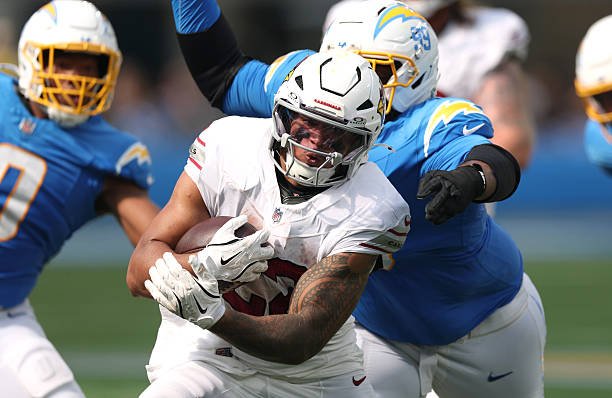
Allgeier may be the most immediate backfield surprise. Arizona gave him 17 carries while Love handled 11. The final fantasy score was not the point. The distribution of work was.
The receiver roles worth buying
Vele and Douglas belong in this group for different reasons.
Vele caught seven of nine targets for 69 yards and a touchdown in New Orleans’ overtime loss to Detroit. More important, TSP’s Week 1 file showed him operating as an every-down receiver rather than a situational target.
Douglas did not score, but his debut may be more useful for season-long fantasy value. Miami’s rookie caught five passes for 94 yards and was used as a full-time receiver. San Francisco is not a matchup to chase in Week 2, which is exactly why the waiver claim is about role rather than trying to predict another big box score.
The point of Week 2 waivers is not to reward what already happened. It is to identify the role most likely to matter next.
Tight end: opportunity before touchdowns
MIN
LV
HOU
NO
Injury-created opportunity we cannot ignore
New England: A.J. Brown was placed on injured reserve, guaranteeing at least four missed games. DeMario Douglas already drew seven Week 1 targets and should be evaluated as more than a speculative injury replacement. Romeo Doubs and Mack Hollins also belong on the watch list because New England has to redistribute Brown’s outside-receiver work.
San Francisco: Stribling is out at least a month, while Ricky Pearsall is already out for the season. Samuel is the obvious first check if available; Demarcus Robinson is the deeper-league fallback.
Los Angeles Chargers: Ladd McConkey is day to day with a rib injury. Tre’ Harris already had a useful Week 1 role, so he becomes a stronger add if McConkey is unable to play against Las Vegas.
The Week 2 matchup overlay
One week of defense is not enough to label any unit permanently bad. It is enough to identify where Week 2 volume may be easier to access.
Allowed 552 total yards and 291 rushing yards to Chicago.
Brian Robinson Jr. becomes a matchup-driven deeper play, but his Week 1 workload keeps him below Black and Allgeier.
Allowed Carolina to produce heavily through the air.
Hockenson gets a useful tight-end matchup. Carson Wentz becomes relevant only if Kyler Murray does not clear concussion protocol.
Arizona created enough offensive volume to expose multiple fantasy roles.
Mayer gets the matchup, but Bowers’ health remains the more important variable.
Allowed 394 yards in the opener.
Antonio Williams is a deep-league name after catching all four Week 1 targets for 64 yards and a touchdown, but his route volume still needs to grow.
Quarterback streamers
Tyler Shough and Bryce Young are the two standard-league quarterbacks worth discussing after Week 1.
Shough threw for 410 yards and three touchdowns on massive volume against Detroit. Baltimore presents a more difficult Week 2 test, but the willingness to let him throw that often establishes a ceiling that was not obvious before the season.
Young threw for 361 yards and three touchdowns against Chicago and added a rushing score. Atlanta is next. The Week 1 result was strong enough to put him back into the streaming conversation without pretending one game has solved every concern from previous seasons.
Superflex managers should also watch Seattle and Minnesota. Drew Lock becomes relevant if Sam Darnold cannot play, while Carson Wentz remains a contingency option if Kyler Murray does not clear concussion protocol.
Do not chase the box score
5 catches, 78 yards, TD.
35 yards, TD.
8 catches, 84 yards.
The cheaper bench adds
The waiver rule after Week 1
There is no way to remove uncertainty after one NFL game. That is not the point.
The goal is to distinguish uncertainty worth buying from noise that only looks important because it produced fantasy points.
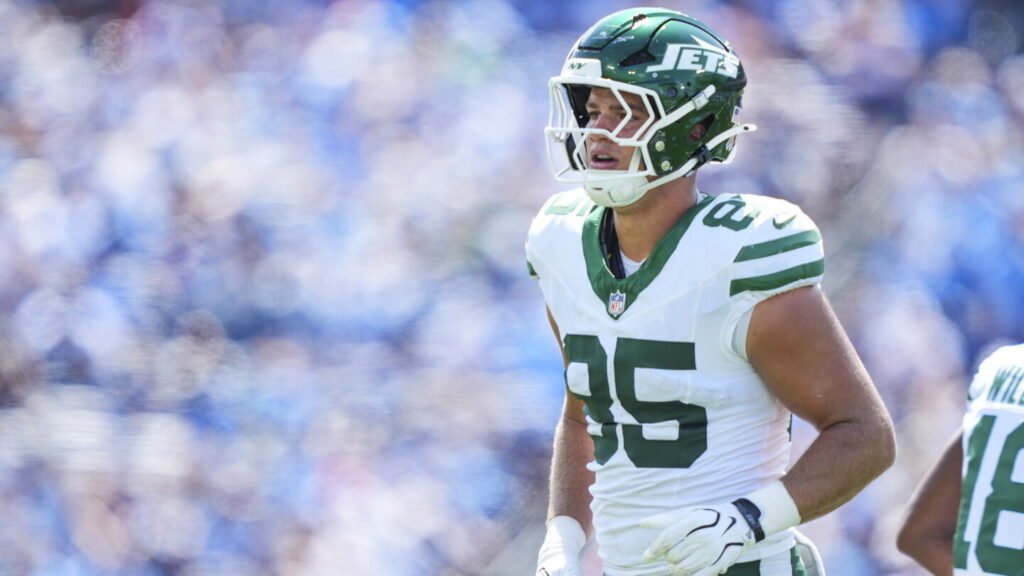
Coker earned targets. Black earned carries. Allgeier shared a backfield. Vele and Douglas were actually on the field. Schultz earned opportunities even though he did not score. Those are things that can survive into Week 2.
A touchdown on three targets might not.
The waiver wire is not about finding the player who scored the most points last Sunday. It is about identifying the player whose Sunday role gives him the best chance to score points next Sunday, and the Sunday after that.