
History
October 15, 1988: the at-bat that made Kirk Gibson a World Series legend
A two-out walk kept the Dodgers alive. Gibson’s full-count swing off Dennis Eckersley ended Game 1 and became the lasting image of the 1988 Series.
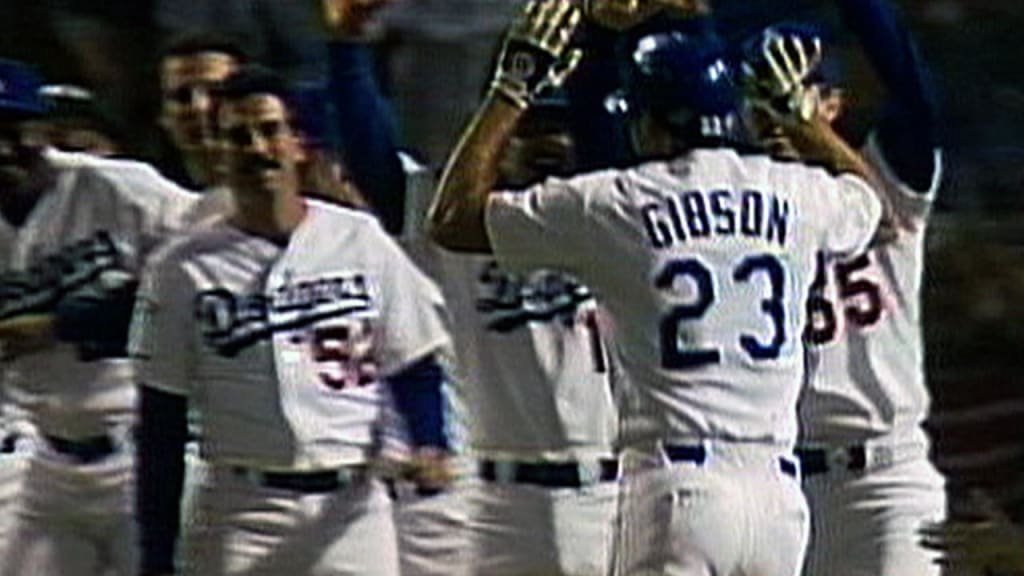
Kirk Gibson’s only plate appearance of the 1988 World Series came with the Dodgers one out from losing its opening game. He turned it into the moment that still defines that championship.
On October 15, 1988, Gibson hit a two-run home run off Dennis Eckersley in the bottom of the ninth at Dodger Stadium. Los Angeles won 5–4. Thirty-eight years later, the result is familiar enough to obscure how many things had to happen before Gibson could take that swing.
He had not started the game. Injuries to his left hamstring and right knee had made even getting to the plate difficult. The Dodgers needed someone else to keep the inning alive before their injured outfielder could decide it.
Baseball-Reference lists Oakland at 104–58 and Los Angeles at 94–67 for the regular season. Those records help explain Oakland’s reputation as the favorite, but they did not change the immediate arithmetic in the ninth: one run would tie the opener.
The game before the famous swing
The game record begins with a Dodgers lead. Mickey Hatcher hit a two-run homer in the first inning. Oakland answered with all four of its runs in the second, when José Canseco hit a grand slam off Tim Belcher.
Mike Scioscia’s sixth-inning RBI single cut the deficit to 4–3. The score remained there into the ninth. Los Angeles had received seven scoreless innings from its relief pitchers after Belcher’s two-inning start, according to Retrosheet’s box score. That work kept a single baserunner capable of changing the game.
Dave Stewart completed eight innings for Oakland. Manager Tony La Russa then turned to Eckersley, who had recorded 45 regular-season saves. A one-run lead in the ninth placed the game in the hands of the pitcher Oakland wanted for that assignment.
Mike Davis keeps the inning alive
Eckersley retired Scioscia on a popup and struck out Jeff Hamilton. Mike Davis, pinch-hitting for Alfredo Griffin, drew a walk. Without that plate appearance, Gibson’s opportunity would never have arrived.
Gibson batted for pitcher Alejandro Peña. The setup was simple and unforgiving: two outs, one runner aboard, Oakland ahead by a run. The Dodgers did not have another chance available if Gibson made an out.
During the at-bat, Davis stole second. That changed what a single might accomplish, putting the tying run in scoring position. It also meant Gibson did not need to hit a home run to prevent an immediate defeat.
A scouting report meets a full count
SABR’s account describes Gibson working his way through an eight-pitch confrontation. He fouled off pitches while struggling with his legs, then reached a full count.
The Dodgers’ scouting preparation included Mel Didier’s warning about Eckersley’s backdoor slider to a left-handed hitter on a 3–2 count. Gibson received that pitch and sent it into the right-field pavilion. Davis scored ahead of him, ending the game.
The preparation is an essential part of the story. Gibson’s physical condition made the swing extraordinary, but identifying a pitch gave him a specific problem to solve. The familiar image of the injured hitter does not capture the information behind his decision.
One appearance, a much larger championship
MLB’s retrospective recounts the distinctive fist pump during Gibson’s trip around the bases. The archive footage preserves both the home run and the difficulty of that trip.
Gibson did not appear again in the Series. The Dodgers won in five games, closing it on October 20. Game 1 supplied the championship’s most enduring scene, while the remaining victories required work from the players still available to take the field.
The full sequence gives the home run its weight. Hatcher supplied early offense, the bullpen stopped Oakland from adding to its lead, and Davis reached base with two outs. Gibson delivered the final swing in a game his teammates had kept within reach.
Sources and notes
- The game sequence was checked against Retrosheet and Baseball-Reference, with historical accounts from SABR and MLB. The original MLB clip is linked below.