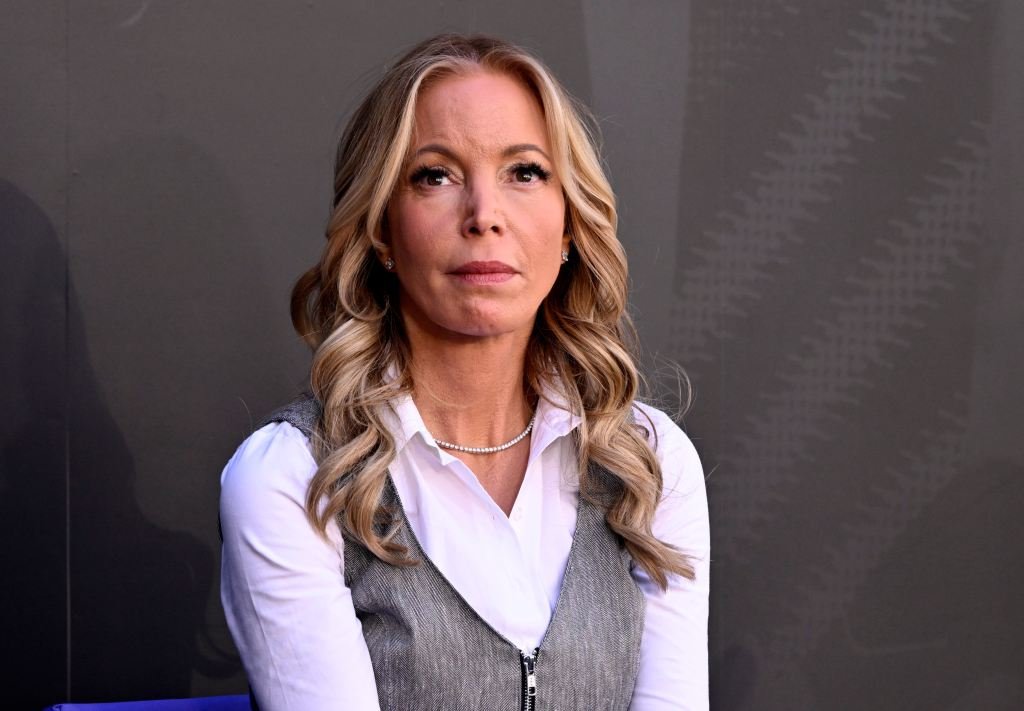
When the Buss family sold its majority stake in the Lakers, Jeanie Buss retained authority over the team’s basketball and business operations. The family’s remaining investment helped support that arrangement, and her attempt to preserve it now rests on the relationship between the shares her family holds and the powers she can exercise.
An October 2025 amendment to the Lakers’ bylaws, attached to her court petition, identifies Buss as the franchise’s governor and controlling owner. It assigns that office operational authority while reserving major financial decisions for the board. Those provisions explain what she retained when Mark Walter became the majority owner, and what is at stake as her siblings seek another sale.
Walter has agreed to sell his interest to a group led by Josh Kushner and Bob Iger at a $12.5 billion valuation. Five Buss siblings support selling the family trust’s remaining shares alongside him. Jeanie is challenging their attempt in Los Angeles Superior Court, where her petition seeks to protect the ownership interest supporting her position.
The Sporting Page reviewed the 97-page petition and its attached trust and corporate documents. They show how authority was divided inside the Lakers and explain a central argument in her case: the proposed sale, as she describes it, could leave the trust owning Lakers shares while costing her the ownership qualification on which her role depends.
What the family kept in the Walter deal
When the NBA approved Walter’s acquisition on October 30, 2025, its announcement said the Buss family would retain an interest and Jeanie would remain governor for at least five years after closing. The bylaw amendment effective that day provides a more detailed account of the office’s powers.
The governor has authority to act for the corporation on NBA matters and the basketball and business operations of the team. The board retains approval over specified major decisions, including annual budgets, arena agreements, relocation and a sale of the corporation or its NBA membership.
Budgets illustrate how those responsibilities intersect. The board approves annual capital and operating budgets, but the governor can deviate by up to 10 percent in the aggregate and move savings between budget lines. The amendment also preserves authority to adopt budgets or changes necessary to operate the team and maintain its arena in a first-class manner.
That final protection matters when describing the 10 percent provision. It prevents the figure from being treated as an absolute limit on her discretion, while the board’s approval rights show that operational authority does not extend to every financial decision.
The amendment names Jeanie in that office and provides for shareholders to choose a successor, subject to prior NBA approval and compliance with league rules. It also makes the corporation’s governance subject to NBA rules and agreements. Reading the successor provision alone would leave out those conditions and the separate commitment concerning her tenure.
The shareholders agreement is referenced in the amendment but is not included in the exhibits reviewed by TSP. Its full terms are necessary to assess which protections apply if ownership changes again.
The significance of the family’s 17.82 percent
The petition identifies the remaining owner as the Jo Ann C. Buss 2006 Children’s Electing Small Business Trust, which holds 17.82 percent of the Lakers. Jeanie, Janie and Joey Buss are co-trustees, and all six siblings are beneficiaries.
An NBA ownership-policy extract attached to the filing sets a 15 percent minimum interest for a controlling owner, held directly or indirectly. It permits the relevant league committee to attribute holdings of family members, trusts and affiliates to an owner. That helps explain how a shared family investment can support Jeanie’s qualification without all those shares belonging to her personally.
The same policy extract addresses removal for substantial cause and allows fixed terms of at least five years. TSP has not independently established the extract’s current revision status or obtained the NBA’s interpretation of its application to this dispute. The 2025 amendment expressly subjects the Lakers’ governance to NBA rules and agreements, making their current terms relevant to any assessment of her protections.
Jeanie asks the court to direct the trustees to take no action that would reduce the trust’s interest below 15 percent. She also seeks to invalidate the sale resolution and remove Janie and Joey as trustees. These are requests for court action, not findings that her siblings acted unlawfully.
What the voting rules actually permit
The trust contains two voting provisions that serve different purposes. Section 9.5 generally allows a majority of trustees to act when more than two are serving. Section 2.4 separately provides for termination following specified events, including a two-thirds vote by the living children to terminate the trust or sell its Lakers stock.
ESPN reported that the siblings supporting a sale believed they needed four of the six beneficiaries and two of the three trustees. They publicly maintained that they were united in their decision to sell and intended to proceed through the appropriate process.
Jeanie’s petition acknowledges majority decision-making among the trustees. Her challenge is that the action they propose would violate other obligations, including the trust’s direction to take reasonably available steps to secure her appointment as controlling owner.
She also relies on a 2017 court order, quoted in the petition, requiring steps to preserve her position during her lifetime unless a further court order modifies the trust. TSP’s earlier analysis examined that language and the family history behind the dispute.
The dispute concerns the scope of those voting powers and the restrictions that accompany them. A majority-voting clause does not settle whether a particular transaction complies with the rest of the trust, just as Jeanie’s objection does not establish that she has an unrestricted personal veto.
Why a partial sale matters to her case
Paragraph 30 of the petition describes the mechanism allowing the trust to sell alongside Walter. According to Jeanie, the contractual opportunity would cover only a portion of the trust’s Lakers shares, with the amount determined by a formula and other factors.
Her argument turns on what would remain after the sale: a trust still holding Lakers stock. She contends that the siblings cannot use a trust-termination provision to authorize a transaction that leaves the trust in place.
Under the scenario she describes, the trust could continue participating in the Lakers’ financial performance while losing the ownership percentage needed to support her role. That distinction makes the amount being sold as important as the headline valuation.
The underlying contract and its sale formula are not attached to this petition. The disputed resolution is referenced through a separate declaration that TSP has not reviewed. This file therefore does not establish the precise percentage to be transferred, the proceeds available or the ownership that would remain.
Subtracting the 15 percent threshold from 17.82 percent produces a difference of 2.82 percentage points, but it does not establish a permitted sale or an agreed compromise. Any transaction would still have to satisfy the trust, the relevant contracts and NBA requirements.
What the buyers’ forecast adds
The financial argument for holding has become more specific through reporting on the buyers’ plans. The Wall Street Journal reviewed a Thrive Capital presentation projecting a Lakers valuation of at least $30 billion by the end of 2037, according to Yahoo Sports’ account of that reporting.
TSP has not independently reviewed the presentation. The figure describes a projected franchise valuation, not an offer for the trust’s shares or a guaranteed payout to the beneficiaries. Keeping an investment could preserve participation in that growth, while selling could provide funds to invest elsewhere.
The forecast cannot determine whether the proposed sale complies with the trust. Nor can the $12.5 billion transaction valuation, on its own, establish what each sibling would receive from a partial sale governed by terms that have not been independently reviewed.
The California Post reported that the initial hearing was moved to December 8. It also reported that Iger intended to honor Walter’s agreement with Buss. That assurance and the family’s proposed share sale raise separate questions: what the incoming investors would honor, and whether the trust must retain enough ownership to preserve her qualification.
The 2025 arrangement allowed the family to sell its majority interest while preserving Jeanie’s operating role. Her petition now seeks to prevent a further sale from breaking that connection. The outcome depends on how the trust’s voting powers and protections for her position apply to the proposed transaction, which could change both the family’s investment and who exercises authority inside the Lakers.
Reporting note: The Sporting Page reviewed the petition and relevant trust and bylaw exhibits. The trust exhibit is redacted in the public copy. We have not reviewed the full shareholders agreement, the separate 2017 order, the resolution’s supporting declaration or a filed response from the siblings. Their position is attributed to existing reporting. We have not sought comment from the parties. This is document analysis, not a claim of exclusive reporting.