Two Models of Greatness: Kevin Loughery on Michael Jordan and Julius Erving
In a February 2026 interview, Loughery contrasts Jordan’s relentless competitive imposition with Erving’s cooperative leadership within championship systems.
2/24/2026
When Kevin Loughery appeared on Mad Dog Unleashed in February 2026, he did not frame Michael Jordan and Julius Erving as rivals in ability.¹ He framed them as contrasting leadership models shaped by temperament.
“The difference is, in my opinion, Doc was easier to coach than Michael. And I love Michael. I love both of them,” Loughery said.¹ What followed was not a ranking, but a structural comparison.
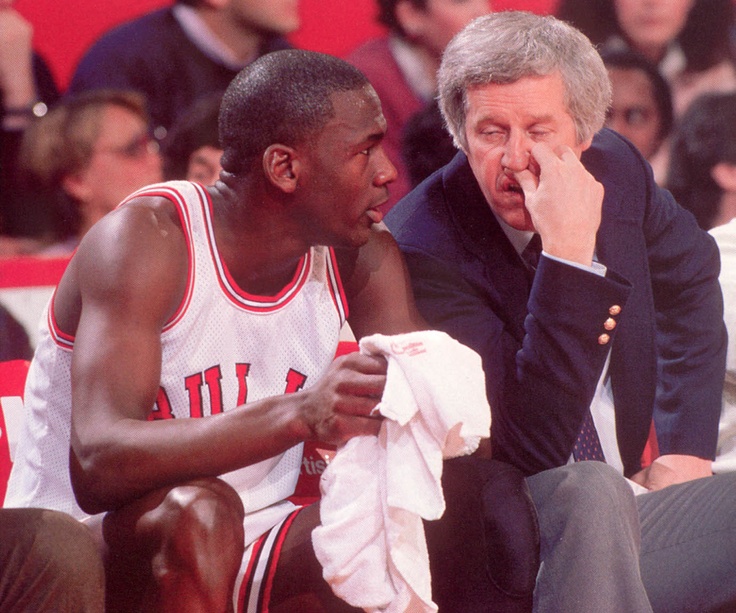
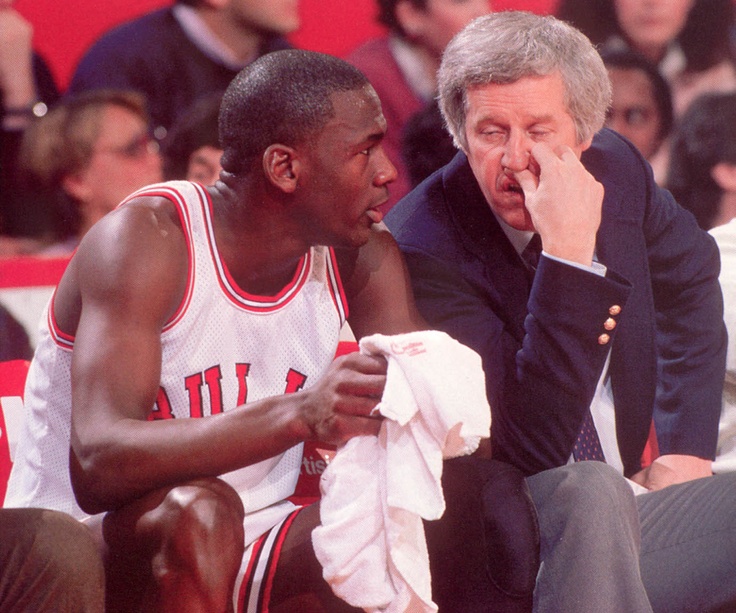
Loughery coached Erving with the New York Nets from 1973 through 1976, winning two ABA championships.² He later coached Jordan during the 1984–85 NBA season with the Chicago Bulls.³ The environments were different. So were the personalities.
“I’d say the difference is the competitive spirit with Michael is beyond belief,” Loughery said.¹ That competitive intensity manifested immediately in Chicago. “You know I had a very veteran team for Chicago when he came in, and he just beat these guys up… destroyed them.”¹
Jordan entered the league at 21 and averaged 28.2 points per game as a rookie, ranking third in the NBA behind Bernard King and Larry Bird.⁴ The Bulls improved from 27–55 in 1983–84 to 38–44 in 1984–85 and reached the playoffs.³ He finished sixth in Most Valuable Player voting.⁵ Production reinforced hierarchy.
Loughery described Jordan as “really tough on his teammates.”¹ The competitive standard did not fluctuate by context. It extended into practice. “He’s on one team’s side in practice, he wouldn’t let up… we are playing to 10 each side. It’s about 7–1 and I said, ‘Michael, change your jersey.’ He’d take the jersey off and beat the team and he was six points up. He was steaming at me for that… He wants to win. He wouldn’t let up.”¹
The anecdote illustrates constancy. Competition was not situational. It governed routine interactions. Loughery added that the same intensity appeared away from the court. “I played cards with Michael… I’d tell Mike, ‘Boy, you’d cheat just to win,’ kiddingly. You know he wouldn’t cheat. And you played golf with him… that’s just the way he is, he never lets up.”¹
Jordan’s leadership model imposed pressure. It demanded adjustment. Loughery suggested that if Jordan had joined Erving’s early Philadelphia 76ers teams alongside Darryl Dawkins, George McGinnis, and Doug Collins, “he’d be the leader of that team in five seconds.”¹ Authority would have been immediate.
Erving’s leadership operated differently.
Loughery described Erving as cooperative within structure. “Doc would get along with everybody,” he said.¹ During the Nets’ ABA tenure, Erving averaged 29.3 points per game in 1975–76, led New York to a 55–29 record, and captured his second ABA Most Valuable Player award.²⁶ The team ranked first in offensive rating and fourth in defensive rating that season.⁷ The system was elite.
The difference, according to Loughery, was coachability within public accountability. “This, you couldn’t do with Michael,” he explained.¹ “Now when we have a couple of bad games… I get to practice the next day… I said, ‘Doc, I’m gonna get on your ass in practice today. I have to do it… Guys are starting to get complacent.’ And I said I’m gonna get on your ass, ’cause I know if I get on his back, everyone else is gonna pop up. You couldn’t do that with Michael. You could do that with Doc. That’s how he blended in.”¹
The approach was deliberate. Challenging Erving publicly reinforced standards across the roster. Erving accepted the dynamic. Leadership, in this case, stabilized hierarchy rather than redefining it.
Loughery extended the contrast into the ABA–NBA transition. “That’s why I don’t think we seen the real Dr. J in the NBA as much as we did in the ABA,” he said.¹ The ABA of the mid-1970s featured a faster pace and greater offensive freedom than the NBA.⁸ Erving’s improvisational style thrived in that environment.
When Erving joined the Philadelphia 76ers in 1976–77 under head coach Gene Shue, the structure changed.⁹ Philadelphia finished 50–32 and reached the NBA Finals in his first season.⁹ His scoring average declined from his ABA peak to 21.6 points per game, though his efficiency remained strong.¹⁰ Fewer possessions and tighter half-court schemes reduced open-floor opportunities.⁸
Erving adapted. He blended rather than imposed. Loughery characterized that adaptability as ease of coaching.¹ It was not lesser competitiveness. “Even though Doc is like that too, but in a different fashion,” he said.¹
Both players generated dominance. The distinction lay in expression. Jordan’s leadership created internal pressure that forced structural change. Erving’s leadership reinforced structure by example and cooperation.
Loughery concluded without hierarchy. “They are two great players and I love both of them. I play golf with both of them.”¹ The affection was evident. So was the analytical clarity.
In Loughery’s accounting, greatness did not require uniform temperament. One model accelerated systems through relentless competitive demand. The other preserved cohesion while sustaining elite performance.
Both worked. They simply operated through different mechanisms.
NOTES
Kevin Loughery interview, Mad Dog Unleashed, SiriusXM, February 2026.
New York Nets season records, 1973–74 through 1975–76, Basketball-Reference.com.
Chicago Bulls season records, 1983–84 and 1984–85, Basketball-Reference.com.
1984–85 NBA scoring leaders, Basketball-Reference.com.
1984–85 NBA MVP voting results, Basketball-Reference.com.
Julius Erving 1975–76 ABA statistics, Basketball-Reference.com.
1975–76 ABA team advanced statistics, Basketball-Reference.com.
ABA vs. NBA pace statistics, mid-1970s, Basketball-Reference.com.
1976–77 Philadelphia 76ers season page, Basketball-Reference.com.
Julius Erving 1976–77 NBA statistics, Basketball-Reference.com.
TWO MODELS OF GREATNESS: KEVIN LOUGHERY ON MICHAEL JORDAN AND JULIUS ERVING
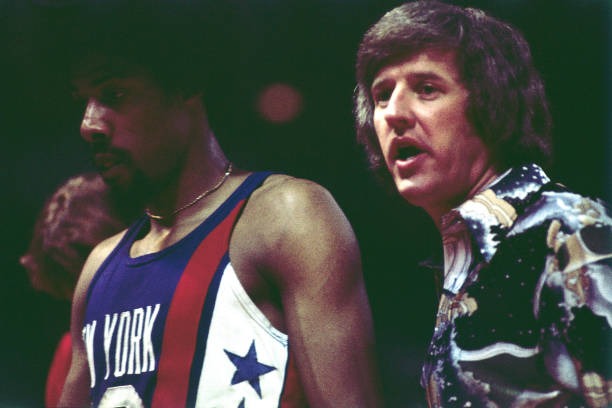
Julius Erving and head coach Kevin Loughery during the 1975–76 ABA season with the New York Nets. (Photo: NBA Photos/Getty Images)