
The Man Who Coached Dr. J and Air Jordan
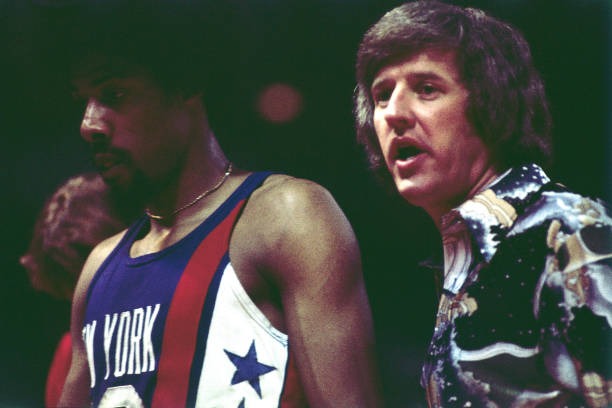
Julius Erving and head coach Kevin Loughery of the New York Nets. (Photo: Focus on Sport / Getty Images)
When Kevin Loughery said that, he was not offering a ranking. He was drawing on something most observers simply do not have: direct experience coaching both Julius Erving and Michael Jordan. He had steered Erving’s New York Nets to two ABA championships and served as Jordan’s first NBA head coach with the Chicago Bulls in 1984. The two assignments were connected by more than one man’s résumé. Rod Thorn, who as Bulls general manager drafted Jordan third overall and hired Loughery to coach him, had been Loughery’s former teammate and colleague going back to their time together with the Nets.13 When Thorn and Loughery were let go in March 1985 after new owner Jerry Reinsdorf brought in Jerry Krause as GM, they left behind a franchise pointed in a direction neither of them would get to see through.14
Loughery was born and raised in the Bronx, a product of St. John’s University who entered the NBA with the expansion Chicago Packers in 1962. He was a 6-foot-3 guard who found his home in Baltimore, averaging 16.6 points per game over eight seasons with the Bullets, helping the franchise reach five postseasons and the 1971 NBA Finals.2 In a 1965 playoff series against St. Louis he averaged better than 20 points a game.
By 1972 a trade sent him to Philadelphia, where the 1972–73 76ers finished 9–73, still the worst record in NBA history.3 Loughery served as player-coach for the final 31 games, going 5–26. That summer he verbally agreed to return to Philadelphia but never signed the contract. When the ABA’s New York Nets called with a five-year offer, he left.
Julius Erving arrived in professional basketball at a moment when the sport was unsettled. The ABA, founded in 1967, was fighting for survival against the NBA — underfunded, prone to franchise instability, and largely shut out of major television contracts. What it offered was a faster pace of play and a three-point line, onditions that suited Erving’s game precisely. He had developed his style at the University of Massachusetts and in summer leagues, and the ABA gave him room to express it at full scale.4
Loughery took over the Nets in April 1973. In his first full season, 1973–74, the team went 55–29 and beat the Utah Stars in the ABA Finals. Erving averaged better than 25 points and double-digit rebounds, winning the first of his three ABA MVP awards.5 In 1975–76 they won the championship again.
The clinching game of that final ABA title — May 13, 1976, Game 6 against the Denver Nuggets at Nassau Coliseum — was, in Loughery’s view, the finest individual performance he had ever witnessed. Erving scored 31 points and pulled down 19 rebounds, controlling the game throughout.6 Late in the fourth quarter, with Denver threatening, he scored on consecutive drives and then found a cutter for a layup after drawing a double-team, a sequence that put the game away.
What Loughery observed beyond the box score was how Erving carried the team’s competitive standard without imposing it. When the Nets went flat across a stretch of games, Loughery went to his star directly. “Doc, I’m gonna get on your ass in practice today,” he told him. “Guys are starting to get complacent. And I know if I get on you, everyone else is gonna pop up.” Erving accepted it. Teammates watched the league’s best player held accountable in front of them, and complacency had nowhere to go. Loughery later described Erving’s approach in terms that drew a direct line to the man who came after him: “It wasn’t his nature. A guy like Michael Jordan, he would have taken over that team in about a week, but that wasn’t Doc’s style. Doc preferred to lead by example.”17
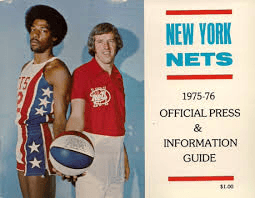
The 1975–76 New York Nets official press guide, Erving’s final ABA season with the franchise.
YOUNG COACH, YOUNG LEAGUE, YOUNG DOCTOR
“You couldn’t do that with Michael. You could do that with Doc. That’s how he blended in.”
AFTER THE ABA
The ABA folded after the 1975–76 season. Four franchises were absorbed into the NBA, but the mergers came with steep entry fees, and to cover them Nets ownership sold Erving’s contract to the Philadelphia 76ers for $3 million.7 He averaged 21.6 points, 8.1 rebounds, and 3.7 assists in his first NBA season, leading Philadelphia to the Finals in 1976–77, though his overall production reflected the NBA’s slower and more structured style of play.8 “That’s why I don’t think we seen the real Dr. J in the NBA as much as we did in the ABA,” Loughery said years later.1
Loughery stayed on to coach the franchise through its transition into the NBA, now relocated to New Jersey as the New Jersey Nets. Without Erving the team struggled, and he was let go midway through the 1980–81 season.9 He landed with the Atlanta Hawks the following year, guiding them to back-to-back playoff appearances, including a run that featured rookie Dominique Wilkins, before being let go after the 1982–83 season. Thorn, by then the Bulls’ general manager, brought him to Chicago.10
Thorn had come up through coaching stops in Seattle, New York, St. Louis, and New Jersey before moving into front office work, and he and Loughery shared a long professional history from their time with the Nets organization.13 Together they set about addressing a Bulls franchise that had gone 27–55 in 1983–84.11 That summer Thorn drafted Jordan third overall out of North Carolina, where Jordan had been a three-time All-American and ACC Player of the Year, and had hit the championship-winning jumper against Georgetown in the 1982 NCAA title game.12 Jordan came to Chicago having just led Team USA in scoring at the Los Angeles Olympics, averaging 17.1 points per game on the way to a gold medal.15
Thorn, for his part, was measured about the pick at the time. “We wish he were seven feet, but he isn’t,” he told reporters after the draft. “Jordan isn’t going to turn this franchise around. I wouldn’t ask him to. I wouldn’t put that kind of pressure on him.”16 He handed the team to Loughery, and together they set about finding out what they actually had.
THE ROOKIE
Training camp answered the question quickly. Loughery’s initial concern had been whether Jordan, who had spent his college career in North Carolina’s passing-oriented system and then the Olympic program, could handle the ball and operate off the dribble in the open NBA game. “When we put in one-on-one drills the third day,” Loughery recalled, “we saw he had the ability to take the ball anyplace on the floor that he wanted to take it, and that he could do things that shocked us.”18 Once full scrimmages began, the picture became impossible to ignore. Loughery cut one early practice short and explained why to Thorn afterward: “That Jordan kid was just dominating so much he was embarrassing the rest of the team.”19
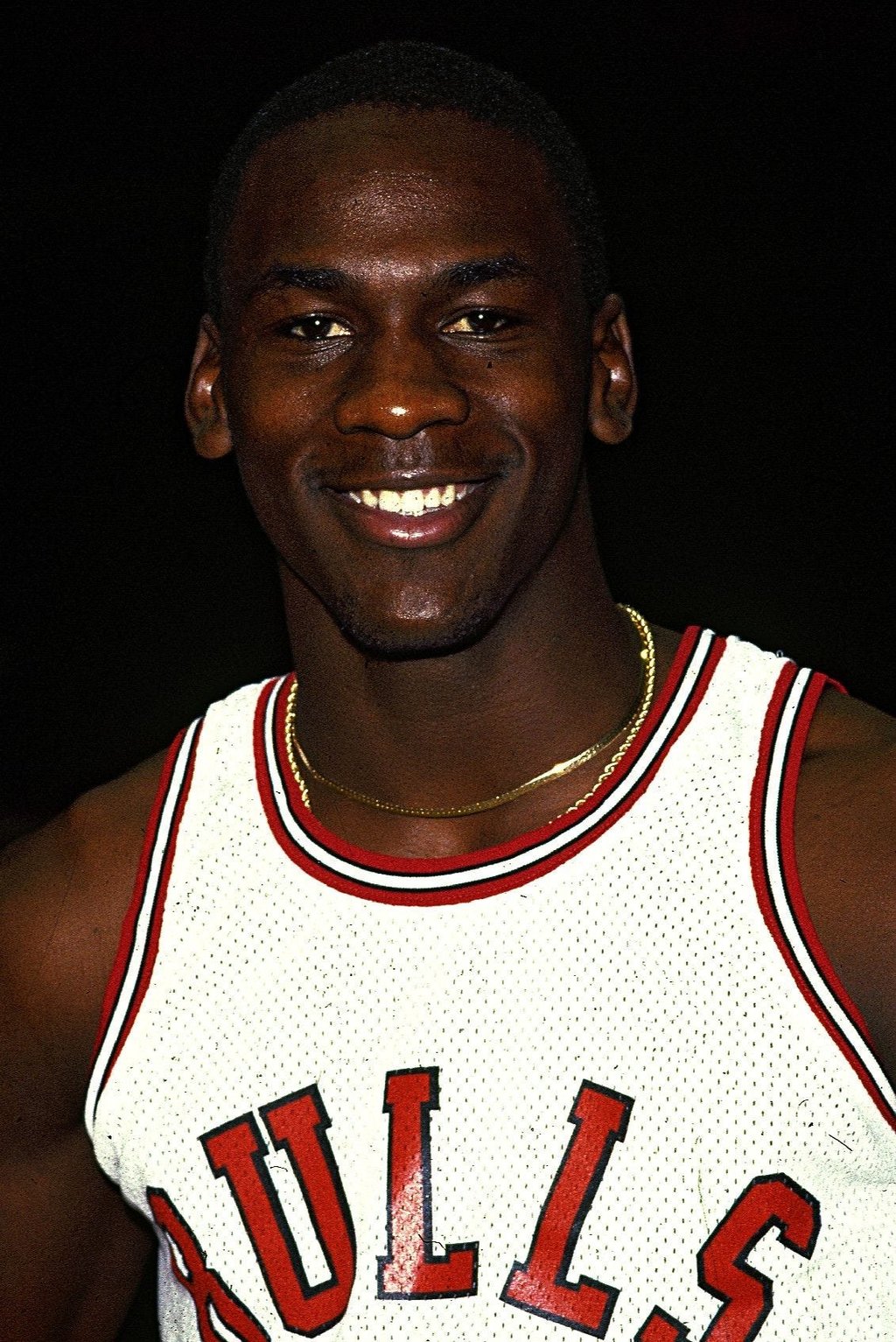
Michael Jordan in his first Chicago Bulls season, 1984–85. (Photo: NBA Photos / Getty Images)
Loughery found ways to keep stoking that competitiveness. At the end of each practice he ran five-on-five scrimmages where the losing team ran 15 laps. In one session Jordan’s team led 7–2 in a game to 11. Loughery stopped play and switched Jordan to the trailing side. Jordan proceeded to score seven straight baskets to win the scrimmage, furious throughout. “I was trying to challenge him and test him,” Loughery said.20
Jordan, speaking at his Hall of Fame induction in 2009, remembered it not as an irritation but as formative: “I appreciate Kevin Loughery for giving me that challenge — providing that type of fire within me. He threw another log on that fire for me.”21
Jordan also credited Loughery with something more fundamental than competitive psychology. “He gave me the confidence to play on his level. My first year, he threw me the ball and said, ‘Hey, kid, I know you can play. Go play,’” Jordan told the Chicago Tribune. “I don’t think that would have been the case going through another coach’s system.”22
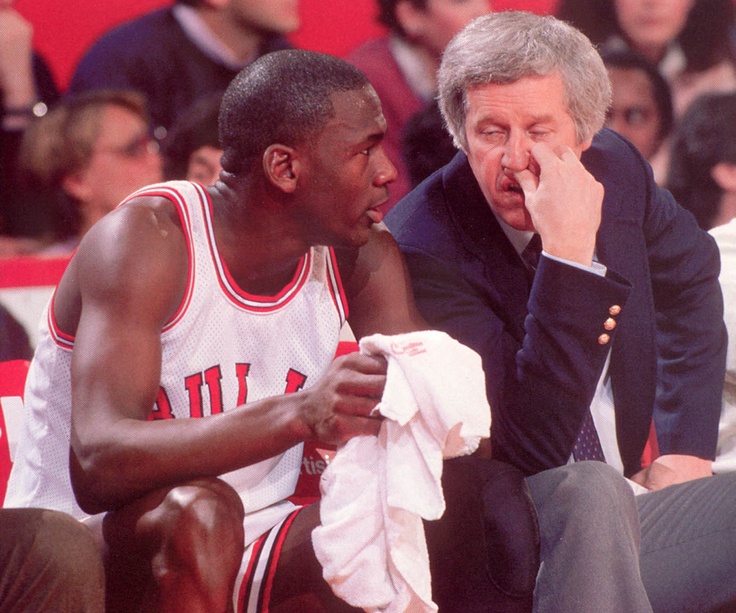
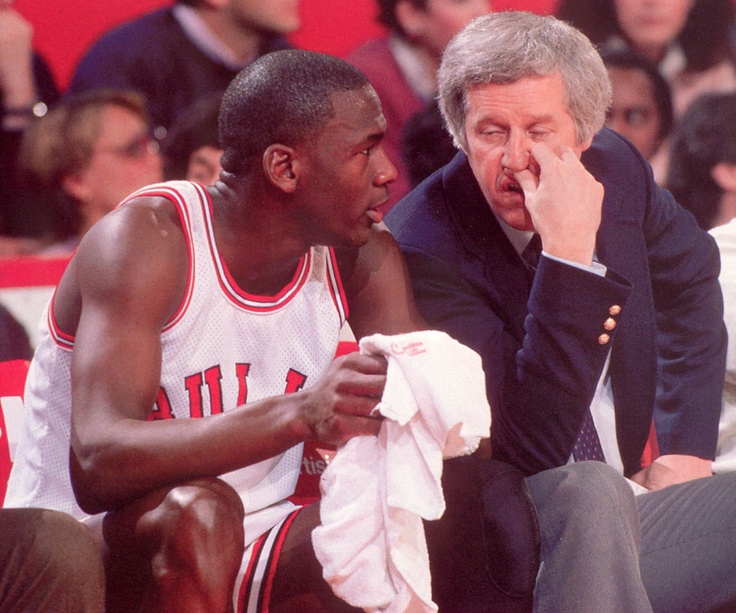
Michael Jordan and head coach Kevin Loughery during the 1984–85 NBA season with the Chicago Bulls. (Photo: NBA Photos / Getty Images)
Jordan averaged 28.2 points, 6.5 rebounds, 5.9 assists, and 2.4 steals per game on 51.5 percent shooting as a rookie, finishing third in league scoring behind Bernard King and Larry Bird, and sixth in MVP voting.23 Chicago improved from 27–55 to 38–44 and returned to the playoffs. “The players weren’t happy with Michael in a way,” Loughery observed, “because he demanded that they play as hard as he played in every practice and every game. He never took a day off.”1
TWO LEADERS, TWO CONTEXTS
Loughery’s comparison of Erving and Jordan is an observation about how different temperaments function within different circumstances, not a judgment about ability.
Erving played in a league that depended on him for credibility. His adaptability across two leagues, his willingness to have his role adjusted without friction, and his steadying effect on franchises navigating financial instability made him valuable in ways that went beyond scoring. The ABA gave him the conditions to express his full range, and the numbers from that period reflect it.
Jordan inherited a struggling franchise in a league already finding its footing and became its central figure almost immediately. His competitive standard extended to practice, card games, golf — any context where a score was being kept. It eventually produced six championships under Phil Jackson. Under Loughery and Thorn it produced a playoff team from a 27-win roster in a single season, before ownership cleared the decks and started over.
“They are two great players and I love both of them,” Loughery said. “I play golf with both of them.”1
Thorn went on to rebuild the New Jersey Nets into a Finals contender in the early 2000s. Loughery continued coaching into the mid-1990s, later guiding the Miami Heat to their first playoff appearance. Neither man was present when Jordan won his first championship in 1991. They had, however, been in the room at the beginning — Thorn with the draft card and Loughery with the whistle — which is a particular kind of credential that no one else holds.
NOTES
Kevin Loughery on Erving and Jordan
The coach who directed both Julius Erving’s championship Nets and Michael Jordan’s rookie Bulls draws a rare comparison — not of ability, but of temperament.
BY THE SPORTING PAGE MARCH 21, 2026 10 min read
Kevin Loughery, interview, Mad Dog Unleashed, SiriusXM, February 2026.
Kevin Loughery player statistics and Baltimore Bullets tenure, Basketball-Reference.com.
1972–73 Philadelphia 76ers season record, Basketball-Reference.com.
ABA founding history and league structure; Terry Pluto, Loose Balls: The Short, Wild Life of the American Basketball Association (Simon and Schuster, 1990).
Julius Erving ABA regular-season statistics and MVP awards, Basketball-Reference.com.
Game 6, 1976 ABA Finals, New York Nets vs. Denver Nuggets, box score, Basketball-Reference.com.
ABA–NBA merger terms and Erving sale to Philadelphia; Roland Lazenby, Michael Jordan: The Life (Little, Brown, 2014), 198.
Julius Erving 1976–77 NBA statistics, Basketball-Reference.com.
Kevin Loughery coaching tenure, New Jersey Nets, 1976–81, Basketball-Reference.com.
Kevin Loughery coaching tenure, Atlanta Hawks, 1981–83, Basketball-Reference.com.
Chicago Bulls season record, 1983–84, Basketball-Reference.com.
Michael Jordan collegiate career and 1982 NCAA championship, Basketball-Reference.com.
Rod Thorn biography and career overview, Naismith Memorial Basketball Hall of Fame, hoophall.com.
Rod Thorn and Kevin Loughery dismissal, March 1985; Sam Smith, The Jordan Rules (Simon and Schuster, 1992).
Michael Jordan, 1984 United States Olympic Men’s Basketball Team statistics, Basketball-Reference.com.
Rod Thorn post-draft remarks on Michael Jordan, June 1984; Bernie Lincicome, “Apologetic Chicago Bulls ‘stuck’ with Michael Jordan,” Chicago Tribune, June 20, 1984.
Kevin Loughery on Julius Erving’s leadership style; Vincent M. Mallozzi, Doc: The Rise and Rise of Julius Erving (Wiley, 2010).
Kevin Loughery on Jordan’s one-on-one drills, Glenn Clark Radio, April 21, 2020.
Kevin Loughery recounting Jordan’s first practice to Rod Thorn; Keith Brown account, The Athletic, via Basketball Network, 2023.
Kevin Loughery on the practice scrimmage drill; Chicago Tribune, via Basketball Network, 2025.
Michael Jordan, Hall of Fame induction speech, Naismith Memorial Basketball Hall of Fame, September 11, 2009.
Michael Jordan on Kevin Loughery as a coach; Chicago Tribune, 1992, via Basketball Network, 2024.
Michael Jordan 1984–85 NBA statistics and MVP voting, Basketball-Reference.com.