OPINION: David Stern’s Influence Likely Delayed Gregg Popovich’s Olympic Appointment
An opinion analysis of how David Stern’s handling of Restgate may have influenced Gregg Popovich’s delayed appointment as Team USA head coach.
2/24/20263 min read
On November 29, 2012, the NBA fined the San Antonio Spurs $250,000 after Gregg Popovich sent Tim Duncan, Tony Parker, Manu Ginóbili, and Danny Green home before a nationally televised game in Miami — a decision Commissioner David Stern ruled contrary to the “best interests of the NBA.”¹ The fine, quickly labeled “Restgate,” created one of the most visible public clashes between Stern and a head coach during his tenure.
Within twenty-four hours, ESPN’s Marc Stein examined whether the confrontation could affect Popovich’s prospects of succeeding Mike Krzyzewski as head coach of USA Basketball.² Stein made clear that formal authority rested with USA Basketball chairman Jerry Colangelo.² He did not allege interference. But the question was serious enough to be raised in national reporting immediately.
Structurally, USA Basketball operates independently from the NBA. Formally, Stern did not appoint the Olympic coach. Yet it is equally true that in 2012 Stern remained the most powerful executive in professional basketball. Commissioners do not cast Olympic votes; they influence the environment in which leadership decisions are evaluated.
Restgate was not merely a disagreement over player rest. Stern had built the NBA’s modern financial model around television stability and broadcast reliability. The Spurs’ decision to rest multiple All-Stars in a nationally televised TNT game challenged that priority directly.¹ The fine functioned as a public assertion of league authority.
Contemporaneous reporting described tension between Stern’s office and the Spurs organization that predated the fine.³ When Tom Ziller summarized Adrian Wojnarowski’s coverage, he referred to the dynamic as a “cold war,” suggesting that the friction was structural rather than episodic.³ Restgate made that friction visible.
No reporting from 2012 establishes that Stern formally barred Popovich from coaching the Olympic team. There is no documented directive, no public vote record, and no confirmed intervention linking the fine to an official denial of authority.² What exists in the record is timing: the dispute occurred while Olympic succession was under discussion.
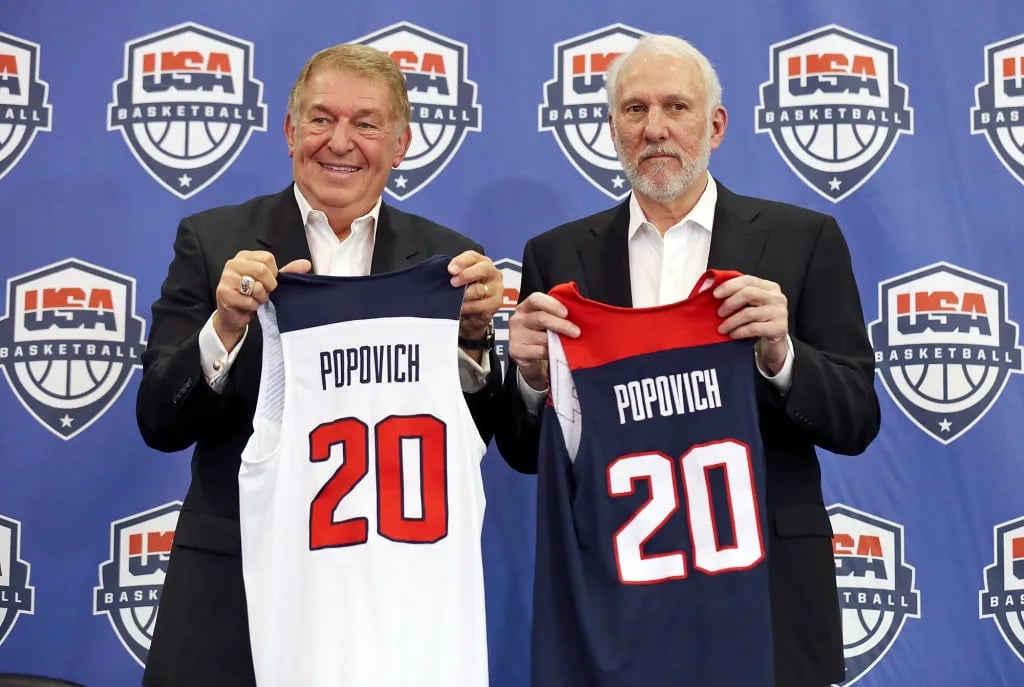
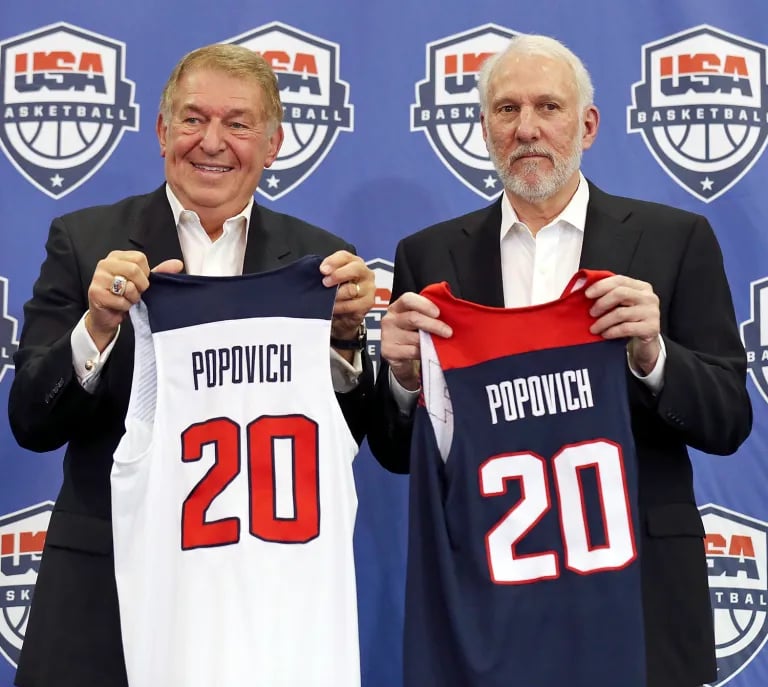
Popovich was not appointed Team USA head coach until 2015 — one year after Stern retired and Adam Silver became commissioner. That chronology does not prove causation. But it is reasonable, in my view, to question whether Stern’s influence and public posture toward the Spurs affected how Popovich’s candidacy was perceived during his tenure.
Influence does not require a memo. It does not require a directive. In elite governance structures, it often operates through alignment and institutional signals. In 2012, Stern signaled publicly that Popovich’s approach to nationally televised rest conflicted with league priorities. That signal coincided with active discussion about Olympic succession.
Chris Russo, speaking years later on Mad Dog Unleashed, framed the issue bluntly while criticizing modern load management: “You think David Stern would put up with this nonsense?” Russo further suggested that the Spurs’ nationally televised rest decisions played into why Popovich did not coach an Olympic team earlier.⁴ Russo’s remarks are commentary, not documentation. But they reflect a perception that the 2012 clash carried institutional consequences.
My position is not that Stern secretly vetoed Popovich. The record does not support that claim. My position is narrower: that during Stern’s final years as commissioner, the public dispute over Restgate likely diminished Popovich’s Olympic viability within the existing power structure. When leadership decisions are made in a network shaped by league authority, public alignment matters.
Popovich ultimately became head coach in 2015. That appointment resolved the formal question. The earlier episode, however, remains instructive. It demonstrates how public discipline, institutional philosophy, and leadership selection can intersect — not through documented obstruction, but through influence that operates in plain sight.
Sources
¹ NBA fine of San Antonio Spurs for resting players before Nov. 29, 2012 game vs. Miami Heat.
² Marc Stein, “Will ‘Restgate’ Affect Pop’s Shot at Team USA?” ESPN, Nov. 30, 2012.
³ Tom Ziller summarizing Adrian Wojnarowski reporting on Stern–Popovich tensions, SB Nation, Dec. 1, 2012.
⁴ Chris Russo, remarks on Mad Dog Unleashed discussing load management and David Stern’s approach (audio broadcast).