MICHAEL JORDAN’S LEADERSHIP WAS ROOTED IN RELENTLESS COMPETITION
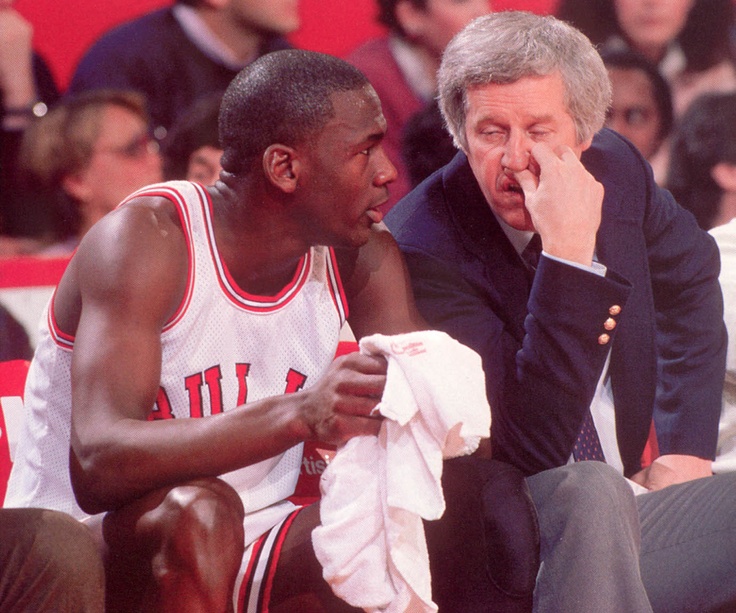
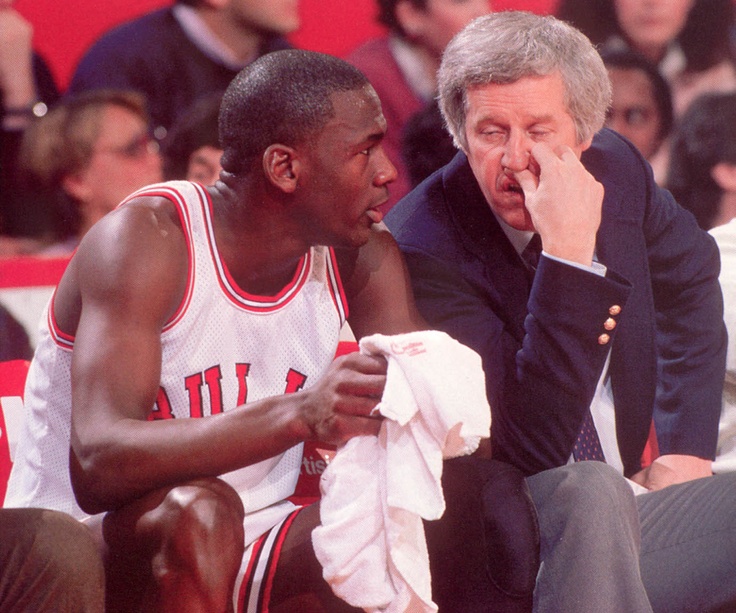
Kevin Loughery reflects on Michael Jordan’s rookie leadership with the 1984–85 Bulls, detailing the relentless competitiveness that defined his impact.
2/24/2026
Kevin Loughery’s February 2026 appearance on Mad Dog Unleashed provided a detailed account of coaching Michael Jordan during the 1984–85 NBA season.¹ His observations centered less on scoring totals and more on competitive temperament.
“You know I had a very veteran team for Chicago when he came in, and he just beat these guys up,” Loughery said.¹ He later added that Jordan “destroyed them.”¹ The phrasing described competitive dominance rather than confrontation. Jordan entered the league at 21 and immediately established hierarchy within a veteran locker room.
The Bulls’ roster included Orlando Woolridge and Quintin Dailey.² Chicago improved from 27–55 in 1983–84 to 38–44 in 1984–85 and qualified for the playoffs.² Jordan averaged 28.2 points per game, ranking third in the NBA behind Bernard King and Larry Bird.³ He finished sixth in Most Valuable Player voting.⁴ Performance substantiated authority.
Loughery characterized Jordan’s disposition as constant. “The competitive spirit with Michael is beyond belief,” he said, adding that Jordan was “really tough on his teammates.”¹ The intensity did not fluctuate with context.
Practice sessions reinforced that pattern. “He’s on one team’s side in practice, he wouldn’t let up,” Loughery recalled.¹ “We are playing to 10 each side. It’s about 7-1 and I said, ‘Michael, change your jersey.’ He’d take the jersey off and beat the team and he was six points up. He was steaming at me for that. He didn’t yell at me, but I knew he was steaming. He wants to win.”¹ The episode demonstrates that competition extended beyond games and was applied equally to teammates.
Off the court, the pattern remained. “I played cards with Michael… I’d tell Mike, ‘Boy, you’d cheat just to win,’ kiddingly… he never lets up,” Loughery said.¹ Competitive urgency shaped even recreational settings.
Jordan’s influence was measurable. Chicago’s offensive rating increased by more than three points per 100 possessions year over year.⁵ His usage rate and scoring gravity immediately altered the offense.³ Leadership operated through production and expectation.
Loughery contrasted this with Julius Erving’s more cooperative style, noting that certain public coaching strategies were not effective with Jordan.¹ The distinction reflects method rather than merit. Jordan generated internal pressure and required alignment. His competitive standard was not situational, and it was not moderated.
Sources
1. Kevin Loughery interview, Mad Dog Unleashed, SiriusXM, February 2026.
2. Chicago Bulls season records, 1983–84 and 1984–85, Basketball-Reference.com.
3. 1984–85 NBA player statistics, Basketball-Reference.com.
4. 1984–85 NBA MVP voting results, Basketball-Reference.com.
5. Chicago Bulls advanced team statistics, 1983–84 vs. 1984–85, Basketball-Reference.com.
MICHAEL JORDAN’S LEADERSHIP WAS ROOTED IN RELENTLESS COMPETITION