David Stern and the Silna Television Clause: The Percentage That Scaled
How a 2.6% television clause from the 1976 ABA–NBA merger paid the Silna brothers hundreds of millions as NBA media rights exploded.
2/24/2026
June 17, 1976 — The Merger Settlement
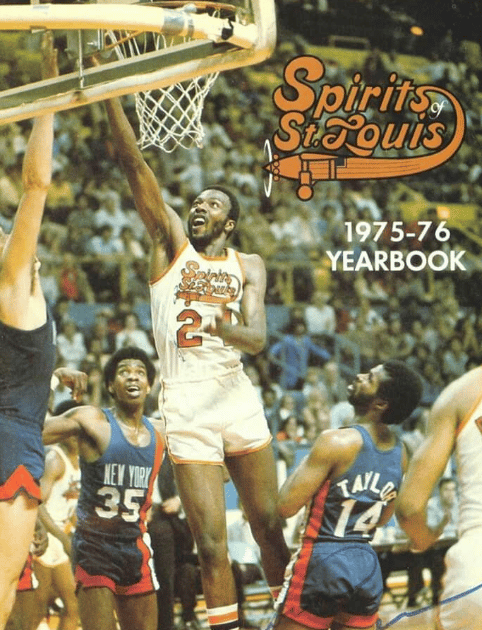
On June 17, 1976, the ABA–NBA merger was finalized, admitting the Denver Nuggets, Indiana Pacers, New York Nets, and San Antonio Spurs into the NBA. The Kentucky Colonels and the Spirits of St. Louis were excluded. The Colonels accepted a $3 million buyout.¹ The Spirits’ owners, Ozzie and Daniel Silna, declined a lump-sum settlement and instead secured a continuing share of national television revenue.¹
At the time the merger agreements were executed in 1976, David Stern was serving as the NBA’s General Counsel, a post he had assumed in 1974.² The Silna television provision was embedded in the merger settlement finalized by the league during that period.¹
Structure of the Provision
In 1976, national television revenue was distributed evenly among the NBA’s 22 teams.³ Each team therefore received 1/22 of the national television pool. The Silna clause entitled its holders to one-seventh of each former ABA team’s share.
The calculation reduces to:
4 × (1/7 × 1/22) = 2/77 ≈ 2.6% of total national television revenue.
Under the NBA’s CBS agreement for the 1976–77 season, which paid approximately $1 million annually,⁴ each team’s share equaled roughly $45,455. A 2/77 share of that pool produced an estimated annual distribution of approximately $25,974.
National television revenue in the mid-1970s represented a limited portion of overall league income. Congressional testimony indicated total NBA revenues of approximately $32.3 million during the 1970–71 season, illustrating the modest scale of league-wide finances in that era.⁵ Television rights had not yet become the league’s primary economic driver.
National Television Expansion
The structure remained constant as television contracts expanded.
In April 1984, the NBA reached a four-year extension with CBS valued at approximately $173 million.⁶ Applying 2.6 percent yields roughly $4.5 million over the life of that agreement, or about $1.1 million annually.
In 1990, the league finalized a four-year national television agreement with NBC and Turner Broadcasting worth approximately $600 million.⁷ At 2.6 percent, the Silna share equated to approximately $15.6 million across the contract.
In January 2002, the NBA signed a six-year agreement with ABC/ESPN and Turner valued at approximately $4.6 billion.⁸ At 2.6 percent, that equated to roughly $119 million over six years.
In June 2007, the league announced an eight-year extension valued at approximately $7.4 billion.⁹ A 2.6 percent allocation equated to approximately $192 million over the life of that contract.
Taken together, the 1984 ($4.5M), 1990 ($15.6M), 2002 ($119M), and 2007 ($192M) agreements produced an estimated cumulative distribution of approximately $331 million before the 2014 contract cycle.
By 2012, Ken Belson of The New York Times reported that the Silna family had already collected hundreds of millions of dollars under the agreement.⁵
The 2014 Media Agreement and Settlement
In October 2014, the NBA finalized a nine-year media rights agreement with ESPN and Turner valued at approximately $24 billion.¹⁰ At 2.6 percent, the Silna share would have equated to approximately $624 million across the contract term.
In January 2014, prior to that agreement taking effect, the NBA reached a settlement with the Silna family reportedly valued at approximately $500 million.¹ ¹¹ The settlement terminated the continuing revenue share established in 1976.
The percentage remained unchanged for nearly four decades. The revenue base expanded from approximately $1 million annually in 1976 to a $24 billion multiyear agreement in 2014.
Sources
Howard Beck, “NBA Agreement With Silna Brothers Ends Spirits of St. Louis TV Deal,” Sports Illustrated, Jan. 7, 2014.
NBA Biography Archive, David Stern (General Counsel appointment, 1974).
NBA historical revenue distribution summaries, 1976 season structure.
Ken Belson, “Deal That Keeps Paying Silna Brothers From ABA Merger,” New York Times, May 15, 2012 (CBS contract context).
Ken Belson, New York Times, May 15, 2012 (league revenue and payout reporting).
Richard Sandomir, “CBS Extends N.B.A. Pact,” New York Times, April 1984.
Richard Sandomir, “N.B.A. Signs $600 Million TV Deal,” New York Times, May 1990.
Richard Sandomir, “N.B.A. Signs $4.6 Billion TV Deal,” New York Times, Jan. 2002.
Richard Sandomir, “N.B.A. Extends Television Deals,” New York Times, June 2007.
John Ourand & John Lombardo, “NBA reaches nine-year, $24 billion deal,” Sports Business Journal, Oct. 2014.
Monte Burke, “The NBA Finally Puts an End to the Greatest Sports Deal of All Time,” Forbes, Jan. 7, 2014.
David Stern and the Silna Television Clause: The Percentage That Scaled
How a fixed 2.6 percent television provision from the 1976 ABA-NBA merger expanded alongside the league's modern media economy.
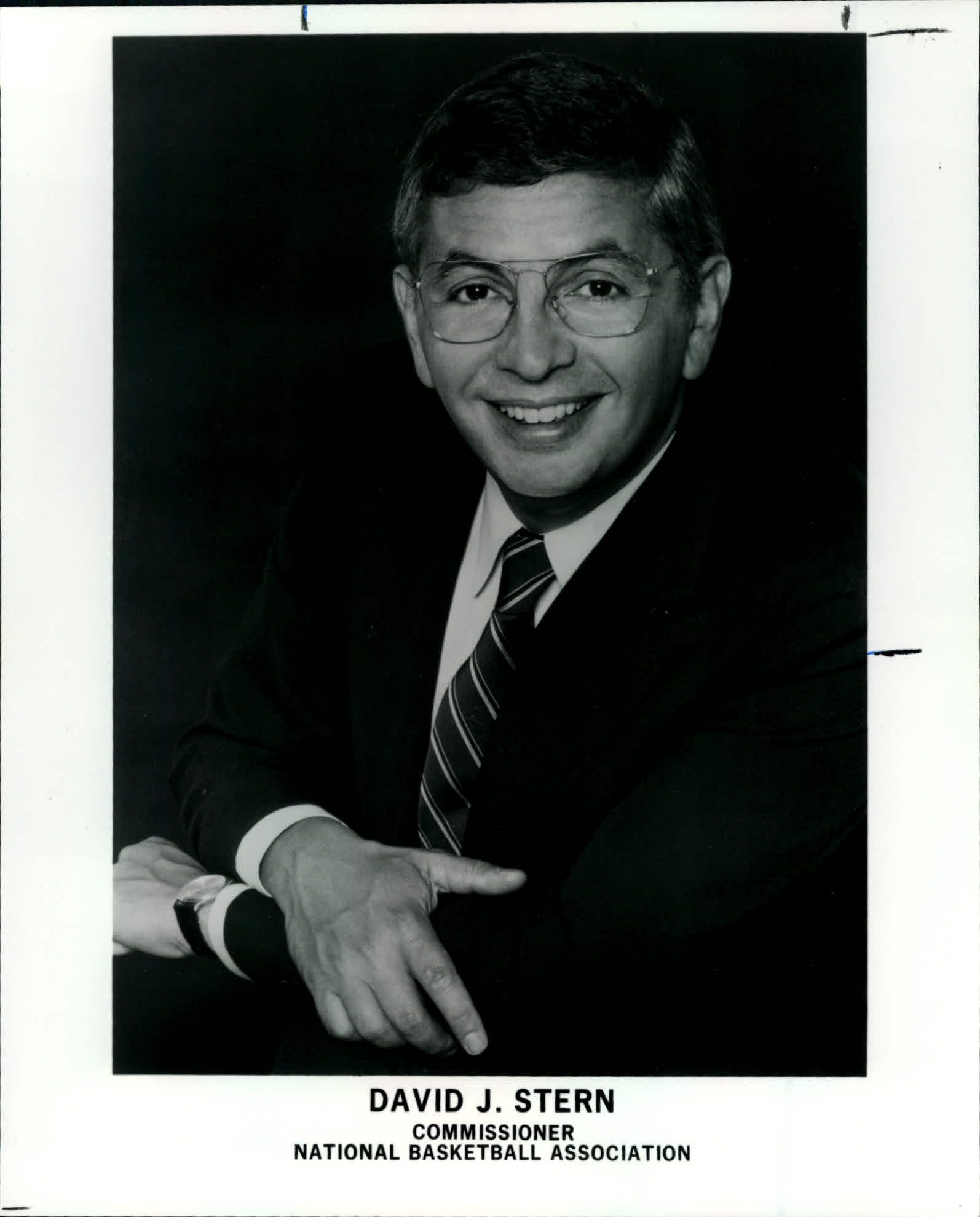

Photo: Courtesy of MEARS Online Auctions Archive — likely a press portrait of David Stern from the late 1970s/early 1980s.